Tag Archives: psychosocial hazards

Asia-Pacific: It’s time to address psychosocial hazards in a changing world of work | ILO

To mark World Day for Safety and Health at Work, Kaori Nakamura-Osaka, International Labour Organization Assistant Director-General and Regional Director for Asia and the Pacific, calls for stronger action to protect workers from psychosocial hazards.

A delivery rider works 14 hours a day to meet algorithm-driven targets. A factory worker quietly endures relentless pressure and harassment. A middle-aged manager pushes away thoughts of suicide resulting from stress.

These are not isolated stories. They are signals of a deeper crisis, one that is too often invisible, unspoken and underestimated: the impact of psychosocial hazards on workers.

This 28 April, the World Day for Safety and Health at Work calls global attention to psychosocial factors that influence health at work.

The impact of physical work-related hazards such as manual handling of heavy loads or working at heights are well recognised and understood. Psychosocial hazards are invisible but just as dangerous.  Long working hours, workplace stress, violence and harassment, low pay and lack of job security – to name but a few – can all take a toll on both the physical and mental health of workers.

A new International Labour Organization (ILO) report, The psychosocial working environment: Global developments and pathways for action highlights the scale of the impact.

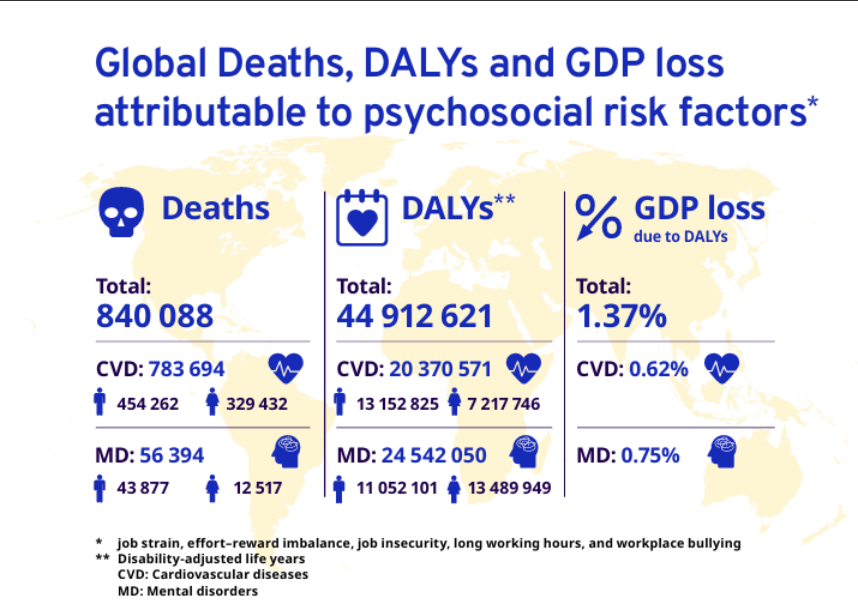
It reveals that work-related psychosocial factors are responsible for more than 840,000 deaths annually due to associated cardiovascular diseases and mental disorders and lead to the loss of nearly 45 million disability-adjusted life years (DALYs) each year.

Long working hours are highlighted as a critical psychosocial risk factor associated with increased risk of cardiovascular disease and stroke. In Asia and the Pacific, the burden is especially significant with nearly half of workers in the region working more than 48 hours per week, substantially higher than in other parts of the world.

The report also recognises the implications of the changing world of work on the psychosocial work environment. Digitalization and the use of artificial intelligence are transforming how tasks are coordinated, monitored and assessed. New forms of employment, including platform work, varied contractual arrangements and the expansion of remote and hybrid work, are redefining supervision, expectations and working time. While these developments may create opportunities to strengthen the psychosocial working environment, they may also exacerbate psychosocial risks.

The true extent of the problem is still not fully understood. Data remains fragmented and many countries lack consistent systems to identify psychosocial hazards and address their risks.

Stigma continues to silence workers who might otherwise speak out. This silence is one of the biggest barriers we face. Many fear the negative career consequences of talking about stress, burnout, anxiety or depression at work. The result is that problems remain hidden until they become crises.

But there is also reason for cautious optimism. Governments, employers and workers across the region are increasingly recognizing that psychosocial hazards represent a major threat to workers’ safety and health as well as organizational productivity and broader economic performance.

We are seeing this shift reflected in policy. For instance, when China revised the Work Safety Law in 2021, mental health at work was formally incorporated into employers’ statutory obligations. The revision requires employers to strengthen psychological aspects in occupational health services.  Meanwhile, in 2024, when China revised the Classification and Catalogue of Occupational Diseases, occupational mental health disorders were included as occupational diseases for the first time.

Other examples across the region include Japan’s current national occupational safety and health programme which prioritizes the prevention of overwork and mental health problems. The Republic of Korea is expanding support through workers’ health centres and requiring rest facilities. Australia and New Zealand have integrated mental health into broader national strategies, while countries such as Malaysia and the Philippines are strengthening legal frameworks to address psychosocial risks at work.

The ILO’s new report highlights a simple but powerful truth: psychosocial risks are not inevitable. They arise from identifiable aspects of work, excessive demands, lack of control, poor support and unfair treatment. These can all be changed and this means prevention is possible.

Across Asia and the Pacific, promising practices are already emerging. In Singapore, tools such as iWorkHealth help companies assess workplace psychosocial factors and promote well-being. In Malaysia, guidelines on psychosocial risk management support employers in identifying and addressing risks.

For workers in every sector, psychosocial factors at work can make the difference between a job that supports well-being and one that undermines it. Creating such environments requires commitment from all sides. Governments must strengthen policies and data systems. Employers must take responsibility for how work is organized and managed. Workers must be able to participate, speak up and be heard. Social dialogue is essential to making this happen.

The message for Asia and the Pacific is clear: the region’s future depends not only on how much people work, but on how work is experienced every day. Behind every statistic is a worker trying to cope, to provide, to endure. Managing psychosocial risks means ensuring that work does not come at the cost of health, dignity or life itself.

A safe and healthy working environment is a fundamental principle and right at work. Making that a reality, is a challenge we must meet.
https://www.ilo.org/resource/article/it%E2%80%99s-time-address-psychosocial-hazards-changing-world-work

Global: Psychosocial risks at work now deadlier than traditional hazards – PSI


On World Day for Safety and Health at Work, unions warn that stress, long hours and toxic workplaces have become the biggest killers at work. Long hours alone cause 745,000 deaths yearly, with over 840,000 total deaths linked to psychosocial risks, 70,000 work-related suicides and 12 billion days lost to depression and anxiety.

Behind the daily reality of work, millions of working people are facing relentless pressure: long hours, job insecurity, impossible targets and toxic workplace cultures. These are not just bad jobs – they are dangerous jobs. Stress, anxiety and burnout are now causing more harm globally than traditional workplace hazards such as chemicals or dust.

A new ITUC report “Tackling Psychosocial risks at work: how stresses and strains can kill workers and how unions can save them” shows the scale of the crisis:

  • Long working hours alone are responsible for around 745,000 deaths each year.
  • There are at least 70,000 work-related suicides annually.
  • 12 billion working days are lost every year due to depression and anxiety.
  • Burnout affects around one in five workers globally.
  • Psychosocial risks are linked to over 10 per cent of cases of heart disease, depression and suicides.

The International Labour Organisation (ILO) has also published a ground breaking report titled “ The psychosocial working environment: Global developments and pathways for action” that sheds light on the global epidemy of PSR at work. It shows that:

  • more than 840,000 people die each year from health conditions linked to psychosocial risks, such as long working hours, job insecurity, and workplace harassment. These work-related psychosocial risks are mainly associated with cardiovascular diseases and mental disorders, including suicide.
  • 35 per cent of workers work more than 48 hours per week
  • 23 per cent of workers globally have experienced at least one form of violence or harassment in their working life, with psychological violence being the most prevalent at 18 per cent
  • nearly 45 million disability-adjusted life years (DALYs) are lost annually, reflecting years of healthy life lost due to illness, disability, or premature death, and are estimated to result in economic losses equivalent to 1.37 per cent of global GDP each year.

The root causes of a poor psychosocial working environment

Psychosocial risks depend on three interrelated levels of factors that shape the psychosocial working environment:

  • the nature of the job itself, including demands, responsibilities, alignment with workers’ skills, access to resources, and the design of tasks in terms of meaning, variety, and skill use.
  • how work is organized and managed, covering role clarity, expectations, autonomy, workload, work pace, and supervision and support.
  • the broader workplace policies, practices and procedures that govern work. These include employment and working time arrangements, the management of organizational change, digital monitoring, performance and reward processes, OSH policy and management systems, procedures to prevent violence and harassment at work, and mechanisms for genuine worker consultation and participation.

Psychosocial risks are the most pressing OSH issue in public service jobs

According to a PSI global survey on OSH risks among public service workers, with 54 affiliates responding from 32 countries across all continents and PSI sectors and professions, psychosocial risks—including work-related stress and mental health—are identified as the most pressing workplace issue (75% of respondents). These are followed by understaffing and workload pressure (67.3%), workplace violence and harassment (55.8%), and long working hours (40.4%). Notably, all four of the highest-rated OSH risks identified by public service unions fall within the broader category of primary or contributing factors to psychosocial risks.

PSI will review and discuss priorities and actions related to psychosocial risks in public services during the next PSI Global OSH Network meeting on 22 September 2026.

Question: Which of the following OSH issues are most urgent in the sector(s) your union represents?

Source: PSI OSH Global Network Survey 2025-2026

What can be done to address psychosocial risks at work?

The ILO emphasizes that psychosocial risks can be prevented through organizational approaches that address their root causes. It also highlights the importance of integrating psychosocial risk management into occupational safety and health systems, supported by social dialogue between governments, employers, and workers.

Across the world, unions are proving that change is possible. Evidence shows that a strong, democratic trade union presence in the workplace is the most effective protection against psychosocial risks, improving workers’ health and economic outcomes.

Trade unions worldwide are calling for:

  • Strong laws to prevent psychosocial risks at work.
  • Full involvement of trade unions in workplace health and safety.
  • Decent work, including secure jobs, fair pay, safe staffing levels and manageable workloads.
  • Recognition of mental health conditions as occupational diseases.

The European Agency for Occupational Safety and Health (EU-OSHA) has also marked World Day for Safety and Health at Work, unveiling a new website for the Healthy Workplaces Campaign 2026-2028 ‘Together for mental health at work’. The website, is an anticipation of the EU-OSHA campaign on psychosocial risks at work that will kick-off in October 2026 and offers a first look at the upcoming campaign’s focus: managing and preventing psychosocial risks and their impact on workers and organisations. The websites carries materials, including the campaign guideflyer and poster, to learn more about how to raise awareness and take action.

Resources

Many resources are available for unions, workers and OSH reps who wish to bring progressive change and tackle psychosocial risks at work:

On 28 April, we the trade unions remember the dead – and fight for the living. Work should not cost lives. It must protect lives, dignity and mental health.

Note: this article draws on written materials from ITUC, ILO and EU-OSHA websites.

UK: Workers’ Memorial Day Service at the House of Commons – Julia Walters speech – APPG

Workers’ Memorial Day service – TUC, APPG Occupational Health and Safety

House of Commons, 28 April 2026

Speech by Professor Julia Waters

Today, on Workers’ Memorial Day, we remember those who have died because of work. We speak their names, we honour their lives, and we commit to preventing future deaths.

My sister’s name was Ruth Perry.

Ruth was a dedicated, experienced and much-loved headteacher. She led Caversham Primary School for well over a decade—not for status or recognition, but because she loved that school, its staff, and its children. Ruth believed in public service and the life-changing potential of education.

By every meaningful measure, Ruth was an exceptional school leader: respected by colleagues, trusted by parents, and loved by pupils. She was diligent, caring and quietly determined.

But on 8 January 2023 – 54 days after a brutal, flawed Ofsted inspection downgraded her school from ‘outstanding’ to ‘inadequate’ – Ruth took her own life.

The inquest into Ruth’s death reached a clear conclusion: Ruth died by suicide, contributed to by an Ofsted inspection. The coroner found a direct link between that inspection—its conduct, outcome and consequences—and Ruth’s mental health deterioration and death.

Ruth had no history of mental illness or depression. Prior to that inspection, Ruth had been happy, healthy and successful.

The following words, quoted at the inquest, came from a conversation Ruth had with a mental health professional just days after the inspection:

“This is the most untherapeutic and inhumane system, to have this on one person’s shoulders. I am amazed there are not more heads killing themselves… the shame, the pressure, the loss of income. Where do I go next? […] The Ofsted system has to change. It is totally wrong that one person is made to feel like this.”

Those words were a warning—one the coroner echoed in issuing a Prevention of Future Deaths report, stating there remains a risk of future deaths if meaningful change is not made.

Despite much tweaking and performative listening by Ofsted, that risk remains.

This year’s Workers’ Memorial Day theme—psychosocial risks—recognises the fact that, as in Ruth’s case, work can kill not only through physical injury or illness, but through psychological damage and despair.

Work-related deaths are not only accidents or diseases. They are also suicides—driven by extreme pressure, fear, humiliation, and a loss of hope.

Yet our systems are not designed to recognise, investigate, or prevent deaths by suicide in the same way as physical injuries.

One critical, systemic failing is that work-related suicides are not investigated by the Health and Safety Executive. They are treated as personal tragedies, rather than the result of workplace harms.

If Ruth had died in a fire at her school, there would have been a full health and safety investigation.

But because Ruth died by suicide, the system that led to her death continues to escape that kind of official scrutiny and is allowed to carry on regardless.

At least ten teachers before Ruth are thought to have died by suicide linked to an Ofsted inspection. But none of their deaths – or the potential common factors contributing to them – has been recorded or investigated by the HSE.

I can’t help but wonder: if just one of these work-related suicides had been investigated and corrective action taken, might Ruth still be here today?

A second systemic failing lies in what happens after inquests. Coroners can issue Prevention of Future Deaths reports, but there is no National Oversight Mechanism to ensure their recommendations are implemented.

While organisations are obliged to respond, their responses are often dismissive, insufficient or quietly abandoned. Too often, bereaved families are left to push for change themselves, against considerable institutional resistance, reliving trauma in the process.

A third systemic failure, which we experienced in the aftermath of Ruth’s death, is the misuse of suicide reporting guidelines – such as those developed by the Samaritans – not to protect people, but to shut down legitimate discussion.

These guidelines are vital. They exist to prevent harm. Yet they can too easily be distorted to avoid scrutiny, deflect criticism, perpetuate false narratives, or silence those speaking out about systemic causes of suicide.

Talking responsibly and openly about suicide—and its causes—can save lives.

What is harmful is silence, defensiveness, and failure to act.

Across these failings runs a common thread: systems that are far more comfortable addressing physical risks than psychological ones; far more willing to individualise harm than to confront systemic, institutional failings and responsibilities.

So what needs to change?

We need recognition: recognition that suicide can be work-related, and that psychosocial risks must be treated as seriously as physical ones.

We need investigation: work-related suicides should be examined with the same rigour as other workplace deaths.

We need accountability: a National Oversight Mechanism is needed to ensure that lessons from inquests and inquiries lead to real change.

We need honesty: we must be able to talk openly and responsibly about suicide and its causes, without fear of being silenced or attacked.

And finally, we need action: institutions must be willing to confront their own failings and implement meaningful reform.

Because behind every statistic is a person.

A sister. A daughter. A wife. A mother. A colleague. A friend.

Ruth was all of these things. Ruth was a lovely human being, destroyed by an inhumane system. And Ruth should still be here.

So today, as we remember those who have died because of work, let us commit to creating workplaces that protect not only physical safety, but also human dignity and mental wellbeing.

If we fail to act on what Ruth’s preventable death has revealed, it will happen again.

Thank you.


See  SUICIDE CRISIS | Action call as more than one in 10 suicides is linked to work Hazards, number 171/172 double issue, spring 2026

Asia-Pacific: ITUC-AP 28 April commemoration highlights psychosocial risks

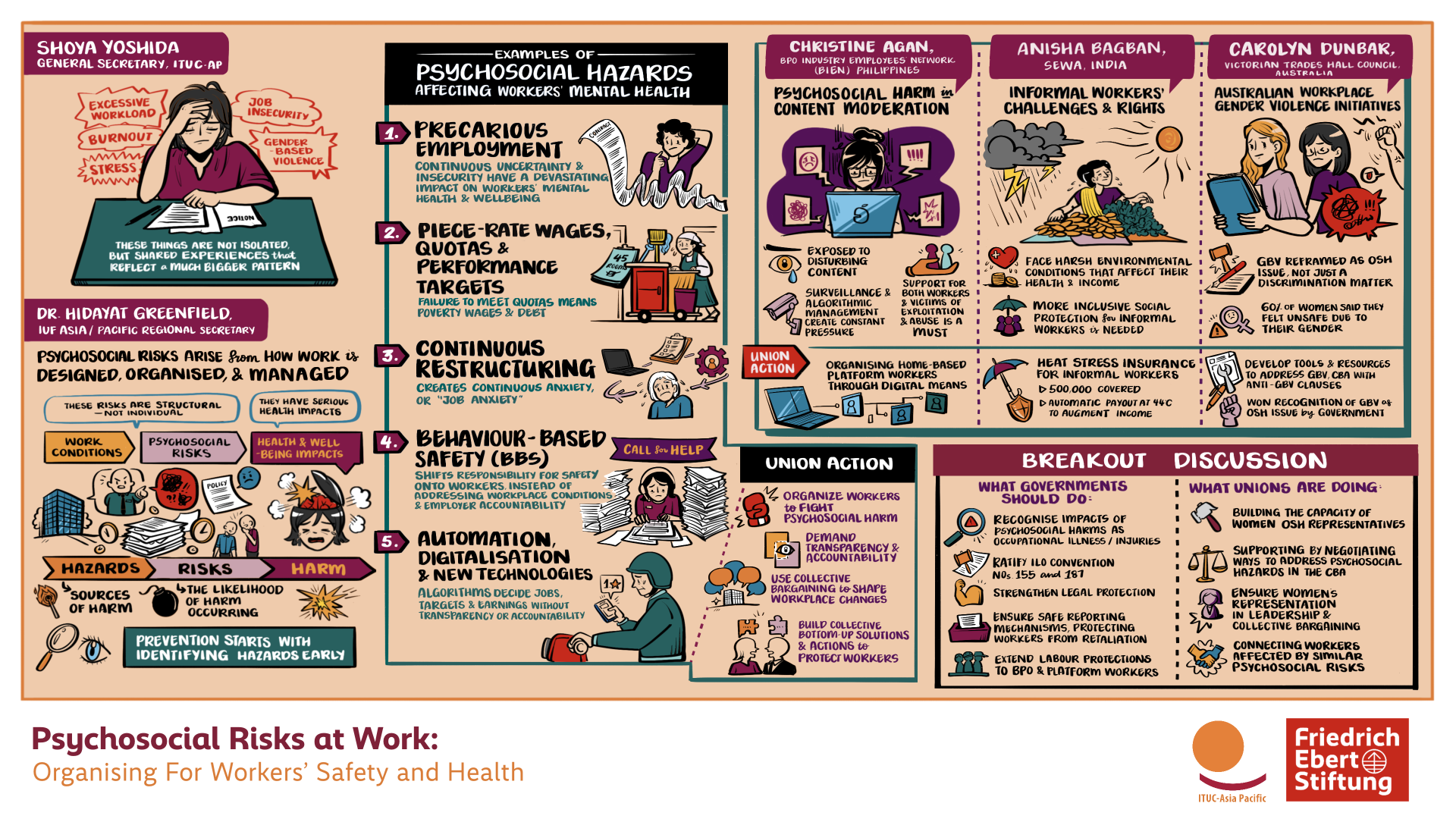
Hundreds of trade unionists attended a 24 April 2026 preparatory webinar for International Workers’ Memorial Day, organised by ITUC’s Asia Pacific office (ITUC-AP). The event, on the theme of how unions can challenge psychosocial hazards at work, included case histories on informal work, content moderation and gender, and featured presentations by ITUC-AP general secretary Shoya Yoshida and IUF-AP regional secretary and work safety expert Hidayat Greenfield.

ITUC-AP produced a graphic summary of the meeting, which including action points. It concluded unions should: organise to fight psychosocial harm; demand accountability and transparency; use collective bargaining to shape workplace changes; and build bottom-up solutions and actions to protect workers.

It noted unions were: building the capacity of women occupational safety and health representatives, including measures to address psychosocial risks in collective bargaining agreements; ensuring women’s participation in collective bargaining; and connecting workers affected by similar psychosocial risks.

Unions in the region agreed it was necessary to: call on governments to recognise psychosocial harms as occupational injuries and illnesses; ratify the fundamental ILO occupational health and safety conventions C155 and C187; strengthen legal protections from psychosocial harm; and extend labour protections to platform workers and BPOs (business processing outsourcing – a service subcontracting practice commonly used by major companies to provide content moderation, call centre and other services).

“Psychosocial risks are not only occupational safety and health issues; they are also issues of dignity, equality, and fundamental rights,” ITUC-AP general secretary Shoya Yoshida said.

“What trade unions are showing is that psychosocial risks are not invisible. They are being named, organised around, and challenged. Through collective action, workers are turning these issues into demands and concrete solutions for safer, healthier, and more dignified work.”

Global: ITUC calls for urgent action to tackle the global crisis of psychosocial risks at work

International Workers’ Memorial Day 2026: Tackling psychosocial risks at work

This International Workers’ Memorial Day, 28 April, the ITUC calls for urgent action to tackle the global crisis of psychosocial risks at work – now one of the leading causes of death, disease and distress for workers worldwide.

Behind the daily reality of work, millions of working people are facing relentless pressure: long hours, job insecurity, impossible targets and toxic workplace cultures.

These are not just bad jobs – they are dangerous jobs. Stress, anxiety and burnout are now causing more harm globally than traditional workplace hazards such as chemicals or dust.

ITUC’s new report shows the scale of the crisis:

  • Long working hours alone are responsible for around 745,000 deaths each year.
  • There are at least 70,000 work-related suicides annually.
  • 12 billion working days are lost every year due to depression and anxiety.
  • Burnout affects around one in five workers globally.
  • Psychosocial risks are linked to over 10 per cent of cases of heart disease, depression and suicides.

“Bad jobs can break anyone. When workers are pushed beyond their limits by job insecurity, excessive workloads and lack of control, the consequences can be fatal. This is not inevitable – it is a result of choices made in boardrooms and by governments.” ITUC General Secretary Luc Triangle

Across the world, unions are proving that change is possible. Evidence shows that a strong, democratic trade union presence in the workplace is the most effective protection against psychosocial risks, improving workers’ health and economic outcomes.

The ITUC is calling for:

  • Strong laws to prevent psychosocial risks at work.
  • Full involvement of trade unions in workplace health and safety.
  • Decent work, including secure jobs, fair pay and manageable workloads.
  • Recognition of mental health conditions as occupational diseases.

Luc Triangle concluded: “The solutions to these problems start with democracy in the workplace, with a voice for workers through their trade unions. Employers can ignore the psychosocial health of workers and break them, lose valuable skills and face the financial cost, or they can work with unions to ensure that workers are valued. If employers are struggling to recognise which is the correct choice, unions are ready and available to remind them. The fight for democracy in the workplace is the fight for the wellbeing of all working people.”

This 28 April, we remember the dead – and fight for the living. Work should not cost lives. It must protect lives, dignity and mental health.

Sweden: När arbetet dödar (When work kills) – Landsorganisationen i Sverige

Arbetsrelaterad stress dödar – och det är inte ett individuellt problem

Den 28 april uppmärksammas Världsdagen för arbetsmiljö eller som den också kallas Workers’ Memorial Day. Den dag då vi särskilt uppmärksammar de som tyvärr har fått sätta livet till pga. sitt arbete.

Inför årets 28 april släpper ILO en ny global rapport om psykosocial arbetsmiljö, eller som vi benämner det i Sverige: organisatorisk och social arbetsmiljö. Det är tung läsning, men inget som förvånar, tyvärr. Vi har länge diskuterat den ökade arbetsbelastningens konsekvenser; när strukturella risker tas för att nå största möjliga ekonomiska vinst, utan hänsyn till arbetstagares hälsa. När arbetstagare stressas av den höga arbetsbelastningen är det inte individers ”stresshantering” som är problemet. Det är ett systemfel.

ILO uppskattar i sin rapport att över 840 000 människor dör varje år – främst genom hjärt‑kärlsjukdomar och psykisk ohälsa – till följd av stress, ohälsosam arbetsbelastning och stora brister i hur arbetet organiseras. Nästan 45 miljoner friska levnadsår går förlorade varje år, och kostnaderna motsvarar 1,37 procent av den globala BNP. Långa arbetsdagar är en central riskfaktor – globalt arbetar 35 procent av alla arbetstagare mer än 48 timmar i veckan. Arbetsrelaterat våld och trakasserier är ett annat område där omfattningen är stor: nästan var fjärde arbetstagare globalt uppger att de utsatts för våld och trakasserier någon gång under sitt arbetsliv.

Även ITUC släpper en mycket matnyttig rapport, med globala exempel: Tackling psyhosocial risks at work. Bland annat lyfts arbetsrelaterade suicid, med fruktansvärda siffror på minst 70 000 per år. Återigen, det här är dödsfall som alla har kunnat undvikas. Det handlar nämligen inte om arbetstagares ”känslighet”, bristande copingstrategier eller individuella tillkortakommanden. Det handlar om hur arbetet är organiserathur krav och resurser fördelas och om makt, dvs inflytande över arbetsvillkoren. Möjligheten för den enskilde arbetstagaren att påverka sin arbetssituation varierar stort mellan olika länder, i takt med att brister i demokratiska rättigheter ökar och efterlevnaden av grundläggande mänskliga rättigheter minskar, exempelvis rätten att fritt organisera sig och förhandla om sina arbetsvillkor.

Ur ett fackligt perspektiv är slutsatsen självklar: psykosocial arbetsmiljö är en kollektiv fråga som kräver kollektiva lösningar – via lagstiftning, tillsyn, inflytande från arbetstagarrepresentanter såsom skyddsombud och genom förbättrade arbetsvillkor genom kollektivavtal. I Sverige har vi vår OSA (AFS 2023:2), men globalt saknas det både skydd och inflytande för arbetstagare.

Svensk arbetsmiljöstatistik bekräftar bilden som ILO presenterar i sin rapport. Enligt Arbetsmiljöverkets senaste arbetsmiljöundersökning uppger många anställda att arbetet präglas av hög arbetsbelastning, bristande möjlighet till återhämtning och krav som inte står i proportion till resurserna.

Särskilt utsatta är kvinnodominerade yrken inom vård, skola och omsorg – där stressrelaterad psykisk ohälsa är den vanligaste orsaken till långtidssjukskrivningFörsäkringskassans data visar att kvinnor löper mer än dubbel risk jämfört med män att sjukskrivas på grund av stressrelaterad psykisk ohälsa. Det bör förtydligas att det är inte ett kvinnorelaterat problem, utan problemet ligger i att just kvinnodominerade yrken ofta drabbas av nedskärningar av personal, vilken i sin tur leder till alltför hög arbetsbelastning. Ett exempel i att försöka motverka detta är det som Kommunal nu kämpar för, att ta bort minutstyrningen inom äldreomsorgen. Något som leder till både bättre arbetsmiljö för de anställda och tryggare och säkrare omsorg för de äldre.

Från individfokus till organisering av arbete

En central poäng i ILOs rapport är behovet av att flytta fokus: från att behandla psykisk ohälsa som ett individuellt problem till att förebygga psykosociala risker där de uppstår – i organiseringen av arbetet.

ILO delar in den psykosociala arbetsmiljön i tre nivåer:

  • arbetets krav och innehåll
  • hur arbetet leds och organiseras
  • de övergripande systemen: arbetstid, styrning, digitalisering och inflytande

Dessa tre nivåer känns tydligt igen från de grundläggande rättigheterna för en säker arbetsmiljö globalt (konvention 155) och i våra OSA‑föreskrifter. Både ILOs rapport och den utvärdering av OSA som genomfördes 2022 visar att implementeringen ofta brister, både globalt och nationellt. Riskbedömningar görs – men följs inte alltid av faktiska förändringar i hur arbetet organiseras. Även kontroll på att vidtagna åtgärder faktiskt gör skillnad saknas ofta.

Social dialog – fortfarande en blind fläck

Trots att psykisk ohälsa, p g a arbetet är en av de största arbetsmiljöriskerna, behandlas frågan fortfarande förvånansvärt styvmoderligt i många sammanhang. ILO:s genomgång av 338 gränsöverskridande kollektivavtal visar att endast 18 procent explicit tar upp psykosociala faktorer eller mental hälsa inom arbetsmiljöarbetet.

Det visar på hur stor bristen på kunskap om dessa frågor är. Det behövs ett rejält kunskapslyft om hur man förebygger psykisk ohälsa orsakat av arbetet, både globalt och nationellt. Fokuset behövs flyttas till arbetets organisering från det som arbetsgivaren så ofta fokuserar på: individens privata eventuella problem. Vår nu 10-åriga OSA-föreskrift lyfter just kravet på kunskap i 4 § (AFS 2023:2):

 Arbetsgivaren ska se till att chefer och arbetsledare har kunskaper om hur man förebygger och hanterar ohälsosam arbetsbelastning, och kränkande särbehandling.

Arbetsgivaren ska se till att det finns förutsättningar att omsätta dessa kunskaper i praktiken.

Ur ett fackligt perspektiv är vägen framåt tydlig:

  • Stärk tillsynen och efterlevnaden av OSA‑föreskrifterna nationellt.
  • Flytta fokus från individ till organisation – arbetsgivare är och ska hållas  ansvariga för hur arbete organiseras.
  • Stärk skyddsombudens mandat och resurser i frågor om organisatorisk och social arbetsmiljö.
  • Integrera psykosociala risker tydligare i kollektivavtal och i det systematiska arbetsmiljöarbetet.
  • På global nivå behöver samverkan mellan arbetstagare och arbetsgivare stärkas.

ILO:s budskap är tydligt: psykosociala risker är inte ett oundvikligt inslag i ett modernt arbetsliv. De är ett resultat av politiska val, företagsstrategier och maktförhållanden – och kan därför förändras. Tillsammans kan vi ändra på villkoren – slutsatsen blir därför som vanligt: don’t mourn – organize!

Cyrene Martinsson Waern – När arbetet dödar – LO Bloggen (When work kills…)

Regeringen måste göra mer för att stoppa hot och våld i arbetslivet – Altinget

https://www.facebook.com/reel/1968326160439577


Global: Jornada Internacional de Conmemoración de los Trabajadores Fallecidos y Lesionados 2026

Jornada Internacional de Conmemoración de los Trabajadores Fallecidos y Lesionados 2026: abordar los riesgos psicosociales en el trabajo

Con motivo de la Jornada Internacional de Conmemoración de los Trabajadores y Trabajadoras Fallecidos y Lesionados, el 28 de abril, la CSI hace un llamamiento a la acción urgente para abordar la crisis mundial de los riesgos psicosociales en el trabajo, la cual se ha convertido en una de las principales causas de muerte, enfermedad y sufrimiento entre los trabajadores y las trabajadoras de todo el mundo.

Detrás de la realidad cotidiana del trabajo, millones de personas trabajadoras se enfrentan a una presión continua: largas jornadas de trabajo, inseguridad laboral, objetivos imposibles de alcanzar y culturas empresariales tóxicas.

No solamente son malos empleos, son empleos peligrosos. El estrés, la ansiedad y el agotamiento ocupacional causan ahora más daños a escala mundial que los riesgos laborales tradicionales, como los inducidos por productos químicos o el polvo.

El nuevo informe de la CSI muestra la magnitud de la crisis:

  • Solo las largas jornadas laborales son responsables de aproximadamente 745 000 muertes cada año.
  • Se registran al menos 70 000 suicidios anuales relacionados con el trabajo.
  • Se pierden 12 000 millones de días de trabajo cada año debido a la depresión y la ansiedad.
  • El agotamiento profesional afecta a aproximadamente uno de cada cinco trabajadores en todo el mundo.
  • Los riesgos psicosociales están relacionados con más del 10% de los casos de enfermedades cardíacas, depresión y suicidios.

Luc Triangle, secretario general de la CSI, afirmó en este sentido: “Los malos empleos pueden destrozar a cualquiera. Cuando la inseguridad laboral, las cargas de trabajo excesivas y la falta de control sobre el trabajo llevan a las personas trabajadoras más allá de sus límites, las consecuencias pueden ser fatales. No es algo inevitable: es el resultado de decisiones tomadas en las salas de juntas y por los gobiernos”.

En todo el mundo, los sindicatos demuestran que el cambio es posible. Los datos indican que una presencia sindical fuerte y democrática en el lugar de trabajo constituye la protección más eficaz contra los riesgos psicosociales, mejorando así la salud de las personas trabajadoras y los resultados económicos.

La CSI reclama:

  • Leyes estrictas para prevenir los riesgos psicosociales en el trabajo.
  • La plena implicación de los sindicatos en la salud y la seguridad en el trabajo.
  • Un trabajo decente, que incluya seguridad laboral, una remuneración justa, niveles de dotación de personal adecuados y cargas de trabajo asumibles.
  • El reconocimiento de los trastornos de salud mental como enfermedades profesionales.

Luc Triangle concluyó a este respecto: “Las soluciones a estos problemas comienzan por la democracia en el lugar de trabajo, con una voz para los trabajadores y trabajadoras a través de sus sindicatos. Los empleadores pueden pasar por alto
la salud psicosocial de las personas trabajadoras y agotarlas, perder valiosas competencias y sufrir las consecuencias económicas, o bien pueden colaborar con los sindicatos para garantizar que se valore a las personas trabajadoras. Si los empleadores tienen dificultades para reconocer cuál es la opción correcta, los sindicatos están preparados y dispuestos para recordárselo. La 
lucha por la democracia en el lugar de trabajo es la lucha por el bienestar de todos los trabajadores y trabajadoras”.

Este 28 de abril, conmemoramos a los fallecidos y luchamos por los vivos. El trabajo no debería costar vidas. Debe proteger las vidas, la dignidad y la salud mental.

https://www.ituc-csi.org/Jornada-Internacional-de-Conmemoracion-de-los-Trabajadores-Fallecidos-y-Lesionados-2026

Global: 840,000 deaths a year linked to psychosocial risks at work – ILO

More than 840,000 people die each year from health conditions linked to psychosocial risks, such as long working hours, job insecurity, and workplace harassment, according to a new global report by the International Labour Organization (ILO). These work-related psychosocial risks are mainly associated with cardiovascular diseases and mental disorders, including suicide.

The report also finds that these risks account for nearly 45 million disability-adjusted life years (DALYs) lost annually, reflecting years of healthy life lost due to illness, disability, or premature death, and are estimated to result in economic losses equivalent to 1.37 per cent of global GDP each year.

The report, The psychosocial working environment: Global developments and pathways for action, highlights the growing impact of how work is designed, organized, and managed on workers’ safety and health. It warns that psychosocial risk factors—including long working hours, job insecurity, high demands with low control, and workplace bullying and harassment—can create harmful working environments if not properly addressed.

Read more on the ILO webpages

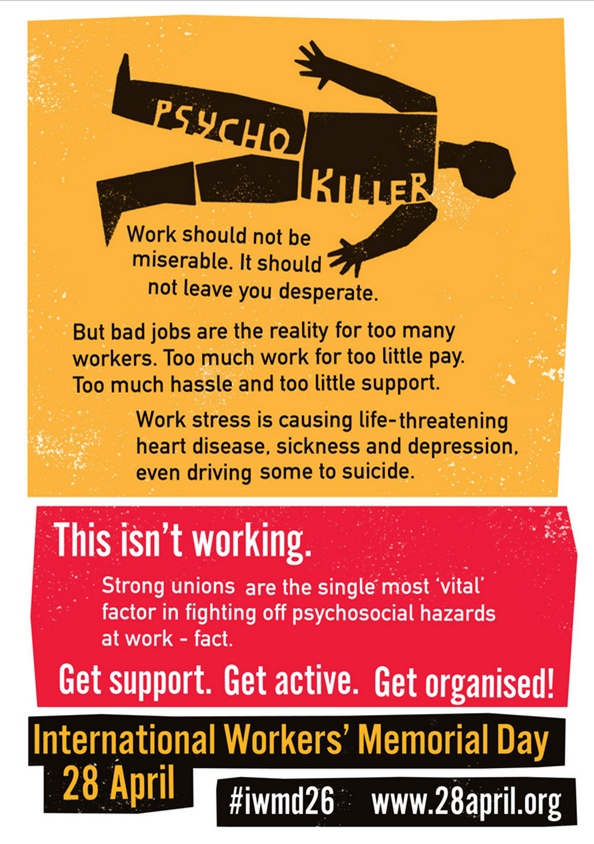
Global: Psychosocial hazards at work – Hazards magazine poster for International Workers’ Memorial Day

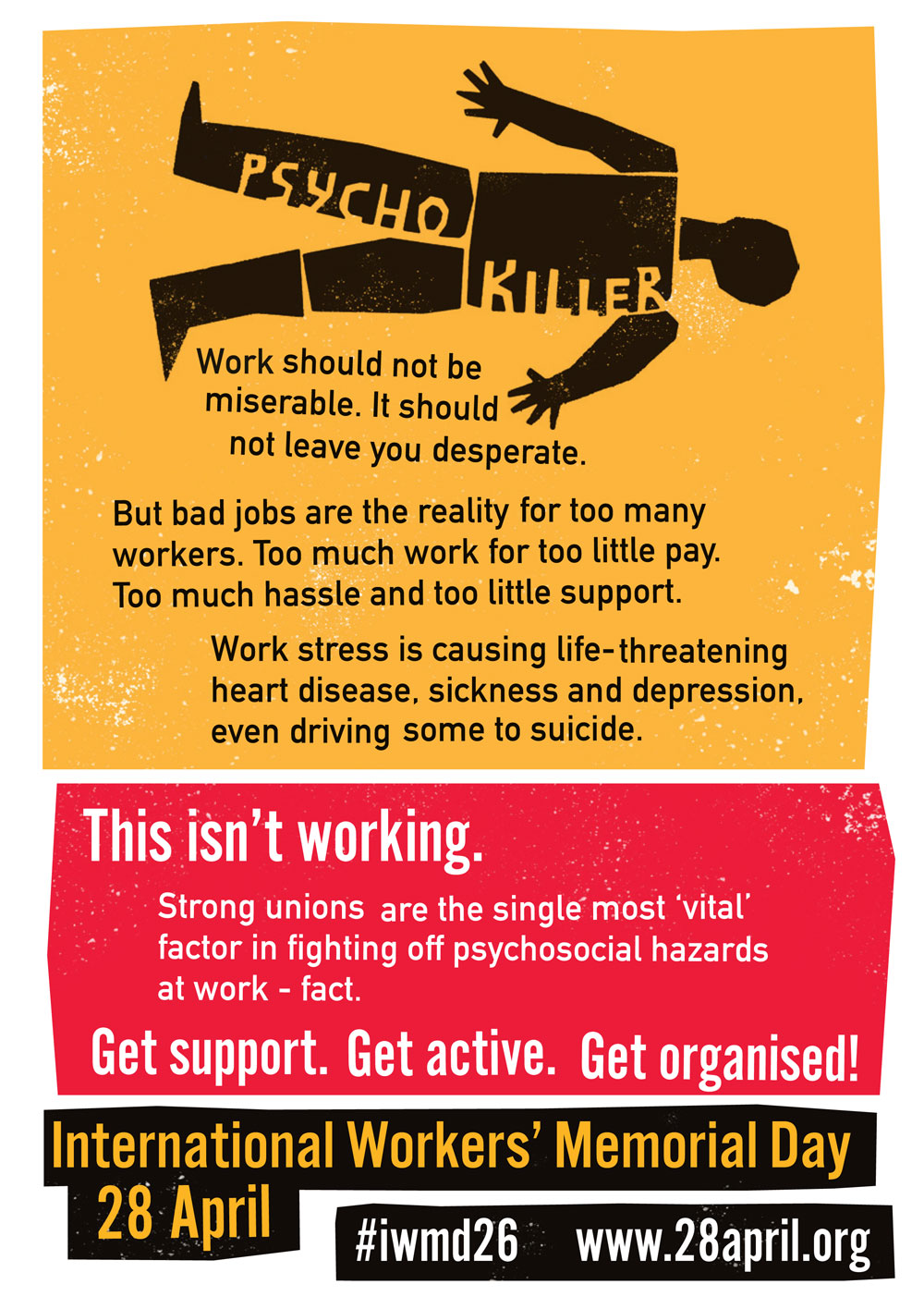
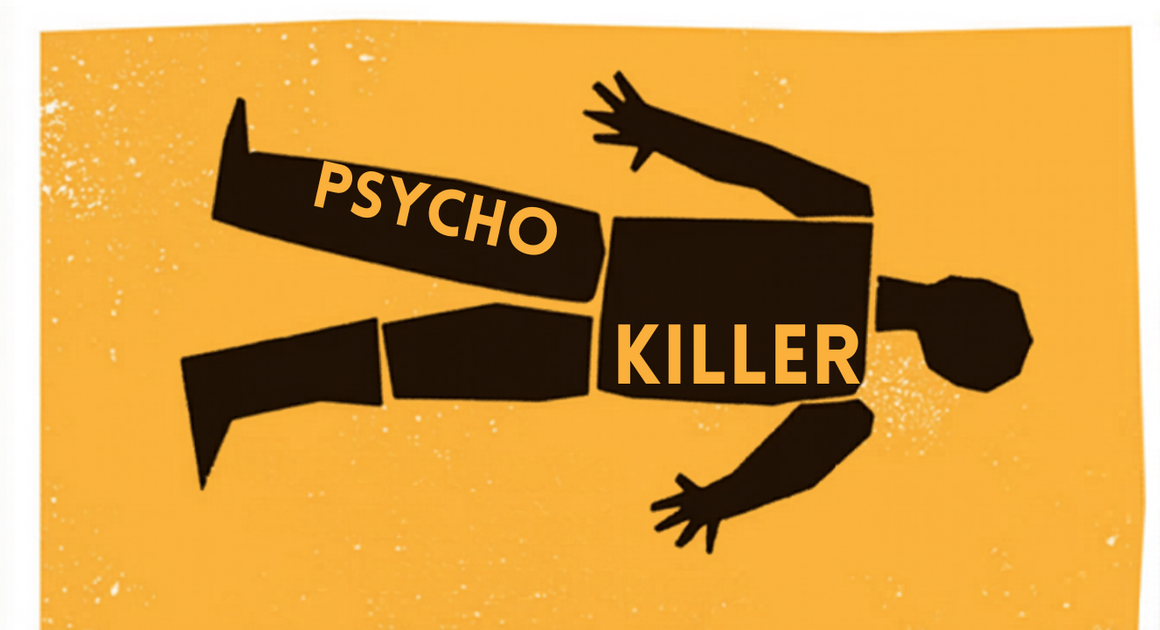
Psycho killer
Work should not be miserable. It should not leave you desperate…

Get support. Get active.
Get organised!

Download the poster from Hazards Magazine here

Hazards webpages

Australia: 28 April events listing from ACTU

ACTU Centre for Health and Safety Update 2026/15

Good afternoon,

As you would be aware, International Workers’ Memorial Day takes place annually around the world on 28 April – it is the international day of remembrance and action for workers killed, disabled, injured or made unwell by their work.

This year the focus is on psychosocial risks.

You can find details of the various TLC memorial events being held on Tuesday 28 April around the country here, and we encourage you to attend.

Kind regards,

Jenny Holden
Executive Assistant to Assistant Secretary, Liam O’Brien

International Workers Memorial Day – Tuesday 28 April