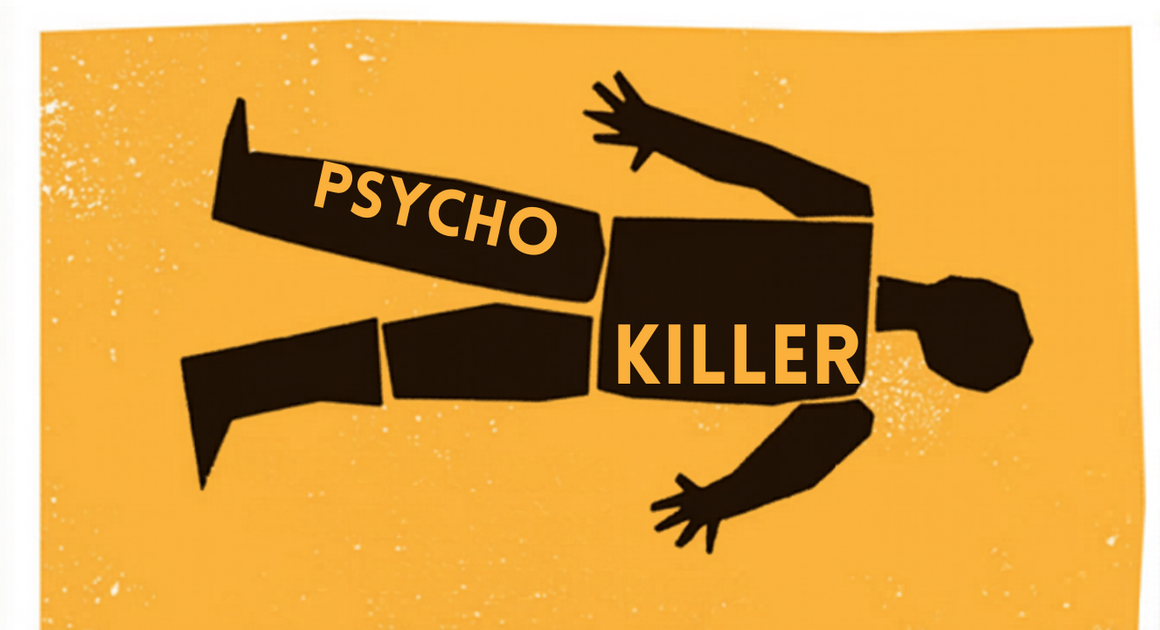
Tag Archives: PSI

Global: Psychosocial risks at work now deadlier than traditional hazards – PSI


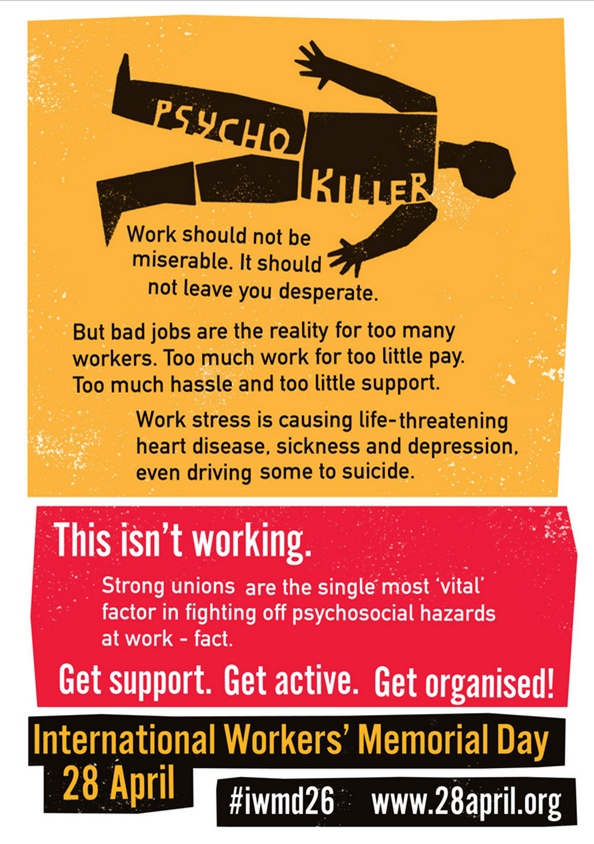
On World Day for Safety and Health at Work, unions warn that stress, long hours and toxic workplaces have become the biggest killers at work. Long hours alone cause 745,000 deaths yearly, with over 840,000 total deaths linked to psychosocial risks, 70,000 work-related suicides and 12 billion days lost to depression and anxiety.

Behind the daily reality of work, millions of working people are facing relentless pressure: long hours, job insecurity, impossible targets and toxic workplace cultures. These are not just bad jobs – they are dangerous jobs. Stress, anxiety and burnout are now causing more harm globally than traditional workplace hazards such as chemicals or dust.

A new ITUC report “Tackling Psychosocial risks at work: how stresses and strains can kill workers and how unions can save them” shows the scale of the crisis:

  • Long working hours alone are responsible for around 745,000 deaths each year.
  • There are at least 70,000 work-related suicides annually.
  • 12 billion working days are lost every year due to depression and anxiety.
  • Burnout affects around one in five workers globally.
  • Psychosocial risks are linked to over 10 per cent of cases of heart disease, depression and suicides.
The International Labour Organisation (ILO) has also published a ground breaking report titled “ The psychosocial working environment: Global developments and pathways for action” that sheds light on the global epidemy of PSR at work. It shows that:

  • more than 840,000 people die each year from health conditions linked to psychosocial risks, such as long working hours, job insecurity, and workplace harassment. These work-related psychosocial risks are mainly associated with cardiovascular diseases and mental disorders, including suicide.
  • 35 per cent of workers work more than 48 hours per week
  • 23 per cent of workers globally have experienced at least one form of violence or harassment in their working life, with psychological violence being the most prevalent at 18 per cent
  • nearly 45 million disability-adjusted life years (DALYs) are lost annually, reflecting years of healthy life lost due to illness, disability, or premature death, and are estimated to result in economic losses equivalent to 1.37 per cent of global GDP each year.

The root causes of a poor psychosocial working environment

Psychosocial risks depend on three interrelated levels of factors that shape the psychosocial working environment:

  • the nature of the job itself, including demands, responsibilities, alignment with workers’ skills, access to resources, and the design of tasks in terms of meaning, variety, and skill use.
  • how work is organized and managed, covering role clarity, expectations, autonomy, workload, work pace, and supervision and support.
  • the broader workplace policies, practices and procedures that govern work. These include employment and working time arrangements, the management of organizational change, digital monitoring, performance and reward processes, OSH policy and management systems, procedures to prevent violence and harassment at work, and mechanisms for genuine worker consultation and participation.

Psychosocial risks are the most pressing OSH issue in public service jobs

According to a PSI global survey on OSH risks among public service workers, with 54 affiliates responding from 32 countries across all continents and PSI sectors and professions, psychosocial risks—including work-related stress and mental health—are identified as the most pressing workplace issue (75% of respondents). These are followed by understaffing and workload pressure (67.3%), workplace violence and harassment (55.8%), and long working hours (40.4%). Notably, all four of the highest-rated OSH risks identified by public service unions fall within the broader category of primary or contributing factors to psychosocial risks.

PSI will review and discuss priorities and actions related to psychosocial risks in public services during the next PSI Global OSH Network meeting on 22 September 2026.

Question: Which of the following OSH issues are most urgent in the sector(s) your union represents?

Source: PSI OSH Global Network Survey 2025-2026

What can be done to address psychosocial risks at work?

The ILO emphasizes that psychosocial risks can be prevented through organizational approaches that address their root causes. It also highlights the importance of integrating psychosocial risk management into occupational safety and health systems, supported by social dialogue between governments, employers, and workers.

Across the world, unions are proving that change is possible. Evidence shows that a strong, democratic trade union presence in the workplace is the most effective protection against psychosocial risks, improving workers’ health and economic outcomes.

Trade unions worldwide are calling for:

  • Strong laws to prevent psychosocial risks at work.
  • Full involvement of trade unions in workplace health and safety.
  • Decent work, including secure jobs, fair pay, safe staffing levels and manageable workloads.
  • Recognition of mental health conditions as occupational diseases.

The European Agency for Occupational Safety and Health (EU-OSHA) has also marked World Day for Safety and Health at Work, unveiling a new website for the Healthy Workplaces Campaign 2026-2028 ‘Together for mental health at work’. The website, is an anticipation of the EU-OSHA campaign on psychosocial risks at work that will kick-off in October 2026 and offers a first look at the upcoming campaign’s focus: managing and preventing psychosocial risks and their impact on workers and organisations. The websites carries materials, including the campaign guideflyer and poster, to learn more about how to raise awareness and take action.

Resources

Many resources are available for unions, workers and OSH reps who wish to bring progressive change and tackle psychosocial risks at work:

On 28 April, we the trade unions remember the dead – and fight for the living. Work should not cost lives. It must protect lives, dignity and mental health.

Note: this article draws on written materials from ITUC, ILO and EU-OSHA websites.
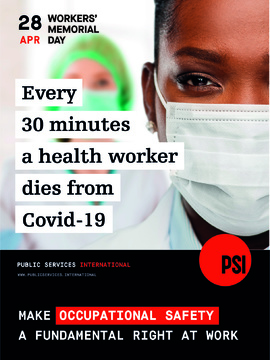
Global: On a day to mourn who dies on the job, Covid-19 looms large – PSI

Each year on this date, labor unions, other advocacy groups and family members mark Workers Memorial Day in recognition of lives lost on the job. In 2019, the most recent year for which data is available, 5,333 workers died of traumatic injury or sudden illness. It’s as if the entire population of Dayton, Kentucky, were erased.

This Workers Memorial Day has a different timbre than previous ones, which have tended to focus on explosions, transportation accidents, falls, trench collapses and other easily measurable events, as opposed to chronic, work-related diseases, which develop over time and take an estimated 95,000 lives a year.

The COVID-19 pandemic has added a fearsome, invisible layer of risk to all of this. And the government agency responsible for workplace health and safety enforcement, which turns 50 today, is under pressure to do something about it.

Since COVID invaded the United States 15 months ago, advocates have urged the Occupational Safety and Health Administration to adopt an emergency temporary standard that would force employers to take steps to quell the spread of the virus, or face penalties. Such standards, intended to address “grave danger,” are exceedingly rare; OSHA has put out nine over the past half-century, none since 1983.

On Monday, an OSHA spokeswoman said the agency had sent a draft standard to the White House Office of Management and Budget for review. It’s unclear how long the review will take, or what will happen as a result.

During the Trump administration, OSHA declined to act aggressively on COVID, insisting that non-binding employer guidance – even in high-risk industries such as health care and meatpacking – was enough. That decision has come under heavy criticism. While the total number of deaths across all industries isn’t known, at least 3,758 health care workers had died of the virus as of April 23, according to National Nurses United, a union with more than 170,000 members.

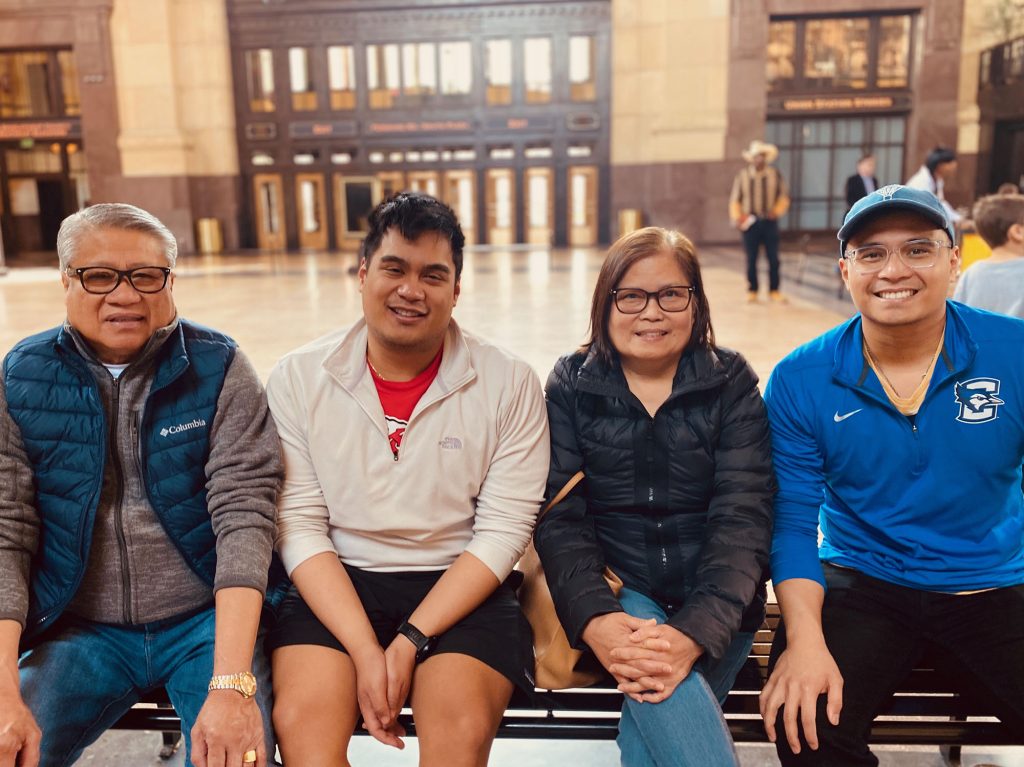
One of them was Celia Yap-Banago, 69, a registered nurse in Kansas City, Missouri, who succumbed on April 21, 2020. She’d fallen ill about a month earlier but had assured her husband and two sons she would make a full recovery. She died in isolation at her home. “We never really thought she would be one of the statistics,” said her eldest son, Jhulan. “Our outlook was, ‘We’ve just got to bite the bullet and wait this one out.’”

Celia Yap-Banago was a nurse who died of complications from COVID-19 on April 21, 2020. Here she is seen at Kansas City’s Union Station on March 7, 2020, with, from left, her husband Amado and sons Josh and Jhulan. (Courtesty of Jhulan Banago)

On January 21, one day after he was inaugurated, President Biden issued an executive order instructing OSHA to decide by March 15 whether to mandate mask-wearing and other measures on an emergency basis. That deadline came and went. In an email to the Center for Public Integrity, agency spokeswoman Denisha Braxton wrote, “OSHA has been working diligently on its proposal and has taken the appropriate time to work with its science-agency partners, economic agencies, and others in the U.S. government to get this proposed emergency standard right.”

OSHA’s leader during the Obama administration, David Michaels, has argued for the move since the beginning of the pandemic. “There has never been a hazard more deserving of an emergency temporary standard,” said Michaels, a public health professor at George Washington University.

That sentiment is shared by the AFL-CIO’s director of occupational safety and health, Rebecca Reindel, who fears there’s a false belief that the virus has been vanquished, with about a quarter of Americans fully vaccinated and 40% having had their first of two shots. “We’re now in a fourth surge,” she said. “We have variants wreaking havoc in some cities, and we know we’re not out of the woods.”

National Nurses United, an AFL-CIO affiliate, says an emergency standard would force hospitals and other employers to stop cutting corners. A recent NNU survey of more than 9,200 registered nurses nationwide found, among other things, that 81% of respondents reported being forced to re-use personal protective equipment and 47% believed their hospitals were short-staffed.

Pascaline Muhindura, one of Yap-Banago’s fellow nurses at Research Medical Center in Kansas City, told a House subcommittee in March that the lack of an OSHA standard and faulty guidance by the Centers for Disease Control and Prevention were creating needless peril. “Over the course of the past year, every single nurse and health care worker in my unit has contracted COVID-19,” Muhindura testified. The hospital’s owner, HCA Healthcare, “has failed to provide the N95 respirators and other workplace protections that my colleagues and I needed to do our jobs safely,” she said.

In a statement to Public Integrity, HCA Healthcare spokeswoman Christine Hamele wrote, “Our frontline caregivers have shown unwavering commitment throughout the pandemic, and we have followed or exceeded CDC guidance to protect them. This includes universal protections requiring all staff in all areas to wear masks, including N95s … While labor unions continue to attack hospitals across the country, we remain focused on protecting our colleagues and caring for our communities.”

At the same March hearing, Manesh K. Rath, a lawyer who represents companies and trade groups in occupational safety and health cases, argued against an emergency temporary standard, saying employers had made “a variety of interventions” to slow transmission of COVID and didn’t need the government to tell them what to do. Emergency standards are “immutable and ill-adapted to evolving conditions,” he said, citing a rule issued by California, which runs its own workplace safety program, that was “hastily approved” and had to be clarified several times.

The state regulatory agency, known as Cal/OSHA, makes no apologies for such adjustments. The standard “will continue to evolve to address changes in the availability of vaccines and public health guidance from the CDC and the [California Department of Public Health],” Cal/OSHA spokeswoman Erika Monterroza wrote in an email. As of April 5, she wrote, the agency had cited companies for 503 COVID-related violations and proposed penalties of more than $4.6 million. (Cal/OSHA’s chief, Douglas Parker, has been nominated by Biden to lead federal OSHA.)

Federal OSHA, whose inspection force was gutted by Trump, has citedsome employers using standards governing respiratory protection, recordkeeping and illness-and-injury reporting, and under the so-called general duty clause of the Occupational Safety and Health Act, a catchall that requires employers to provide workplaces “free from recognized hazards that are causing or are likely to cause death or serious physical harm.” As ofJanuary 14, the agency had issued citations after 315 workplace inspections for the virus and proposed penalties of more than $4 million, according to a recent report by the Congressional Research Service.

If OSHA were to issue an emergency temporary standard, it would take effect immediately after publication in the Federal Register and last for six months, after which the agency would be expected to propose a permanent standard. Court challenges by industry, however, would seem inevitable and have proven effective. Of the nine emergency standards issued since 1971, two were vacated in part or in whole after judicial review and three were stayed, the Congressional Research Service reported.

Whatever OSHA does will come too late for Celia Yap-Banago and thousands of other fallen workers. Jhulan Banago, 29, remembers his mother as someone who would initially appear shy but relished her work and “loved to get in people’s business.” Born and trained as a nurse in the Philippines, she had lived in Kansas City since the early 1980s. When she got sick last year, she was pondering retirement – not too seriously, Jhulan believes – so she could travel with her already-retired husband, Amado.

Her symptoms started with a slight fever. Fatigue, a higher fever and breathing difficulties followed. She never felt the need to be hospitalized, however, and was tended to at home by her family. Jhulan found her unresponsive in her bedroom around dinner time on April 21 – “about 25 minutes after she said she’d be fine.”

Global: Respect Occupational Health and Workplace Safety as Fundamental Rights at Work – PSI

Baba Aye

We remember the workers who have died at work every April 28 and rededicate ourselves to fight like hell for the living.The Covid-19 pandemic has further highlighted the critical importance of workplace safety for the physical and mental health of workers.

  • Read this in: ENFR • ES

The health worker death toll due to the pandemic is at least 17,000. This means more than one health worker dies every 30 minutes. Workers across all other sectors have also been impacted to different extents.

“Every 12 seconds, there is a work-related death somewhere in the world”

Millions of workers continue to die due to lack of adequate workplace safety. Every 12 seconds, there is a work-related death somewhere in the world. Many more suffer chronic or acute diseases. Stress and burnout also contribute significantly to undermining the mental health of overworked and often underpaid working people.

This worrisome situation must stop. Despite the formal inclusion of occupational safety and health as a core aspect of the decent work concept, it is not yet an International Labour Organisation (ILO) fundamental right at work (FRAW).

ILO’s recognition of workplace safety as a key FRAW would lead to its inclusion along with freedom of association, the right to collective bargaining and conventions against child labour and forced labour as components of the Fundamental Principles and Rights at Work (FPRW). In remembering the dead we will fight to win this recognition today, and until victory.

Download the poster


Global: PSI statement on Workers’ Memorial Day [Video]

Continue reading Global: PSI statement on Workers’ Memorial Day [Video]

Global: Safe Workers Save Lives – PSI

Coronavirus is a deadly threat to frontline public service workers – And in particular, our members in the health sector

Safe Workers Save Lives

We rely on them to save countless lives – but for them to be able to do their job, governments across the world must take stronger action now:

  • We need sufficient Personal Protective Equipment (PPE) and training so we can stay healthy while saving lives.
  • We need targeted measures to support health workers who will be working incredibly long hours: care must be provided for their children and other dependents too.
  • We need provisions for home working, paid sick leave, emergency unemployment benefits, and above all, free public healthcare for ALL.
  • We need well-staffed and resourced public health systems, equipped to respond to public health emergencies.

The ongoing Coronavirus outbreak is exposing the vital need for quality public services – especially well-staffed, resilient public health systems.

This is a matter of life and death

Video

Nurse George Poe Williams watched colleagues die as Ebola decimated the Liberian health workforce. Now, he has a message for governments around the world facing the #CoronaVirus: #SafeWorkersSaveLive. Join PSI’s Campaign now at peopleoverprofi.it

Safe Workers Save Lives

What can I do?

  • Fill in our survey and upload materials, resources and strategies for workers and unions dealing with the virus outbreak.
  • Share stories, photos, videos and testimonies from the front lines of the fight against the virus
  • Download our Poster to display at your workplace or share with your members.
  • Sign our petition below for Personal Protective Equipment and training for all workers who need it.
  • Browse our library of materials on COVID-19 for workers and unions.

What can unions do?

  • Fight for the active involvement of trade unions in government decision-making to safeguard workplace safety and health and ensure the costs of this crisis are not borne by the working class.
  • Contribute to policies which ensure all workers, including informal sector workers, casual or sub-contracted workers, are provided sufficient sick-pay and leave allowances for any necessary quarantine or when their workplaces are temporarily closed down to curtail transmission of the infection.
  • Push for the ILO guidelines on decent work in public emergency services to be adopted at the national level, to safeguard workers on the front line, as well as ILO Conventions 155, 187 and ILO Recommendations 194, 197, 171 and Protocol to Convention 155.
  • Stand up for the rights of migrants and refugees as part of the national COVID-19 response and combat all forms of xenophobia and racism.

https://publicservices.international/campaigns/safe-workers-save-lives?id=10633&lang=en