Tag Archives: Asia-Pacific

Asia-Pacific: It’s time to address psychosocial hazards in a changing world of work | ILO

To mark World Day for Safety and Health at Work, Kaori Nakamura-Osaka, International Labour Organization Assistant Director-General and Regional Director for Asia and the Pacific, calls for stronger action to protect workers from psychosocial hazards.

A delivery rider works 14 hours a day to meet algorithm-driven targets. A factory worker quietly endures relentless pressure and harassment. A middle-aged manager pushes away thoughts of suicide resulting from stress.

These are not isolated stories. They are signals of a deeper crisis, one that is too often invisible, unspoken and underestimated: the impact of psychosocial hazards on workers.

This 28 April, the World Day for Safety and Health at Work calls global attention to psychosocial factors that influence health at work.

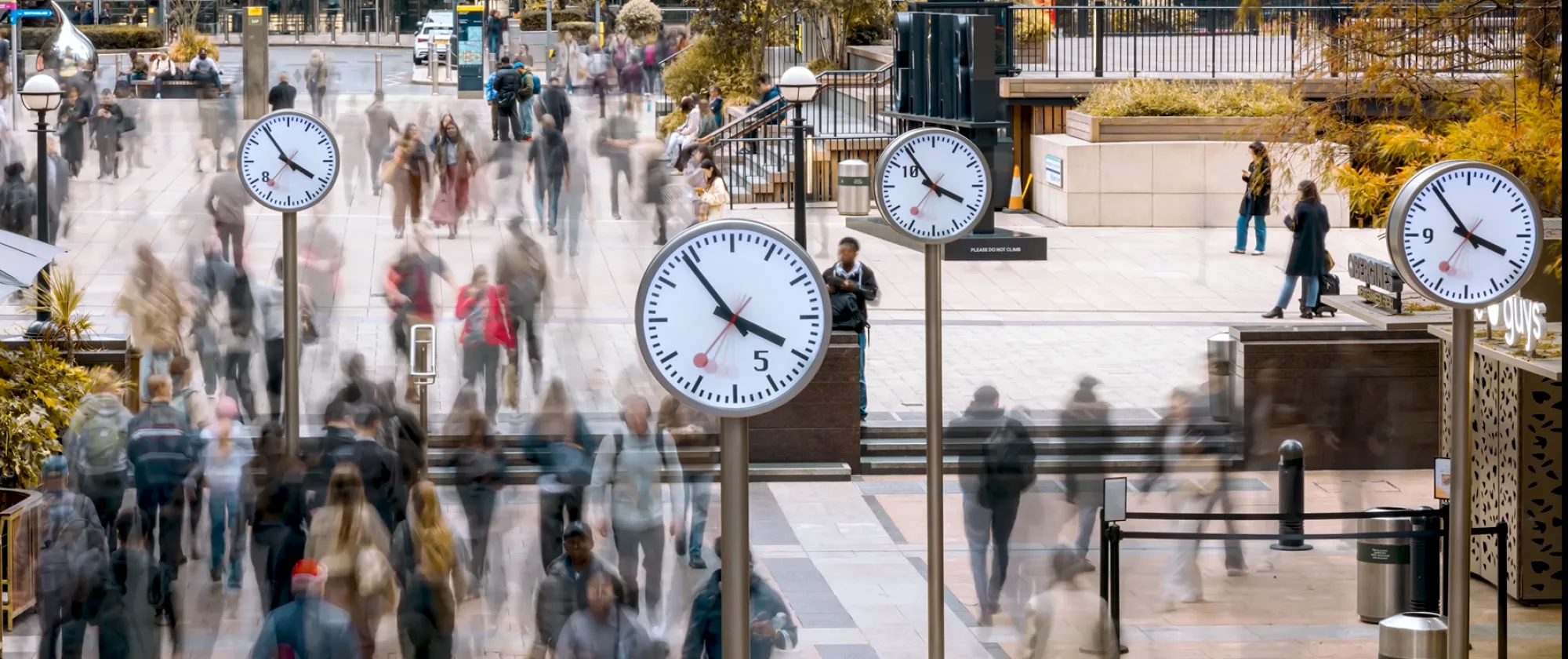
The impact of physical work-related hazards such as manual handling of heavy loads or working at heights are well recognised and understood. Psychosocial hazards are invisible but just as dangerous.  Long working hours, workplace stress, violence and harassment, low pay and lack of job security – to name but a few – can all take a toll on both the physical and mental health of workers.

A new International Labour Organization (ILO) report, The psychosocial working environment: Global developments and pathways for action highlights the scale of the impact.

It reveals that work-related psychosocial factors are responsible for more than 840,000 deaths annually due to associated cardiovascular diseases and mental disorders and lead to the loss of nearly 45 million disability-adjusted life years (DALYs) each year.

Long working hours are highlighted as a critical psychosocial risk factor associated with increased risk of cardiovascular disease and stroke. In Asia and the Pacific, the burden is especially significant with nearly half of workers in the region working more than 48 hours per week, substantially higher than in other parts of the world.

The report also recognises the implications of the changing world of work on the psychosocial work environment. Digitalization and the use of artificial intelligence are transforming how tasks are coordinated, monitored and assessed. New forms of employment, including platform work, varied contractual arrangements and the expansion of remote and hybrid work, are redefining supervision, expectations and working time. While these developments may create opportunities to strengthen the psychosocial working environment, they may also exacerbate psychosocial risks.

The true extent of the problem is still not fully understood. Data remains fragmented and many countries lack consistent systems to identify psychosocial hazards and address their risks.

Stigma continues to silence workers who might otherwise speak out. This silence is one of the biggest barriers we face. Many fear the negative career consequences of talking about stress, burnout, anxiety or depression at work. The result is that problems remain hidden until they become crises.

But there is also reason for cautious optimism. Governments, employers and workers across the region are increasingly recognizing that psychosocial hazards represent a major threat to workers’ safety and health as well as organizational productivity and broader economic performance.

We are seeing this shift reflected in policy. For instance, when China revised the Work Safety Law in 2021, mental health at work was formally incorporated into employers’ statutory obligations. The revision requires employers to strengthen psychological aspects in occupational health services.  Meanwhile, in 2024, when China revised the Classification and Catalogue of Occupational Diseases, occupational mental health disorders were included as occupational diseases for the first time.

Other examples across the region include Japan’s current national occupational safety and health programme which prioritizes the prevention of overwork and mental health problems. The Republic of Korea is expanding support through workers’ health centres and requiring rest facilities. Australia and New Zealand have integrated mental health into broader national strategies, while countries such as Malaysia and the Philippines are strengthening legal frameworks to address psychosocial risks at work.

The ILO’s new report highlights a simple but powerful truth: psychosocial risks are not inevitable. They arise from identifiable aspects of work, excessive demands, lack of control, poor support and unfair treatment. These can all be changed and this means prevention is possible.

Across Asia and the Pacific, promising practices are already emerging. In Singapore, tools such as iWorkHealth help companies assess workplace psychosocial factors and promote well-being. In Malaysia, guidelines on psychosocial risk management support employers in identifying and addressing risks.

For workers in every sector, psychosocial factors at work can make the difference between a job that supports well-being and one that undermines it. Creating such environments requires commitment from all sides. Governments must strengthen policies and data systems. Employers must take responsibility for how work is organized and managed. Workers must be able to participate, speak up and be heard. Social dialogue is essential to making this happen.

The message for Asia and the Pacific is clear: the region’s future depends not only on how much people work, but on how work is experienced every day. Behind every statistic is a worker trying to cope, to provide, to endure. Managing psychosocial risks means ensuring that work does not come at the cost of health, dignity or life itself.

A safe and healthy working environment is a fundamental principle and right at work. Making that a reality, is a challenge we must meet.
https://www.ilo.org/resource/article/it%E2%80%99s-time-address-psychosocial-hazards-changing-world-work

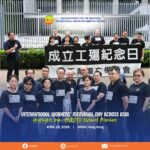
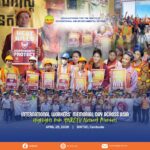
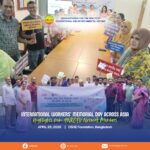
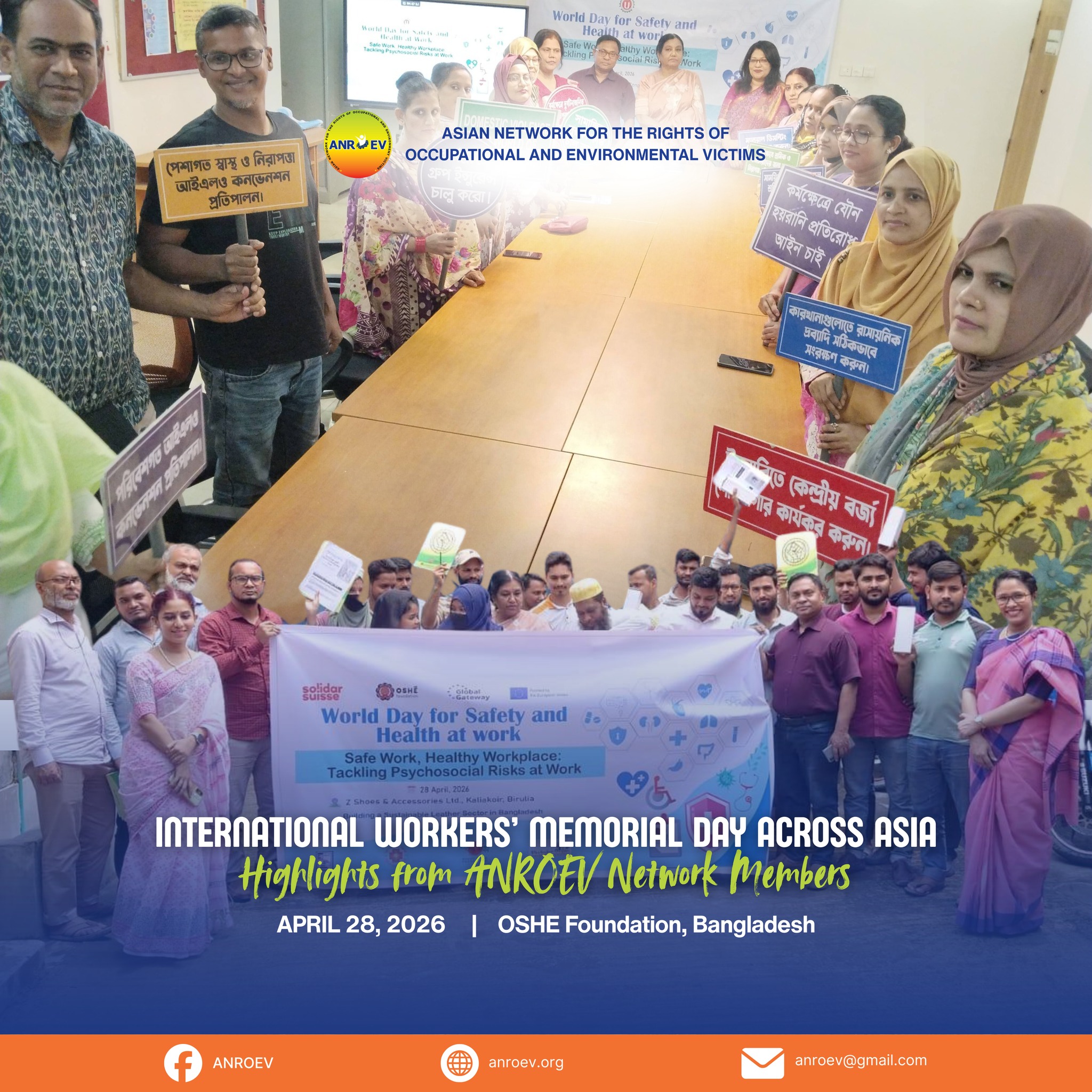
Asia-Pacific: ANROEV members across the continent mark 28 April

Across Asia, members of the ANROEV network came together in different ways, but with one shared purpose: to remember workers whose lives were lost, and to keep fighting for those still at risk.
From tributes and testimonies to actions and collective calls for safer workplaces, these commemorations show that remembrance is not passive — it is a commitment.
Swipe through to see how each organization honored IWMD 2026 in their own countries. 📸
Let these moments remind us: our work does not end with remembrance. We carry it forward.
Remember the dead. Fight for the living.

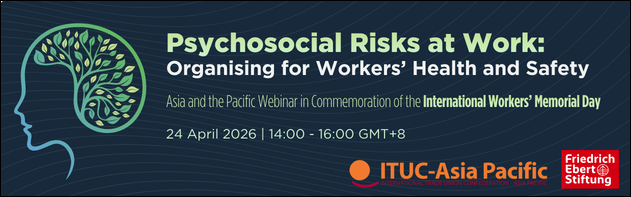
Asia-Pacific/Philippines: ITUC IWMD webinar – psychosocial risks at work: organising for workers’ health and safety

In commemoration of International Workers’ Memorial Day (IWMD) on 28 April 2026, ITUC-Asia Pacific, with support from FES Philippines, warmly invites all affiliates to join a regional webinar on psychosocial risks and organising for workers’ safety and health.

Across the region, many workers face growing pressures at work – from excessive workloads and unpredictable hours to harassment, job insecurity, isolation, and digital surveillance. These conditions can harm workers’ health and well-being, leading to stress, anxiety, burnout, and other psychosocial harms. Psychosocial risks are often felt most by workers already facing discrimination and exclusion, including women, migrant workers, young workers, LGBTIQ+ workers, Indigenous workers, workers with disabilities, and those in informal and platform economies.

In this context, this webinar will bring together unions across the region to share experiences, highlight organising strategies, and discuss how addressing psychosocial risks can strengthen worker protection and union action.

This two-hour session is designed to be highly interactive, ensuring that participants are not just listeners but active contributors. The webinar will include:

  1. Live interactive activities to capture workers’ experiences and perceptions of psychosocial risks in real time
  2. Union voices from different sectors and contexts sharing concrete organising experiences addressing psychosocial risks and their impacts on workers and workplaces
  3. Small breakout discussions where participants can exchange experiences and reflect on organising opportunities around psychosocial risks
  4. Collective reflection and synthesis to identify key demands, organising lessons, and messages for the regional IWMD campaign

Hearing from workers across different sectors and contexts will help deepen our understanding of how psychosocial risks affect workers and workplaces and strengthen our collective efforts to ensure safer and healthier working conditions for all.

REGISTER here: ITUC Meeting Registration – Zoom

Asia/Pacific: 28 เมษา: จดจำแรงงานที่ถูกหลงลืม

ในรายงานขององค์การแรงงานระหว่างประเทศ (ILO) ที่เผยแพร่ในเดือนพฤศจิกายน พ.ศ.2566 เรียกร้องให้คนหันมาสนใจเรื่องสภาพแวดล้อมในการทำงานที่ปลอดภัยมากขึ้น A Call for Safer and Healthier Working Environments  มีเนื้อหาที่ตั้งข้อสังเกตดังนี้

จากประมาณการณ์ตัวเลขล่าสุดที่ทางไอแอลโอได้จัดทำ โดยนับสถิติย้อนหลังถึงพ.ศ. 2562 พบว่ามีคนทำงานกว่า 395 ล้านคนทั่วโลกได้รับบาดเจ็บที่เกี่ยวเนื่องกับการทำงานกรณีไม่ร้ายแรงจนถึงขั้นเสียชีวิต นอกจากนี้ ยังประมาณการณ์ว่าตัวเลขคนทำงานที่เสียชีวิตด้วยเหตุปัจจัยต่างๆ อันเกี่ยวเนื่องกับการทำงานอยู่ที่ราวๆ 2.93 ล้านคน เพิ่มขึ้นมากกว่า 12 เปอร์เซ็นต์จากสถิติปีพ.ศ.2563

ข้อมูลสถิติโดยประมาณการณ์นี้เป็นเครื่องเตือนใจอย่างดีในแง่ที่ว่าคนทำงานยังต้องประสบกับอาการบาดเจ็บขั้นร้ายแรง โรคภัยต่างๆ รวมถึงความเสี่ยงที่จะเสียชีวิตระหว่างทำงาน  นอกเหนือไปจากการเรียกร้องให้มีการบังคับใช้มาตรการต่างๆ เพื่อคุ้มครองคนทำงาน  สร้างหลักประกันด้านสิทธิเกี่ยวกับสุขภาพและความปลอดภัยในการทำงานให้เป็นไปตามหลักอนุสัญญาฉบับที่ 155 ขององค์การแรงงานระหว่างประเทศที่เป็นอนุสัญญาสิทธิหลักขั้นพื้นฐาน

More

Indonesia: Building and wood workers’ union federation BWI announces 28 April plans

Global building unions’ federation BWI has announced the 28 April plans of its Indonesia affiliate SERBUK that will hold area-based rallies and a national social media campaign.

Myanmar: Building and wood workers’ union federation BWI announces 28 April plans

Global building unions’ federation BWI has announced the 28 April plans of its Myanmar affiliate. BWFM will hold a candlelit vigil to honour workers killed on the job.

Cambodia: Building and wood workers’ union federation BWI announces 28 April plans

Global building unions’ federation BWI has announced the 28 April plans of its Cambodia affiliate BWTUC.

BWTUC plans to hold a tribute rally and news conference based around the issue of building collapses. They intend to create awareness of the severity of the issue of building collapses in Cambodia and the importance of regulated occupational health and safety during construction projects. BWTUC also wishes to stress  the importance of government work safety laws and policies, and also insists companies that have signed a safety agreements with BWTUC  implement those policies immediately.


Nepal: Building and wood workers’ union federation BWI announces 28 April plans

Global building unions’ federation BWI has announced the 28 April plans of its Nepal affiliates BWI-NAC (CUPPEC, CAWUN, ANCWU).  The affiliates will be running work safety awareness training for the IFI Projects’ Cadre .

India: Building and wood workers’ union federation BWI announces 28 April plans

Global building unions’ federation BWI has announced its India affiliates 28 April plans. These include meetings, vigils and training sessions.

BMS, Gujarat OHS Conference for Construction Workers
AHPWDIPHCWU, Himachal Pradesh Health and Safety Seminar for Construction Workers (Specific focus on IFI Projects)
CFBWU, Uttar Pradesh Public Awareness Meeting on OHS
INCWF, Chhattisgarh OHS Awareness Meeting at Selected Cement Plants (Shree Cement & ACC)
DANMU, Delhi OHS Sensitisation and Candle Light Vigil in Workers’ Community
MAMU, Delhi OHS Awareness and Sensitisation Program
TKTMS, Tamil Nadu OHS & TU Rights Meeting (for Chennai Metro Rail Workers)
AHBWU, Rajasthan OHS Awareness Meeting and Candle Lighting

Australia: RSVP for International Workers’ Memorial Day, Melbourne, 2022

Every year, Victorian Trades Hall Council hosts a memorial service to remember those Victorians who lost their lives at work. This year’s memorial service will be held in person at 10:30AM at Trades Hall. RSVP here or by following the link below.

RSVP Here

Please join us on the 28th of April for International Workers Memorial Day 2022 to commemorate the workers we’ve lost in the past year. If you aren’t able to attend in person, the event will also be live-streamed through the Victorian Trades Hall Council Facebook page.

The ceremony will include a minute of silence at 11am and an opportunity to lay wreaths.

We hope to see you there.

Reece Gittins – We Are Union: OHS Reps
http://www.weareunion.org.au/