Category Archives: 2026 UK

UK: Take part in International Workers’ Memorial Day – TUC briefing, campaign pack and events listing

Every year more people are killed at work than in wars. Most don’t die of mystery ailments, or in tragic “accidents”. They die because an employer decided their safety just wasn’t that important a priority.

International Workers Memorial Day (IWMD) 28 April commemorates those workers.

Attend a local #IWMD event

Trade unions and organisations are putting on #IWMD events across the country. Find one near you or if you’re organising one add it to our list.

Hold a one minute silence

Join union activists across the country by taking part in a one minute silence at 12.00 to remember all those who have died because of their work.

Share your tributes

Honour those we have lost and pay respects by submitting a tribute on the International Workers Memorial Wall

Spread awareness for #IWMD

Use the hashtag #IWMD on social media channels to help spread the word about the day and why you’re getting involved. We have produced a range of graphics for you to use and share. This campaign pack includes a selection of images to use on social media, and posters for you to print at home or print professionally.

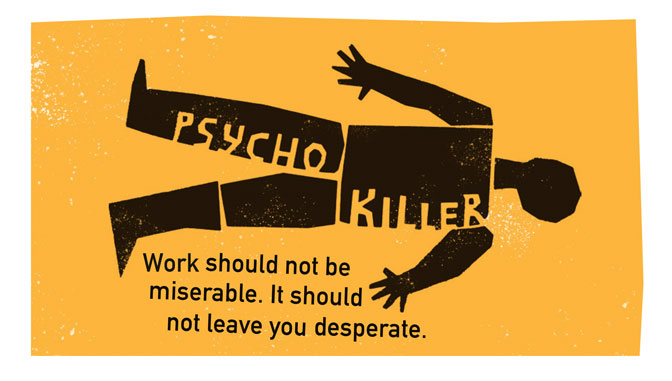
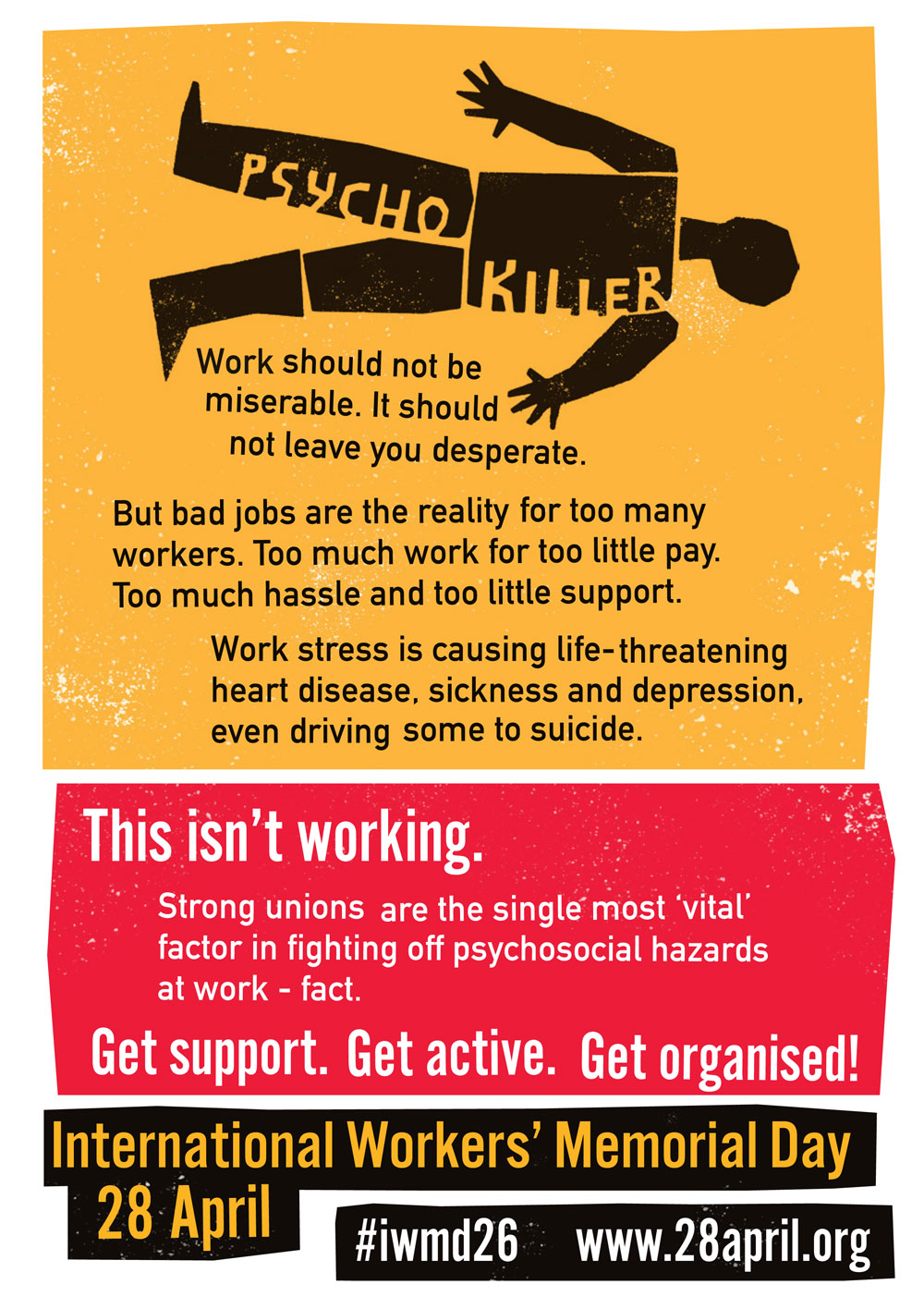
Global: Psychosocial hazards at work – Hazards magazine poster for International Workers’ Memorial Day

Psycho killer
Work should not be miserable. It should not leave you desperate…

Get support. Get active.
Get organised!

Download the poster from Hazards Magazine here

Hazards webpages

UK: Overworked NHS staff report stress, sickness, and a reliance on antidepressants, says UNISON

UNISON National
In the run up to psychosocial hazards-themed International Workers’ Memorial Day health service union UNISON has said health workers need better support to cope with the pressures they face.

A third of NHS employees have taken time off for mental health issues in the past year with many staff talking about reaching “breaking point”, according to new findings released by UNISON on 15 April 2026.

A survey of health workers, including nurses, occupational therapists and paramedics, has also found more than four in five (85%) have experienced stress at work over the past 12 months.

Staff say stress has had a significant impact on their mental and physical health, with symptoms including anxiety, PTSD, panic attacks, migraines, and sleep disturbance.

Some have experienced high blood pressure, stress-related vomiting, dizziness and breathlessness, according to the findings of the union survey. One NHS worker even reported suffering a heart attack due to understaffing and high workloads.

Many described reaching breaking point, feeling exhausted and overwhelmed by sustained levels of stress. This has affected their relationships and family lives, with some reporting suicidal thoughts, UNISON says.

NHS workers also described taking antidepressants and beta-blocker drugs, as well as undergoing cognitive behavioural therapy and counselling.

UNISON says the findings – based on responses from more than 19,000 staff and released during the union’s annual health conference in Edinburgh – paint a grim picture when the NHS workforce is under pressure to reduce waiting lists.

Almost a quarter (23%) didn’t tell their employer the real reason for their absence from work. Of those, most said they did not feel their manager would support them, while concerns about stigma and not wanting colleagues to know were also common.

Counselling, medication or other forms of support had been sought in the past year by more than one in four (28%) of those under stress. Almost two thirds (65%) of those who had taken time off for stress reported feeling that they were under pressure to come to work, despite feeling mentally unwell. This adds strain to an already overstretched workforce, UNISON says.

The Covid inquiry into the impact of the pandemic on the UK’s healthcare systems highlighted the “almost superhuman efforts” of NHS staff despite the significant and long-lasting impact on their mental health and wellbeing.

Ongoing pressures and staff shortages since the pandemic are only adding to the problem, says UNISON.

UNISON head of health Helga Pile said: “Such high levels of stress in the NHS should be ringing alarm bells. Staff who care for others are being pushed to the point that they’re becoming unwell themselves.

“There should be no stigma around mental health, especially in healthcare. Staff need proper support to cope with the pressures they face.

“Government and employers must do more to help staff with their mental health, including providing fast-track access to treatment and moving away from punitive and counter-productive absence policies.

“They must also act to ensure the NHS is safely staffed to meet the growing needs of communities.”

Notes to editors:
– The survey was conducted from 27 January to 27 February 2026 and received 19,356 responses from staff working in healthcare across England, Scotland and Northern Ireland including nurses, paramedics, pharmacists, admin workers and cleaners.
– Staff experiences recorded by the survey include:
“Stress has brought on an eating disorder, and my mental health has suffered tremendously.” Health care assistant, Yorkshire
“I’ve started to take a high dose of antidepressants. I struggle to sleep. It affects my mood at home with my family. I’ve developed a twitch in my eye which the doctor and optometrist say is down to stress and fatigue.” Admin worker, Yorkshire
“I’m on anxiety medication. I’ve just finished some counselling but may restart in the future.” Mental health nurse, Yorkshire
“I’m on medication, regularly see a psychiatrist and psychologist, and have had to take sick leave.” Nurse, North West
“I’ve been so stressed I had a heart attack before Christmas due to no staff and massive workloads.” Admin worker, North West
“My stress manifested in physical symptoms such as stomach aches, vomiting, shaking and overwhelming anxiety when I walk into work. I also started pulling my hair out and it’s triggered by things such as heavy workloads.” Estates and facilities worker, North West
“I’ve developed depression and anxiety due to work, to the point I had negative thoughts and my GP has prescribed antidepressants. I’m constantly stressed and dread going to work. Constant micromanagement and demands are increasing burnout and anxiety.” Paramedic, London
“I often feel overwhelmed by my workload and struggle to switch off from my job, which has caused constant worry and anxiety. This stress made concentrating difficult and reduced my confidence in carrying out tasks. I also experience fatigue, low mood and have difficulty sleeping, and that’s affected my overall wellbeing and performance at work.” Midwife, London
“I have high levels of anxiety and constantly fear making mistakes due to the workload and staffing issues. I’ve experienced hair thinning, poor appetite, dehydration and urinary infections, because I’m unable to pause for a drink. My immune system is poor because I feel burnout, but I fear taking any time off leads to financial issues.” Nurse, West Midlands
“I underwent counselling to help me deal with my work-life balance. I had an occupational health referral that recommended redeployment to come off the road to help reduce stress, but this wasn’t accommodated on my return.” Emergency ambulance associate, South West
“Work pressure was overwhelming. As the weeks went by, I was getting worse: crying as I drove to work, struggling to cope with daily pressure. I was emotional, not eating or sleeping, lacked confidence, withdrew from social and family events. I struggled to even do grocery shopping. It’s something I hope I never go through again.” Admin worker, East of England
“Stress at work has affected my marriage, my ability to socialise and I feel constantly on the verge of tears.” Clinical support worker, Scotland
“My workload is unrealistic. I’m covering two people’s jobs whilst a colleague is on maternity. There’s very little support from senior management. I’ve been signed off by my GP due to work-related stress and high blood pressure for six weeks. I’m now on medication and looking for other jobs.” Admin worker, Northern Ireland
– UNISON’s annual health conference began on Monday (13 April) and continues until today (Wednesday 15 April) at the Edinburgh International Conference Centre, Edinburgh EH3 8EE. UNISON general secretary Andrea Egan gave the keynote speech on Monday afternoon. Health workers from across the UK have been in attendance to debate a variety of motions including NHS pay, a greener NHS, bank staff, support for migrant workers, mental health, sexual safety, problems with NHS salary scales, and safe staffing.
– UNISON is the UK’s largest union and the largest union in the NHS and in the ambulance sector, with more than 1.3 million members providing public services – in education, local government, the NHS, police service and energy. They are employed in the public, voluntary and private sectors.

UK: Hazards Campaign press release: International Workers’ Memorial Day 28 April 2026

Hazards Press Release: International Workers’ Memorial Day 28 April 2026

PRESS RELEASE: For immediate release
28 April 2026

Workers’ Memorial Day 2026: Remember the Dead. Fight for the Living — Addressing Psychosocial Hazards at Work

On International Workers’ Memorial Day, 28 April 2026, workers and trade unions around the world will come together to remember those who have died, been injured, or made ill because of work — and to demand action to prevent further harm.

In 2026, the global trade union movement, coordinated by the International Trade Union Confederation (ITUC), is marking Workers’ Memorial Day with a focus on the urgent and growing crisis of psychosocial hazards at work, highlighted through its global campaign at: https://28april.org

Psychosocial hazards — including work-related stress, excessive workloads, long and unpredictable hours, job insecurity, bullying, harassment, workplace violence, and the misuse of technology and surveillance — are among the leading causes of work-related ill health worldwide. These risks contribute to mental ill health, cardiovascular disease, burnout, and suicide, yet are preventable. Despite this, they are still too often ignored or treated as individual resilience issues rather than recognised as health and safety failures rooted in how work is organised. The ITUC warns that deregulation, weak enforcement, insecure work, climate-related pressures, and technological intensification are driving a global rise in psychosocial harm.

The long-standing message of Workers’ Memorial Day — “Remember the Dead. Fight for the Living.” — reminds us that behind every statistic is a worker whose life has been permanently changed or cut short by unsafe work, including unsafe systems of work that damage mental health.

Manchester Event

Greater Manchester Hazards Centre will mark International Workers’ Memorial Day with a public event at Lincoln Square in central Manchester on 28 April from 11.30am:
https://gmhazards.org.uk/index.php/event/international-workers-memorial-day-28-april-2026

We will be remembering those we have lost and standing with workers currently experiencing harm caused by work-related stress, pressure, and insecurity. Other events will be held around the country, see:
https://www.megaphone.org.uk/events

Will at Greater Manchester Hazards Centre said:

“Psychosocial hazards are real workplace hazards. Stress, bullying, harassment, overwork, and insecure work are killing workers just as physical dangers are. This Workers’ Memorial Day, we honour those we have lost and recommit ourselves to changing the way work is organised so that it protects, rather than damages, people’s health.”

International Workers’ Memorial Day is also a call for action. In line with the ITUC’s 2026 campaign, Greater Manchester Hazards Centre calls on employers, regulators, and governments to:

  • Explicitly recognise psychosocial hazards as workplace health and safety risks
  • Conduct effective risk assessments addressing work-related stress and mental health
  • Prevent bullying, harassment, violence, and discrimination at work
  • Regulate excessive working hours and unsafe workloads
  • Strengthen enforcement of health and safety legislation
  • Ensure protection for all workers, including those in insecure and outsourced work

Psychosocial harm at work is not inevitable. Strong laws, strong enforcement, and strong unions save lives. On 28 April, we remember those who have died and recommit to fighting for safe, healthy and dignified work for all.

Ends

Notes to Editors

International Workers’ Memorial Day takes place annually on 28 April.

In 2026, the ITUC global theme focuses on psychosocial hazards at work, including stress, working hours, job insecurity, bullying, and the mental health impacts of work organisation.

Campaign resources and statements are available at:
https://28april.org
https://gmhazards.org.uk

Media Contact

Name: Will Starritt
Role: Coordinator
Organisation: Greater Manchester Hazards Centre
Email: William@GMHazards.org.uk
Phone: 0161 884 4229

UK: TUC making preparations across several fronts for 28 April

Dear colleagues,
It’s seven weeks to go until Workers’ Memorial Day (Tuesday 28 April), so I wanted to share with you some of what you can share with reps, activists and Trades Councils to support their activity on the day.
Map of events
Search on our map for a WMD event near you, or you can upload details if you’re organising something yourself. View the events map.

Online memorial wall
Some of these testimonies can be powerful to read out, as examples of union members who lost their lives to work causes. You can also add to the wall. View the memorial wall.

Health and Safety at work timeline
Some history on workplace health and safety in Britain. See the timeline.
Graphics
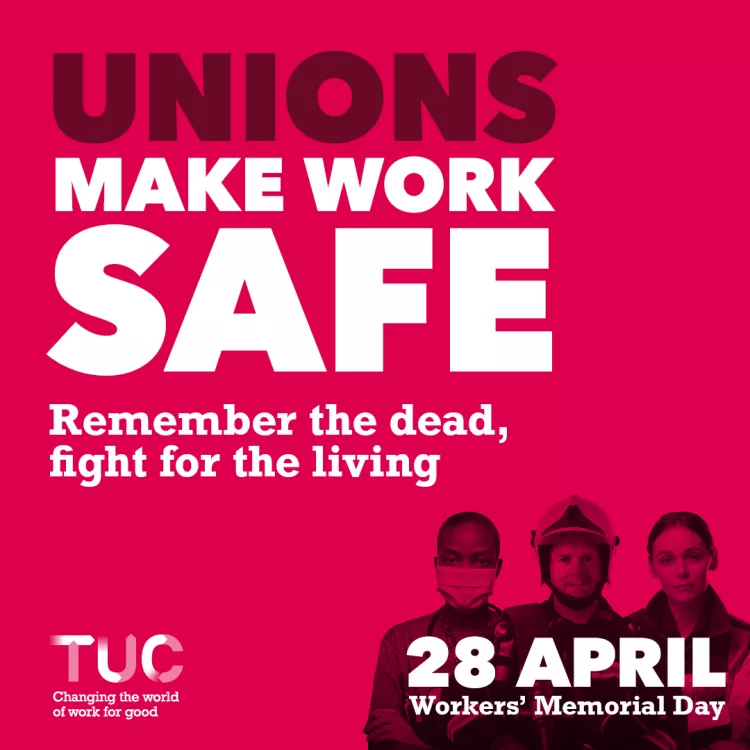
Print the poster for your union noticeboards, or include the banner in your email signature! Find them here.
Memorial Day in Parliament
The All-Party Parliamentary Group on Occupational Safety and Health will be holding a memorial service on the morning of Tuesday 28 April 09:00 – 10:00, inviting MPs and peers to observe a minute silence together, and collect a memorial ribbon to wear for the day. Union members can encourage their MPs to attend the event.
In solidarity,

Shelly Asquith
Lead for Health & Safety
Trades Union Congress