Psychosocial Risks At Work Now Deadlier Than Traditional Hazards
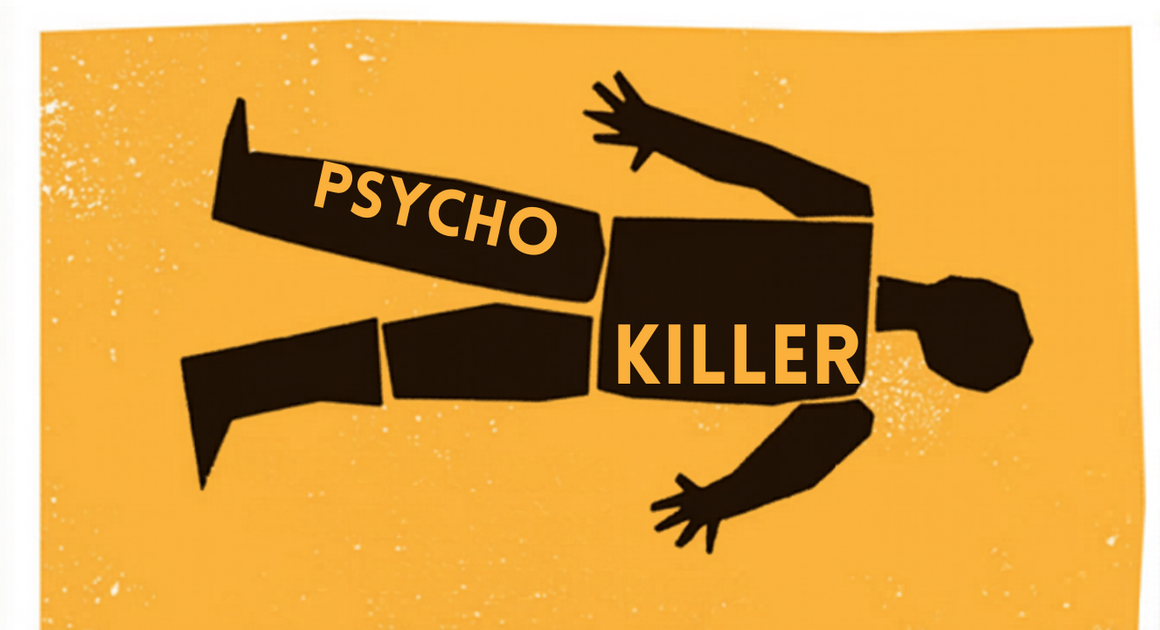
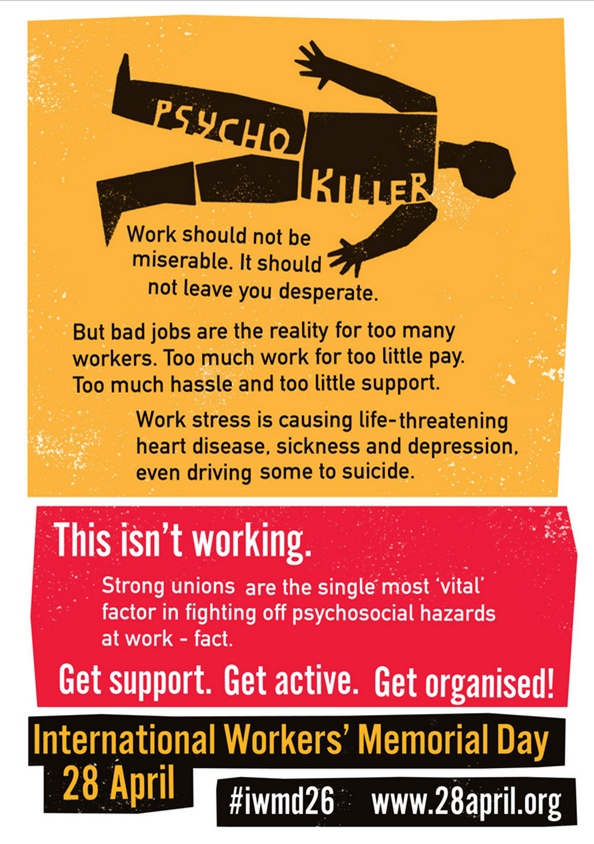
On World Day for Safety and Health at Work, unions warn that stress, long hours and toxic workplaces have become the biggest killers at work. Long hours alone cause 745,000 deaths yearly, with over 840,000 total deaths linked to psychosocial risks, 70,000 work-related suicides and 12 billion days lost to depression and anxiety.
by Daria Cibrario
Behind the daily reality of work, millions of working people are facing relentless pressure: long hours, job insecurity, impossible targets and toxic workplace cultures. These are not just bad jobs – they are dangerous jobs. Stress, anxiety and burnout are now causing more harm globally than traditional workplace hazards such as chemicals or dust.
A new ITUC report “Tackling Psychosocial risks at work: how stresses and strains can kill workers and how unions can save them” shows the scale of the crisis:
- Long working hours alone are responsible for around 745,000 deaths each year.
- There are at least 70,000 work-related suicides annually.
- 12 billion working days are lost every year due to depression and anxiety.
- Burnout affects around one in five workers globally.
- Psychosocial risks are linked to over 10 per cent of cases of heart disease, depression and suicides.
The International Labour Organisation (ILO) has also published a ground breaking report titled “ The psychosocial working environment: Global developments and pathways for action” that sheds light on the global epidemy of PSR at work. It shows that:
- more than 840,000 people die each year from health conditions linked to psychosocial risks, such as long working hours, job insecurity, and workplace harassment. These work-related psychosocial risks are mainly associated with cardiovascular diseases and mental disorders, including suicide.
- 35 per cent of workers work more than 48 hours per week
- 23 per cent of workers globally have experienced at least one form of violence or harassment in their working life, with psychological violence being the most prevalent at 18 per cent
- nearly 45 million disability-adjusted life years (DALYs) are lost annually, reflecting years of healthy life lost due to illness, disability, or premature death, and are estimated to result in economic losses equivalent to 1.37 per cent of global GDP each year.
The root causes of a poor psychosocial working environment
Psychosocial risks depend on three interrelated levels of factors that shape the psychosocial working environment:
- the nature of the job itself, including demands, responsibilities, alignment with workers’ skills, access to resources, and the design of tasks in terms of meaning, variety, and skill use.
- how work is organized and managed, covering role clarity, expectations, autonomy, workload, work pace, and supervision and support.
- the broader workplace policies, practices and procedures that govern work. These include employment and working time arrangements, the management of organizational change, digital monitoring, performance and reward processes, OSH policy and management systems, procedures to prevent violence and harassment at work, and mechanisms for genuine worker consultation and participation.
Psychosocial risks are the most pressing OSH issue in public service jobs
According to a PSI global survey on OSH risks among public service workers, with 54 affiliates responding from 32 countries across all continents and PSI sectors and professions, psychosocial risks—including work-related stress and mental health—are identified as the most pressing workplace issue (75% of respondents). These are followed by understaffing and workload pressure (67.3%), workplace violence and harassment (55.8%), and long working hours (40.4%). Notably, all four of the highest-rated OSH risks identified by public service unions fall within the broader category of primary or contributing factors to psychosocial risks.
PSI will review and discuss priorities and actions related to psychosocial risks in public services during the next PSI Global OSH Network meeting on 22 September 2026.
Question: Which of the following OSH issues are most urgent in the sector(s) your union represents?

Source: PSI OSH Global Network Survey 2025-2026
What can be done to address psychosocial risks at work?
The ILO emphasizes that psychosocial risks can be prevented through organizational approaches that address their root causes. It also highlights the importance of integrating psychosocial risk management into occupational safety and health systems, supported by social dialogue between governments, employers, and workers.
Across the world, unions are proving that change is possible. Evidence shows that a strong, democratic trade union presence in the workplace is the most effective protection against psychosocial risks, improving workers’ health and economic outcomes.
Trade unions worldwide are calling for:
- Strong laws to prevent psychosocial risks at work.
- Full involvement of trade unions in workplace health and safety.
- Decent work, including secure jobs, fair pay, safe staffing levels and manageable workloads.
- Recognition of mental health conditions as occupational diseases.
The European Agency for Occupational Safety and Health (EU-OSHA) has also marked World Day for Safety and Health at Work, unveiling a new website for the Healthy Workplaces Campaign 2026-2028 ‘Together for mental health at work’. The website, is an anticipation of the EU-OSHA campaign on psychosocial risks at work that will kick-off in October 2026 and offers a first look at the upcoming campaign’s focus: managing and preventing psychosocial risks and their impact on workers and organisations. The websites carries materials, including the campaign guide, flyer and poster, to learn more about how to raise awareness and take action.
Resources
Many resources are available for unions, workers and OSH reps who wish to bring progressive change and tackle psychosocial risks at work:
- ILO global video event on Global OSH Day 2026 “Ensuring a healthy psychosocial working environment” (27 April 2026)
- ILO Podcast: ”Psychosocial risks at work, the invisible threat to workers’ health” (28 April 2026)
- ITUC campaign page on Global OSH Day 28 April
- EU-OSHA: Healthy Workplaces Campaign website on mental health at work
- Compilation of OSH resources for PSI unions (September 2025)
On 28 April, we the trade unions remember the dead – and fight for the living. Work should not cost lives. It must protect lives, dignity and mental health.
Note: this article draws on written materials from ITUC, ILO and EU-OSHA websites.