Category Archives: Resources

Global: Call to action – International Workers’ Memorial Day 2026 – BWI

International Workers’ Memorial Day 
28 April 2026 
Intensifying the “Too Hot To Work Campaign”  
From Awareness to Agreements 

On 28 April, International Workers’ Memorial Day, BWI fights for the living and remembers those we have lost.

In 2026, we are intensifying our global Too Hot To Work Campaign while confronting the growing impact of extreme weather events on workers.

Heat stress is no longer a seasonal issue. It is a structural occupational hazard driven by climate change, unsafe production targets, and weak enforcement. At the same time, workers face escalating exposure to extreme weather, heatwaves, storms, floods, wildfires, and unpredictable climate conditions, which threaten their safety and lives. In 2023, the World Health Organisation (WHO) estimated that 250,000 additional deaths would occur each year by 2030 due to climate change. In 2024, the International Labour Organisation (ILO) report said that at least 2.41 billion workers – 71 per cent of the working population – are exposed to excessive heat, resulting in 22.85 million injuries and 18,970 deaths annually.

Workers in construction, building materials, forestry, and related sectors are paying the price.

This year, our priority is clear: move from awareness to enforceable protection.

Affiliates are encouraged to push for binding commitments, including:

  • Collective Bargaining Agreements with heat and climate risk clauses
  • Sectoral or national framework agreements
  • Legal and regulatory reforms
  • Company-level heat and climate protection plans
  • Joint declarations with employers

Where agreements already exist, promote them and use them as models.

Where protections are weak or absent, push for new signatures and stronger commitments.

BWI and its affiliates call for protections that guarantee:

  • The right to stop work in extreme heat or dangerous weather without retaliation, through set maximum temperature limits that account for weather conditions and humidity levels.
  • Paid cooling breaks and adjusted working hours
  • Access to water, shade, ventilation, and protective measures appropriate to weather risks
  • Mandatory heat and climate risk assessments
  • Emergency preparedness and evacuation procedures
  • Income protection when work is halted due to unsafe climate conditions
  • Compensation and long-term support for affected workers

Heat stress is predictable. Climate risks are escalating. Deaths are preventable.

No worker should depend on goodwill. Protection must be written, signed, and enforceable.

Take Action

  • Secure or strengthen agreements
  • Publicise existing CBAs or joint agreements with heat and extreme weather protections
  • Initiate negotiations where no protections exist
  • Mobilise and train workers
  • Conduct toolbox talks and training on heat stress and climate risks
  • Equip safety representatives to identify climate-related hazards
  • Engage governments
  • Push for legally binding national standards and social protection schemes addressing heat and extreme weather risks
  • Call for integrating climate protection into national OSH and adaptation policies.

Share Your Agreements & Action. Showcase union power in action.

Send BWI:

  • Signed agreements
  • Joint declarations
  • CBA clauses
  • National legal commitments
  • Photos and videos from events or mobilisations

Share with your regional coordinator, and your actions will be featured on www.28april.org 

Download IWMD posters.  

#TooHotToWork #IWMD26 #BWI

USA: AFL-CIO 28 April resources available now!

The AFL-CIO’s Workers Memorial Day’s web page in now live, which means you can download stickers, posters and fliers in English and Spanish.

You can also download a toolkit, which includes some important fact sheets and information on deregulation and worker safety and health, the Trump record, etc. There are some English and some Spanish sections to the toolkit. Descargue el Kit de Herramientas (Ingles / Espanol)

This year we will HOLD THE LINE FOR SAFE JOBS/SIGAMOS EN PIE POR EMPLEOS SEGUROS. “Mourn for the Dead, Fight for the Living” stickers are also available.

We are pretty excited about the theme and the artwork this year. State feds/CLCs, faith groups, other community groups and others have already placed orders.

Rebecca Reindel

OHS Director, AFL-CIO

Argentina: Aportes al informe de CSI sobre Riesgos Psicosociales – CTA

En respuesta a la CIRCULAR CSI N.º 04 (2026): Jornada Internacional de Conmemoración de los Trabajadores Fallecidos y Heridos: 28 de abril. Aportes al informe de CSI sobre Riesgos Psicosociales.

La situación de las personas trabajadoras argentinas respecto de los Riesgos Psicosociales, se vuelve cada vez mas compleja. El perfil y las acciones del gobierno nacional suman cotidianamente presión con precarización en aumento, pérdida de puestos de trabajo registrado, caída de la producción y el consumo, salarios en retroceso, aprobación de normativa que ataca a la clase trabajadora y a quienes se encuentran en situación de vulnerabilidad por múltiples factores (personas jubiladas, en situación de discapacidad, mujeres y diversidades, entre otros).

En este contexto, sostener los acuerdos existente dentro de los Convenios Colectivos, referidos a los riesgos psicosociales se vuelve complejo. La reforma laboral propuesta y aprobada por el actual gobierno, también pone en peligro aún mas la salud y seguridad, atacando derechos básicos ya consagrados para quienes trabajamos en Argentina. Condiciones de trabajo tales como el tiempo, la forma de vinculación, la organización de tareas, el trabajo de plataformas, entre otros, profundizan aún mas los riesgos laborales y sus efectos sobre nuestra salud. Seremos cada vez mas esclavxs.

Entre otras cuestiones, la nueva norma elimina la ultraactividad, lo que redundará en la caída de los Convenios Colectivos de Trabajo (CCT) a su vencimiento, generando la perdida de derechos logrados a través de la negociación colectiva, obligando a la renegociación inmediata. Entre las perdidas de derechos, podremos contar los espacios mixtos de SST (Comités, Comisiones), que en nuestro país se encuentran dentro de los CCT, espacios donde se abordan o pueden abordar los riesgos psicosociales o situaciones vinculadas a ellos.

Como marco legal, se encuentra vigente el nuestro país el Convenio 190 de OIT sobre erradicación de la Violencia y el acoso en el mundo del trabajo, ratificado por Ley 27580 en el año 2020.

También contamos con una recomendación del Mercosur sobre el tema: Recomendación CMC 04/23 “Prevención de Riesgos Psicosociales en el Trabajo”

En el 2025, la Superintendencia de Riesgos del Trabajo una Guía para la intervención psicosocial en los espacios de trabajo, de aplicación opcional para los actores del sistema de riesgo argentino, a fin de evaluar y mitigar los denominados riesgos psicosociales.

Hay Convenios Colectivos vigentes que incluyen los Riesgos Psicosociales, al menos como aspecto a considerar dentro de la Salud y Seguridad, entre ellos el CCT 214/06 de la Administración Pública Nacional.

Dentro de las actividades llevadas a cabo y en las que participamos desde nuestra ATE y la CTA Autónoma, algunas vinculadas directamente al abordaje de los riesgos psicosociales son:

2021

  • Participamos del curso “Riesgos psicosociales y sus consecuencias para el bienestar físico y psíquico de trabajadores y trabajadoras”, organizado por ACTRAV OIT.
  • Participamos en la formación “Poner fin a la violencia y el acoso en el mundo del trabajo: Conocer el marco y los principios para abogar por el cambio”, del Centro Internacional de Formación de OIT.
  • Participamos de la Formación “UN FUTURO DEL TRABAJO LIBRE DE VIOLENCIA Y ACOSO: LABORATORIO DE DISEÑO DE UNA POLÍTICA EN EL LUGAR DE TRABAJO”, organizada por el Centro Internacional de Formación de OIT.
  • Desarrollamos en conjunto con el Dpto. de Género y Diversidad de ATE Nación, la Campaña sobre Convenio 190 y Recomendación 206 de la OIT, para erradicar la violencia y el acoso en el mundo del trabajo. Cuadernillo de divulgación, flyers, afiches y video. (https://ate.org.ar/ate-lanza-una-campana-sobre-el-convenio-190-oit/)

2022

  • Curso realizado por ISSTATE en conjunto con la OIT y la Universidad Laboral de México,(UNILAM) sobre la “Inclusión de condiciones de trabajo seguras y saludables en el marco de la OIT relativo a los principios y derechos fundamentales en el trabajo y al Convenio 190”. Este curso tuvo una duración de 5 semanas y fue realizado en el Campus de ACTRAV- OIT.
  • Segundo encuentro del curso “Ambientes de Trabajo libres de violencia: Normativa vigente – Salud Laboral”, organizado por el Dpto. de Salud Laboral del CDP de ATE Córdoba.
  • Taller virtual introductorio sobre “CONVENIO 190: LA ERRADICACIÓN DE LA VIOLENCIA EN EL MUNDO DEL TRABAJO. Organizado por el depto de Salud de ATE JUJUY y el ISSTATE. Secretaría de CyMAT – CTA A. Lic. Ramiro Fernández (Secretario), Lic. Orestes Galeano, Lic. Magali Arocena
    (2026)
  • Junto con ACTRAV de OIT, llevamos a cabo los ENCUENTROS VIRTUALES SOBRE RIESGOS PSICOSOCIALES y su vínculo con la violencia en el mundo del Trabajo.
  • Fuimos parte de la organización y desarrollo de las Primeras Jornadas de formación y reflexión sobre: “ERRADICACIÓN DE LA VIOLENCIA Y EL ACOSO EN EL MUNDO DEL TRABAJO. CONVENIO 190 Y RECOMENDACIÓN 206 DE OIT”. Realizado en CDP ATE Buenos Aires.
  • aller de Formación: Violencia y Acoso en el mundo del Trabajo”. Centrado en SST y Convenio 190 de OIT, llevado a cabo en la ciudad de Tolhuin, provincia de Tierra del Fuego.

2023

  • Elaboración del PROTOCOLO Y LICENCIAS ANTE CASOS DE VIOLENCIA DE GENERO. Acompañamiento con profesionales y ampliación de licencias.

2024

  • Curso sobre “Prevenir y abordar la violencia y el acoso en el mundo del trabajo mediante la Salud y Seguridad en las Américas”, del cual participamos junto a 13 compañerxs de ATE y CTAA.
  • Taller “Masculinidades y Seguridad y Salud en el Trabajo: El papel de los hombres y las masculinidades transformadoras”, llevado a cabo por OIT.
  • Taller sobre “Violencia y acoso en el mundo del trabajo”, realizado en Chaco y organizado con la Secretaría de Formación de ATE Nacional.
  • JORNADA S/CONSUMO PROBLEMÁTICO. Realizado en FOETRA junto al SEDRONAR. Consecuencias sobre la salud física y psíquica.
  • PROTOCOLO DE ACTUACIÓN ANTE CLIENTES VIOLENTOS. En el marco de la erradicación de la violencia en el mundo del trabajo.

2025

  • JORNADA DE SALUD MENTAL. Realizado en FOETRA, En el marco del mes de la Salud Mental, encuentro informativo y de concientización.
  • JORNADA SOBRE SALUD MENTAL Y ADICCIONES. Realizado en FOETRA. Presentado por profesionales del Hospital Nacional en Red Especializado en Salud Mental y Adicciones “Lic. Laura Bonaparte”.

Secretaría de CyMAT – CTA A. Lic. Ramiro Fernández (Secretario), Lic. Orestes Galeano, Lic. Magali Arocena
(2026)

Poland: Światowy Dzień Bezpieczeństwa i Ochrony Zdrowia w Pracy 2026

From the Polish safety agency CIOP. Below in English translation and Polish | Z polskiej agencji bezpieczeństwa CIOP. Poniżej tłumaczenie na język angielski i polski.

Dear Sirs,

I would like to kindly inform you that the theme of the celebration of the World Day for Safety and Health at Work in 2026 is the creation of a healthy psychosocial work environment.

The slogan of this year’s celebrations:

How is it at work?

A healthy psychosocial environment is essential

Today, more and more attention is paid to the psychosocial work environment and its impact on workers’ health. It includes not only the atmosphere in the team, but also the way in which tasks are planned and organized, e.g. their number, pace and time of execution, clarity of expectations, the extent of independence, the support of superiors and transparent rules of operation.

These elements greatly affect the health, safety and efficiency of employees. If they are poorly designed or neglected, they can become a source of psychosocial risks, stress and its consequences for health.

The poster for the celebration of the Day 2026 can be seen at:

www.ciop.pl/28kwietnia

Soon we will post more materials and information about this year’s celebrations on this page. If you have any questions, please contact me.


Yours sincerely,
Dorota Pięta
Centre for Promotion and Implementation
Central Institute for Labour Protection – National Research Institute
Czerniakowska 16, 00-701 Warsaw
tel. 22 623 37 22


Szanowni Państwo,

 Uprzejmie informuję, że tematem obchodów Światowego Dnia Bezpieczeństwa i Ochrony Zdrowia w Pracy w 2026 r. jest tworzenie zdrowego psychospołecznego środowiska pracy.

 Hasło tegorocznych obchodów:

Jak tam w pracy?

Zdrowe środowisko psychospołeczne to podstawa

 Coraz więcej uwagi zwraca się dziś na psychospołeczne środowisko pracy i jego wpływ na zdrowie pracowników. Obejmuje ono nie tylko atmosferę w zespole, ale także sposób planowania i organizacji zadań, np. ich liczbę, tempo i czas wykonywania, jasność oczekiwań, zakres samodzielności, wsparcie przełożonych oraz przejrzyste zasady działania.

 Te elementy w dużym stopniu wpływają na zdrowie, bezpieczeństwo i efektywność pracowników. Jeśli są niewłaściwie zaprojektowane lub zaniedbane, mogą stać się źródłem zagrożeń psychospołecznych, stresu oraz jego konsekwencji dla zdrowia.

Plakat obchodów Dnia 2026 można zobaczyć na stronie:

www.ciop.pl/28kwietnia

 Wkrótce na tej stronie zamieścimy więcej materiałów i informacji na temat tegorocznych obchodów. W razie pytań, uprzejmie proszę o kontakt.


Z pozdrowieniami
Dorota Pięta
Ośrodek Promocji i Wdrażania
Centralny Instytut Ochrony Pracy – Państwowy Instytut Badawczy
ul. Czerniakowska 16, 00-701 Warszawa
tel. 22 623 37 22

Global: ILO – Let’s ensure a healthy psychosocial working environment

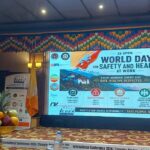
World day for safety and health at work 2026

28 April 2026 Let’s ensure a healthy psychosocial working environment
OSH2026_visuel_2026_ENG_RGB.jpg
Click here for more graphics
The psychosocial working environment is defined by how work is designed, organized and managed, and the organizational practices that shape everyday working conditions.
Psychosocial factors – such as workload and working time, role clarity, autonomy, support, and fair and transparent processes – strongly influence how work is experienced and affect workers’ safety, health and performance.

When psychosocial factors harm workers, they become hazards which, alongside physical, chemical and biological types, must be addressed and managed to ensure safe and healthy working environments.

To mark the World Day for Safety and Health at Work on 28 April 2026, the ILO will share campaign materials, including a global report and a PowerPoint presentation. The report takes an organizational, prevention-focused approach and looks at psychosocial factors across three levels: the job, how work is managed and organized, and the broader policies, practices and procedures that govern work.

ILO World day for safety and health at work 2026 webpages

UK: TUC making preparations across several fronts for 28 April

Dear colleagues,
It’s seven weeks to go until Workers’ Memorial Day (Tuesday 28 April), so I wanted to share with you some of what you can share with reps, activists and Trades Councils to support their activity on the day.
Map of events
Search on our map for a WMD event near you, or you can upload details if you’re organising something yourself. View the events map.

Online memorial wall
Some of these testimonies can be powerful to read out, as examples of union members who lost their lives to work causes. You can also add to the wall. View the memorial wall.

Health and Safety at work timeline
Some history on workplace health and safety in Britain. See the timeline.
Graphics
Print the poster for your union noticeboards, or include the banner in your email signature! Find them here.
Memorial Day in Parliament
The All-Party Parliamentary Group on Occupational Safety and Health will be holding a memorial service on the morning of Tuesday 28 April 09:00 – 10:00, inviting MPs and peers to observe a minute silence together, and collect a memorial ribbon to wear for the day. Union members can encourage their MPs to attend the event.
In solidarity,

Shelly Asquith
Lead for Health & Safety
Trades Union Congress

International Workers’ Memorial Day – April 28th 2026

Dear colleagues,

The right to a safe and secure working environment is a fundamental right at work, and the ITUC will continue to bring visibility to the need to strengthen workers’ health and safety in advance of International Workers’ Memorial Day (April 28th). This year, the ITUC will give a key focus to psychosocial risks and will prepare a specific report on the topic.

Psychosocial risks are an increasing reality for workers across a wide variety of sectors and across all regions. This year, the ITUC will outline many of the key underlying factors contributing to generating increasing incidences of risks such as anxiety, depression and suicide – including job insecurity (temporary/gig work), unregulated long working hours, low levels of legal protection and enforcement, climate-related stressors, and the outsourcing of particularly hazardous jobs like data labelling and content moderation – disproportionately carried out under poor conditions in the global south.

A worrying trend of deregulation in many countries is reversing hard-won rights and protections secured by unions. However, unions around the world are mobilising, and the ITUC intends to bring visibility to highlight the many actions unions are undertaking, and the reforms that they are calling for, to support mental health at work.

While many organisations will have their own priority themes for 28 April, the critical issue is that unions mobilise to ensure the date remains the biggest and most effective global action to bring visibility to workers’ safety and health.

In preparing the ITUC’s forthcoming report, we welcome contributions about union experiences in addressing psychosocial hazards at work. These may include protective legal standards won or campaigned for by trade unions, collective agreements on stress and mental health at work, and union-led campaigns.

In the run up to 28 April, the ITUC would also like to hear about planned events and activities, as well as any related materials. Updates and resources will be posted on the dedicated website, www.28april.org. Please send details of your union’s work to rory.oneill@ituc-csi.org

Yours sincerely,

Luc Triangle
General Secretary

Global: CSI – Inteligencia artificial y digitalización: una cuestión de vida o muerte para los trabajadores

Inteligencia artificial y digitalización: una cuestión de vida o muerte para los trabajadores En este informe de la CSI se identifican daños físicos y psicosociales generalizados en el trabajo asociados al uso de estas tecnologías, desde la sobrecarga cognitiva que supone para los humanos tener que trabajar en tándem con robots – cobots o robots colaborativos – hasta lesiones por movimientos repetitivos, estrés y depresión como consecuencia de objetivos inalcanzables determinados y controlados por algoritmos. Descargar aquí


Global: CSI – Intelligence artificielle et numérisation : une question de vie ou de mort pour les travailleureuses

Le présent rapport – Intelligence artificielle et numérisation : une question de vie ou de mort pour les travailleureuses –  identifie les dommages physiques et psychosociaux couramment associés à l’utilisation de ces technologies sur le lieu de travail, lesquels vont de la surcharge cognitive touchant les personnes obligées de travailler en tandem avec des robots – les « cobots » – aux blessures dues à la fatigue, au stress et à la dépression en raison de quotas irréalisables fixés et suivis par des algorithmes.
Télécharger ici

Global: ITUC 28 April report – Artificial intelligence and digitalisation: A matter of life and death for workers 

The 28 April ITUC report Artificial intelligence and digitalisation: A matter of life and death for workers  identifies widespread physical and psychosocial harms at work associated with the use of these technologies, from cognitive overload as humans are required to work in tandem with robots — cobots — to strain injuries, stress and depression as a consequence of unachievable quotas determined and policed by algorithms. Download here