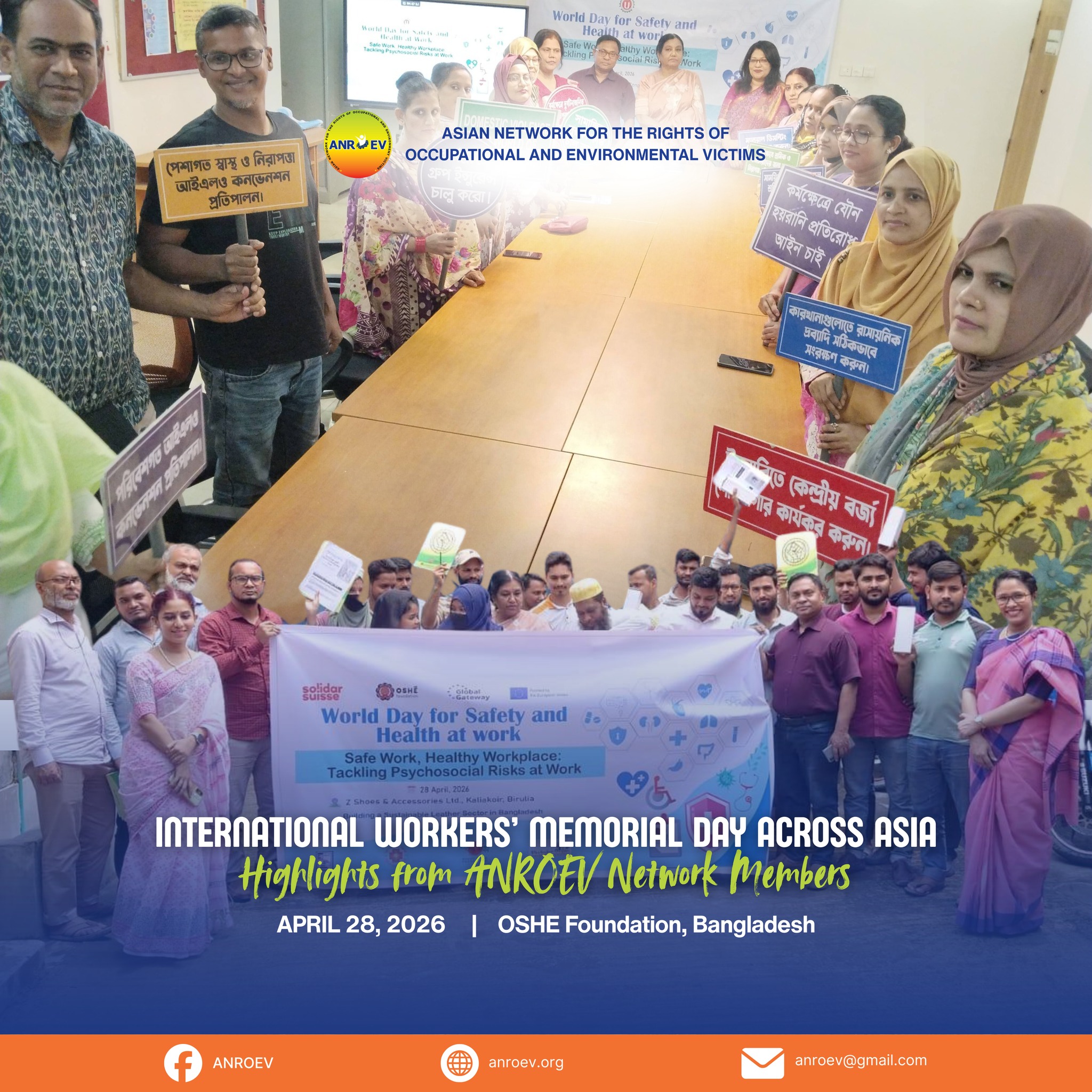
On 24 April 2013 garment workers in Dhaka arrived for another shift at Rana Plaza. The cracks in the walls had been visible the day before. Workers raised the alarm and were told the building was safe. Within hours, all eight floors had collapsed, killing 1,134 people, most of them women, and injuring thousands more.
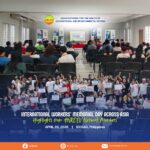
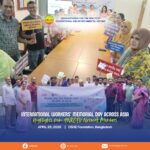
It was not an accident but the outcome of an industry that had spent decades treating workers’ safety as someone else’s problem. The tragedy came just four days before the annual commemoration of workers killed or harmed by their work, International Workers’ Memorial Day on 28 April. And it illustrated how union action can deliver the fundamental changes necessary to make work safer and healthier.
Built from the rubble
Three weeks after the collapse, IndustriALL Global Union and UNI Global Union sat down with international garment brands. What they negotiated had never existed in the industry before: a legally binding agreement holding brands directly accountable for safety in their supply chains.
The Bangladesh Accord on Fire and Building Safety came into force in May 2013, signed by 43 brands from 13 countries. Its logic was straightforward and radical at the same time — that brands profiting from cheap labour in faraway factories could no longer outsource responsibility for what happened inside them.
What followed has been measurable, documented change. Over 48,000 factory inspections have been carried out so far, checking compliance with fire, electrical, boiler and structural safety standards. The remediation rate stands at 81 per cent. More than 2.5 million workers have been trained in workplace safety, including gender-based violence prevention. Over 1,831 complaints have been successfully resolved through enforceable grievance mechanisms. Around 12,632 workers now serve on factory safety committees in Bangladesh.
The path has not always been smooth. Legal challenges from factory owners threatened the Accord’s ability to operate in Bangladesh. Negotiations to renew the agreement were protracted and at times precarious. Some brands dragged their feet, and others left. But the framework held and it expanded.
From Bangladesh to the world
In November 2023, brands and trade unions renewed their commitments under a new International Accord. The agreement extended the model to Pakistan, where 351 factories were inspected by March 2026. Across both programmes, the International Accord now counts 297 brand signatories, covering around 2.5 million workers in Bangladesh alone.
The Accord also demonstrated something beyond its own borders: that binding, independently administered, transparent agreements deliver results where voluntary codes and self-regulation do not. That lesson shaped the global push for mandatory human rights due diligence legislation, culminating in the EU’s Corporate Sustainability Due Diligence Directive in 2024.
The current International Accord runs until the end of 2026. Renegotiations are coming, and IndustriALL Global Union is clear that the next iteration must build on what has been achieved — not retreat from it. IndustriALL and its Bangladeshi affiliates are now working on its proposals to ensure that the scope of coverage and complaint mechanism are expanded. Trade unions also want to ensure that the governance structure works effectively.
IndustriALL general secretary Atle Høie said: “Thirteen years ago, 1,134 workers died in a building that should never have been occupied. What was built in response, through years of campaigning, negotiation and organized worker power, has saved lives and changed what the industry considered possible. The question now is whether brands will honour that by committing to a stronger Accord, or whether they will treat the renegotiation as an opportunity to water it down.
“For IndustriALL Global Union, the answer is not in doubt. The workers who make the world’s clothes deserve no less than what the Accord at its best has always promised: safety, accountability and a voice.”
Christy Hoffman, general secretary of UNI Global Union, said “we remember all those who were killed, and the many thousands whose lives were changed forever in the garment industry’s worst ever disaster.”
She added: “UNI and IndustriALL founded the Bangladesh Accord because we knew that voluntary commitments to factory safety were not enough. Binding agreements, with unions at the table, are what make workplaces safe. Thirteen years on, that remains as true as ever. As we prepare to negotiate a new Bangladesh Safety Agreement, and as we push to extend the International Accord to other countries, we carry with us the memory of Rana Plaza and the responsibility it places on all of us.”