Category Archives: Events listing

Palestine: 75 workers were killed at work in Palestine last year

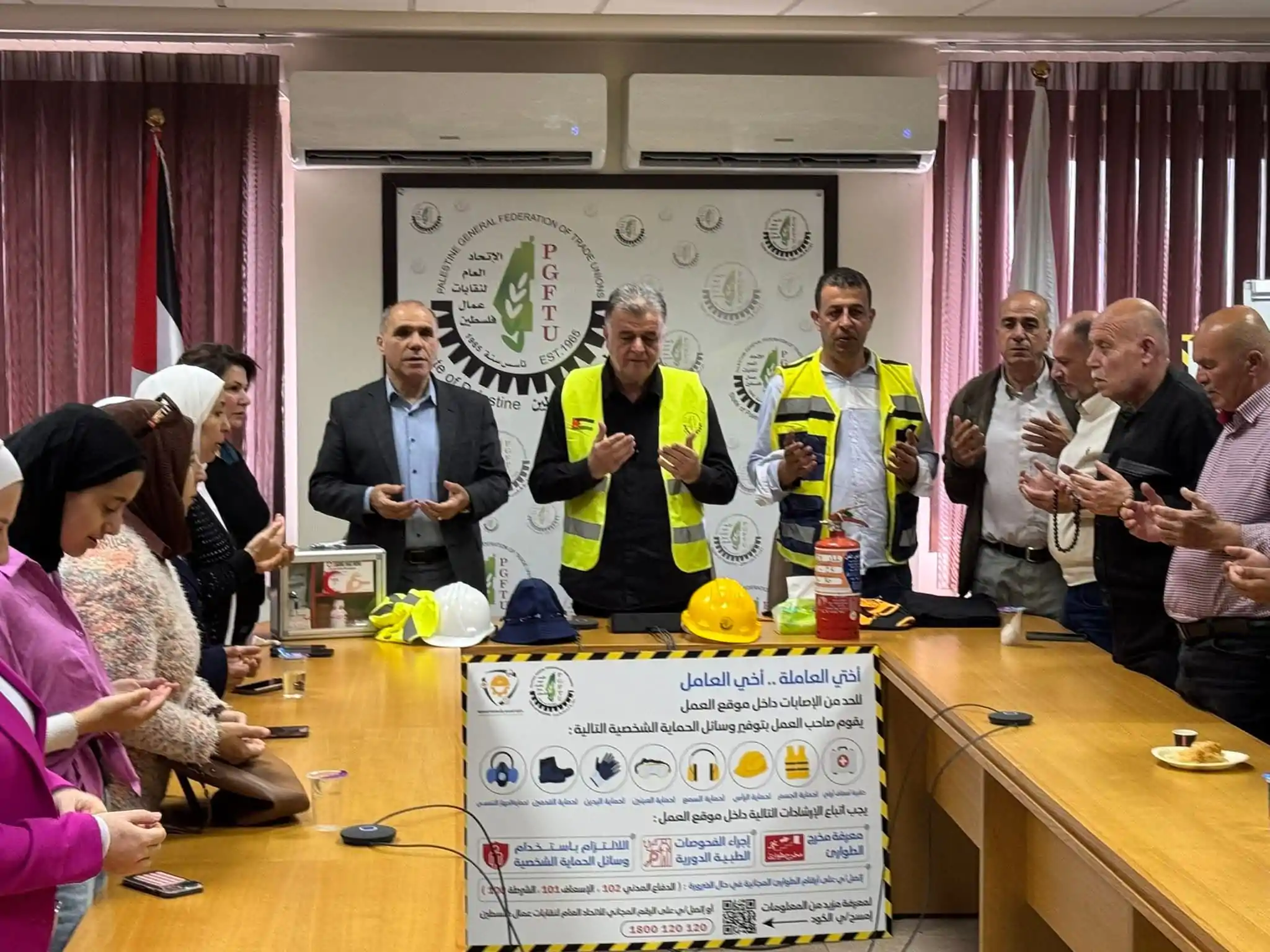
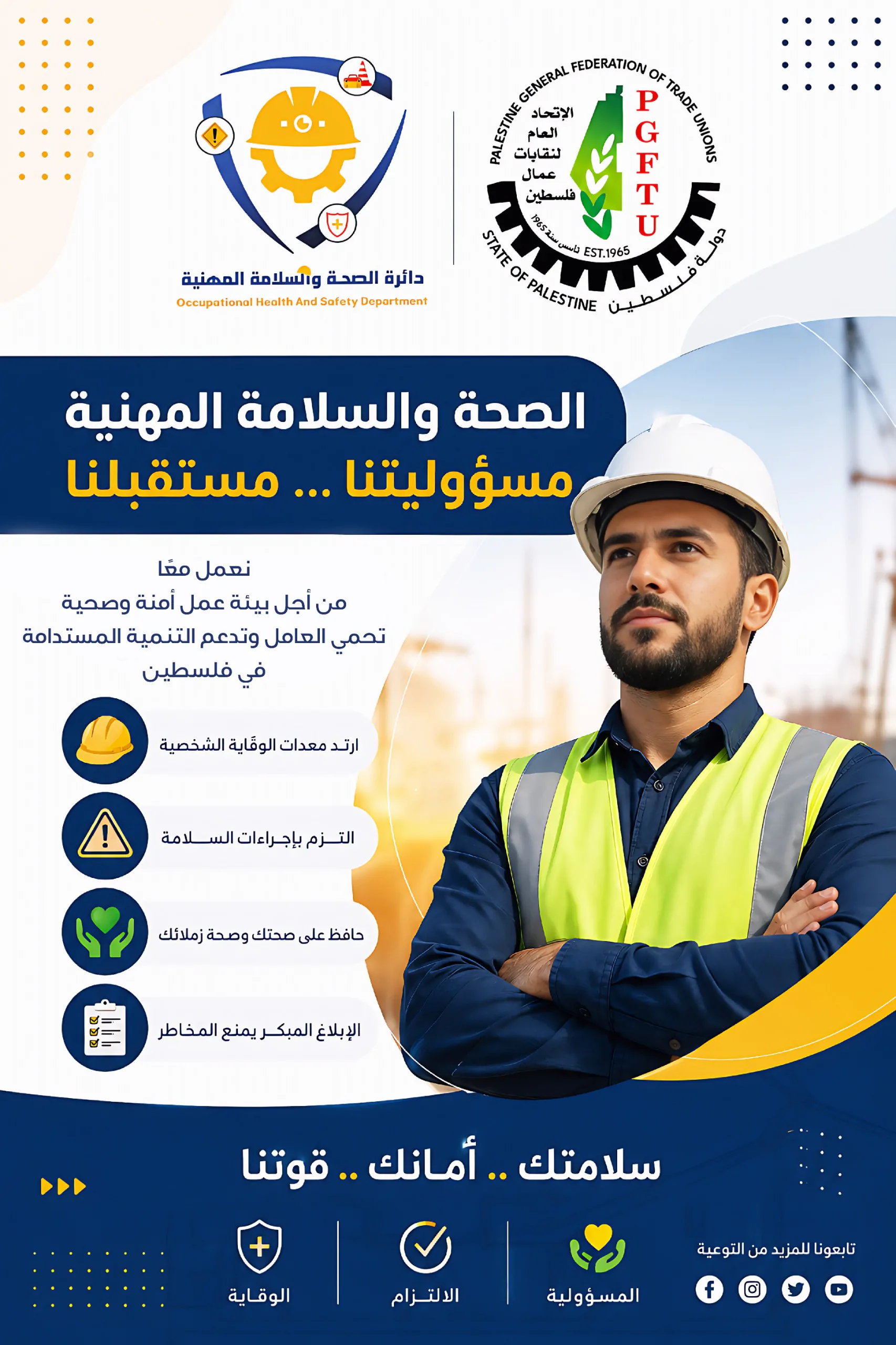
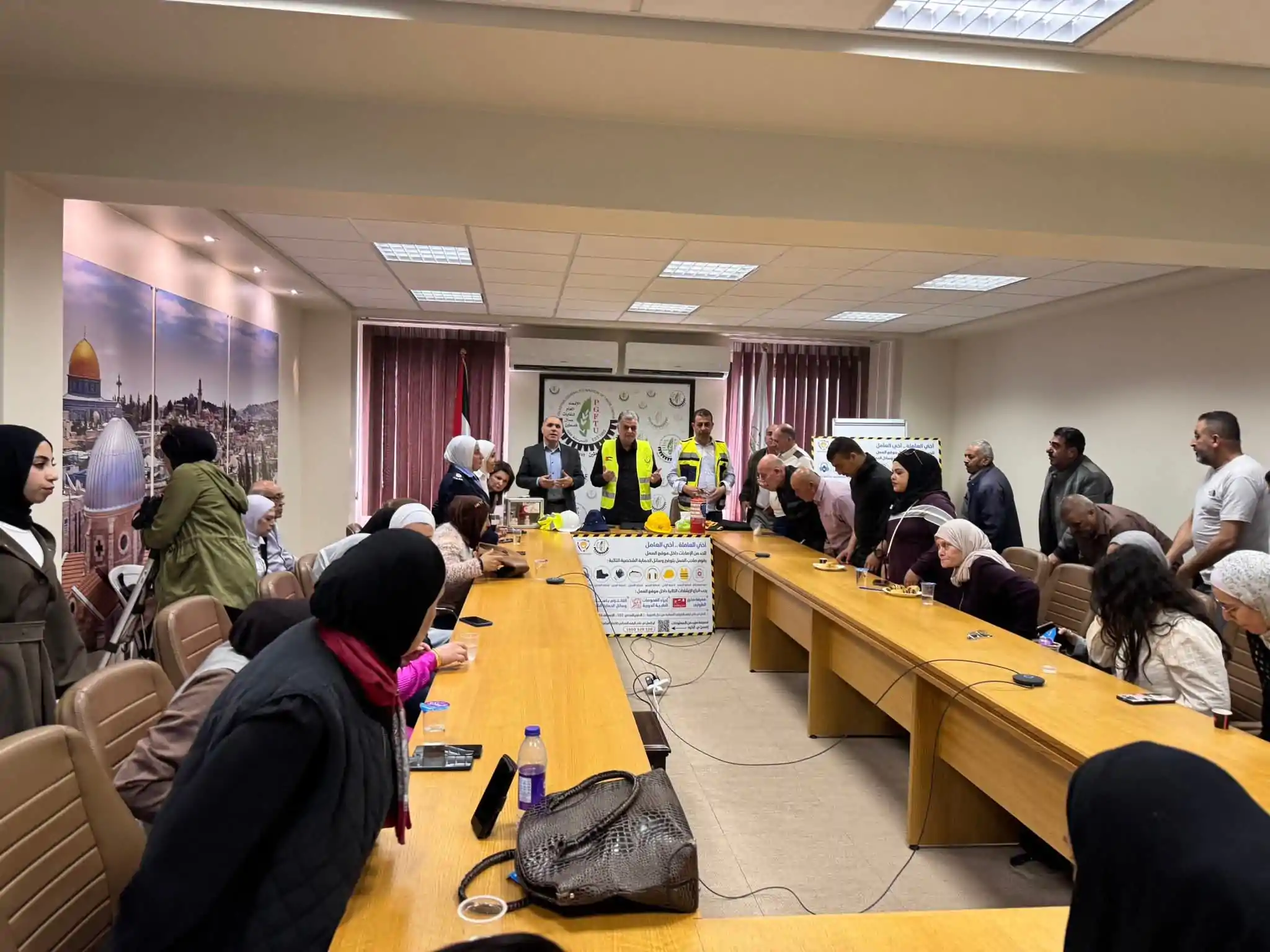
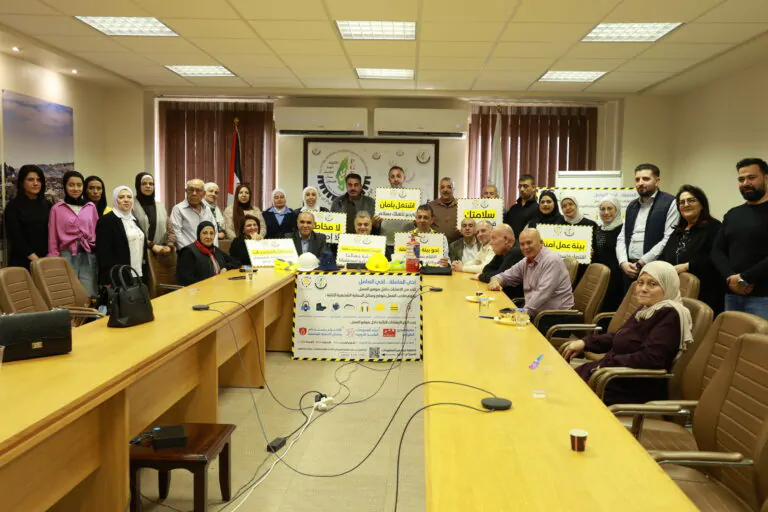
جدّدت دائرة السلامة والصحة المهنية في اتحاد نقابات عمال فلسطين، اليوم، التزامها بالدفاع عن حق العمال في بيئة عمل آمنة وصحية، مؤكدة أن هذا الحق “أصيل ولا يقبل التنازل أو التأجيل”، وذلك بمناسبة اليوم العالمي للسلامة والصحة المهنية.

وأوضحت الدائرة، في بيان صحفي، أن هذا اليوم يأتي في ظل تحديات متفاقمة يواجهها العمال الفلسطينيون، في ظل الأوضاع الاقتصادية الصعبة وضعف الالتزام بمعايير السلامة في بعض مواقع العمل، ما يزيد من حجم المخاطر المهنية ويعرّض حياة العمال للخطر.

وكشف البيان عن استشهاد 74 عاملًا خلال الفترة من 1 كانون ثاني/يناير 2025 وحتى 30 كانون أول/ديسمبر 2025، توزّعوا بواقع 20 عاملًا داخل سوق العمل في الضفة الغربية، وعامل واحد نتيجة استهداف في البحر، و14 عاملًا أثناء محاولتهم الوصول أو العودة إلى أماكن عملهم، و39 عاملًا داخل أراضي الـ48. كما سُجّل استشهاد 18 عاملًا نتيجة إطلاق النار عليهم أو أثناء الاعتقال أو الملاحقة أو خلال اقتحام أماكن عملهم.

وأشار البيان إلى سقوط 47 “شهيد لقمة عيش” منذ 7 أكتوبر 2023 وحتى نهاية عام 2025، في ظل استمرار المخاطر التي تهدد العمال الفلسطينيين في مختلف أماكن عملهم.

وأكدت الدائرة أن السلامة المهنية ليست خيارًا، بل “مسؤولية وطنية وأخلاقية وقانونية”، داعية إلى تضافر الجهود من أجل حماية العمال وتعزيز بيئة العمل الآمنة.

ودعت إلى التطبيق الفعلي والرقابة الصارمة على معايير السلامة والصحة المهنية في مختلف القطاعات، وتحميل أصحاب العمل مسؤولياتهم الكاملة في توفير مستلزمات الوقاية، إلى جانب تعزيز دور الجهات الرقابية وتفعيل أدوات التفتيش والمساءلة، ونشر الوعي الوقائي عبر برامج تدريبية مستمرة تستهدف العمال وأصحاب العمل.

كما شددت على أهمية مواءمة التشريعات الوطنية مع المعايير الدولية بما يضمن حماية أوسع للعمال.

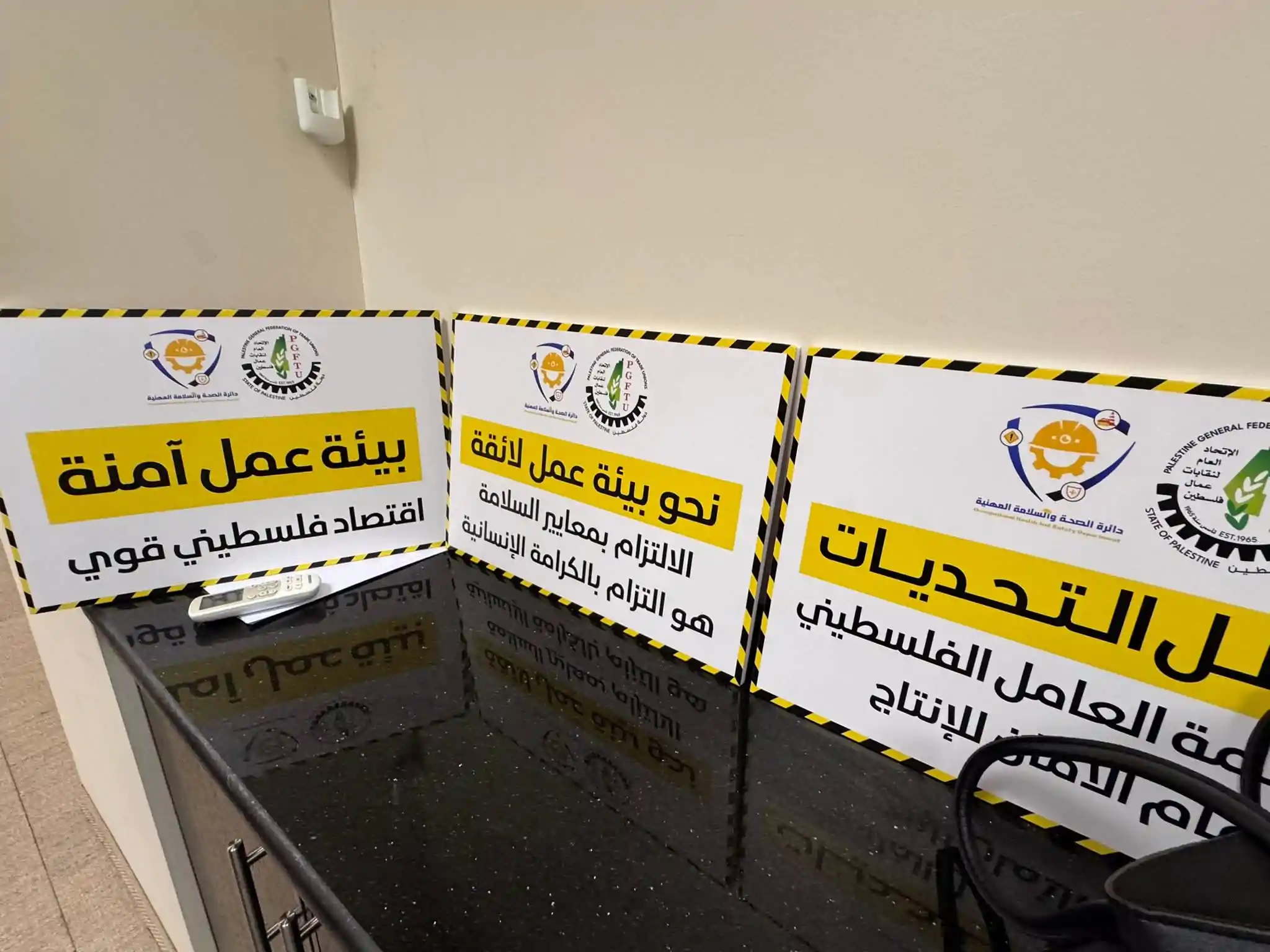
وختمت الدائرة بيانها بالتأكيد على استمرار الاتحاد في النضال النقابي من أجل صون كرامة العامل الفلسطيني وحماية حياته وتعزيز شروط العمل اللائق، تحت شعار:

“سلامة العامل… أساس الإنتاج، وكرامته… عنوان العدالة.”

The Palestinian General Federation of Trade Unions renews its commitment to protecting workers and reveals that 74 workers were killed during 2025.

The department explained, in a press statement, that this day comes in light of the worsening challenges faced by Palestinian workers, in light of the difficult economic conditions and weak adherence to safety standards in some work sites, which increases the extent of occupational risks and exposes workers’ lives to danger.

The statement revealed the martyrdom of 74 workers during the period from January 1, 2025 to December 30, 2025, distributed as follows: 20 workers within the labor market in the West Bank, one worker as a result of targeting at sea, 14 workers while trying to reach or return to their workplaces, and 39 workers within the 1948 territories. 18 workers were also killed as a result of being shot, arrested, pursued, or stormed into their workplaces.

The statement indicated that 47 “livelihood martyrs” fell from October 7, 2023 until the end of 2025, in light of the continuing risks threatening Palestinian workers in their various workplaces.

The department stressed that occupational safety is not an option, but rather “a national, ethical and legal responsibility”, calling for concerted efforts to protect workers and promote a safe work environment.

She called for the effective implementation and strict oversight of occupational safety and health standards in various sectors, holding employers fully responsible for providing preventive measures, strengthening the role of regulatory authorities, activating inspection and accountability tools, and spreading preventive awareness through ongoing training programs targeting workers and employers.

She also stressed the importance of harmonizing national legislation with international standards to ensure broader protection for workers.

The department concluded its statement by emphasizing the Union’s continued union struggle to preserve the dignity of the Palestinian worker, protect his life, and promote decent work conditions, under the slogan:

“Worker safety… the basis of production, and his dignity… the title of justice.”

Denmark: 3F marks Workers’ Memorial Day with social media awareness campaign

BWI affiliate 3F marked Workers’ Memorial Day through a social media campaign and publication of its own poster, raising awareness of workplace safety.

Mauritius: CMWEU marks Workers’ Memorial Day with dialogue and demonstration

BWI affiliate CMWEU marked Workers’ Memorial Day with a panel discussion involving government ministries, health and safety stakeholders and federation sisters unions CTSO focusing on occupational health and safety standards and the impact of weak enforcement. The union also joined a street demonstration in Rosehill demanding safety improvements, inclusion of migrant workers and addressing climate change impacts on the workplace. Roughly 1,000 workers were involved across both activities.

Zimbabwe: ZCATWU marks Workers’ Memorial Day with heat stress and climate protection focus

BWI affiliated union ZCATWU  marked Workers’ Memorial Day through awareness meetings in Masvingo and Harare focused on heat stress and the need for climate-protective clauses in collective bargaining agreements and sector policies. Workers were also encouraged to strengthen negotiations at workplace and national level.

Nigeria: NUCECFWW marks Workers’ Memorial Day with focus on decent work and climate risks

BWI affiliate the National Union of Civil Engineering, Construction, Furniture and Wood Workers (NUCECFWW) marked Workers’ Memorial Day through an awareness campaign and workplace action focused on decent work and climate-related occupational health risks, including heat stress. Workers shared experiences and recommendations, and the union also participated in a federation pre-May Day lecture. Over  300 workers were involved in 28 April activities.

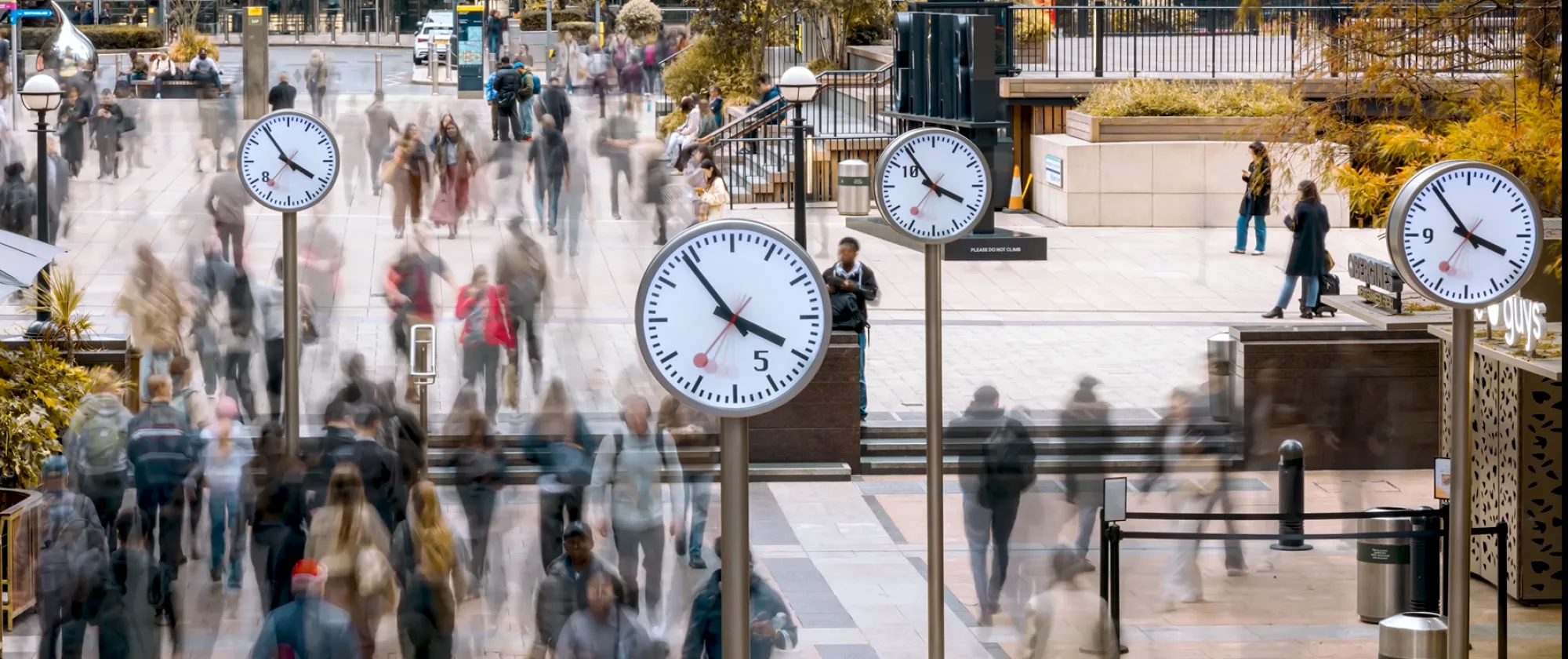
Asia-Pacific: It’s time to address psychosocial hazards in a changing world of work | ILO

To mark World Day for Safety and Health at Work, Kaori Nakamura-Osaka, International Labour Organization Assistant Director-General and Regional Director for Asia and the Pacific, calls for stronger action to protect workers from psychosocial hazards.

A delivery rider works 14 hours a day to meet algorithm-driven targets. A factory worker quietly endures relentless pressure and harassment. A middle-aged manager pushes away thoughts of suicide resulting from stress.

These are not isolated stories. They are signals of a deeper crisis, one that is too often invisible, unspoken and underestimated: the impact of psychosocial hazards on workers.

This 28 April, the World Day for Safety and Health at Work calls global attention to psychosocial factors that influence health at work.

The impact of physical work-related hazards such as manual handling of heavy loads or working at heights are well recognised and understood. Psychosocial hazards are invisible but just as dangerous.  Long working hours, workplace stress, violence and harassment, low pay and lack of job security – to name but a few – can all take a toll on both the physical and mental health of workers.

A new International Labour Organization (ILO) report, The psychosocial working environment: Global developments and pathways for action highlights the scale of the impact.

It reveals that work-related psychosocial factors are responsible for more than 840,000 deaths annually due to associated cardiovascular diseases and mental disorders and lead to the loss of nearly 45 million disability-adjusted life years (DALYs) each year.

Long working hours are highlighted as a critical psychosocial risk factor associated with increased risk of cardiovascular disease and stroke. In Asia and the Pacific, the burden is especially significant with nearly half of workers in the region working more than 48 hours per week, substantially higher than in other parts of the world.

The report also recognises the implications of the changing world of work on the psychosocial work environment. Digitalization and the use of artificial intelligence are transforming how tasks are coordinated, monitored and assessed. New forms of employment, including platform work, varied contractual arrangements and the expansion of remote and hybrid work, are redefining supervision, expectations and working time. While these developments may create opportunities to strengthen the psychosocial working environment, they may also exacerbate psychosocial risks.

The true extent of the problem is still not fully understood. Data remains fragmented and many countries lack consistent systems to identify psychosocial hazards and address their risks.

Stigma continues to silence workers who might otherwise speak out. This silence is one of the biggest barriers we face. Many fear the negative career consequences of talking about stress, burnout, anxiety or depression at work. The result is that problems remain hidden until they become crises.

But there is also reason for cautious optimism. Governments, employers and workers across the region are increasingly recognizing that psychosocial hazards represent a major threat to workers’ safety and health as well as organizational productivity and broader economic performance.

We are seeing this shift reflected in policy. For instance, when China revised the Work Safety Law in 2021, mental health at work was formally incorporated into employers’ statutory obligations. The revision requires employers to strengthen psychological aspects in occupational health services.  Meanwhile, in 2024, when China revised the Classification and Catalogue of Occupational Diseases, occupational mental health disorders were included as occupational diseases for the first time.

Other examples across the region include Japan’s current national occupational safety and health programme which prioritizes the prevention of overwork and mental health problems. The Republic of Korea is expanding support through workers’ health centres and requiring rest facilities. Australia and New Zealand have integrated mental health into broader national strategies, while countries such as Malaysia and the Philippines are strengthening legal frameworks to address psychosocial risks at work.

The ILO’s new report highlights a simple but powerful truth: psychosocial risks are not inevitable. They arise from identifiable aspects of work, excessive demands, lack of control, poor support and unfair treatment. These can all be changed and this means prevention is possible.

Across Asia and the Pacific, promising practices are already emerging. In Singapore, tools such as iWorkHealth help companies assess workplace psychosocial factors and promote well-being. In Malaysia, guidelines on psychosocial risk management support employers in identifying and addressing risks.

For workers in every sector, psychosocial factors at work can make the difference between a job that supports well-being and one that undermines it. Creating such environments requires commitment from all sides. Governments must strengthen policies and data systems. Employers must take responsibility for how work is organized and managed. Workers must be able to participate, speak up and be heard. Social dialogue is essential to making this happen.

The message for Asia and the Pacific is clear: the region’s future depends not only on how much people work, but on how work is experienced every day. Behind every statistic is a worker trying to cope, to provide, to endure. Managing psychosocial risks means ensuring that work does not come at the cost of health, dignity or life itself.

A safe and healthy working environment is a fundamental principle and right at work. Making that a reality, is a challenge we must meet.

https://www.ilo.org/resource/article/it%E2%80%99s-time-address-psychosocial-hazards-changing-world-work
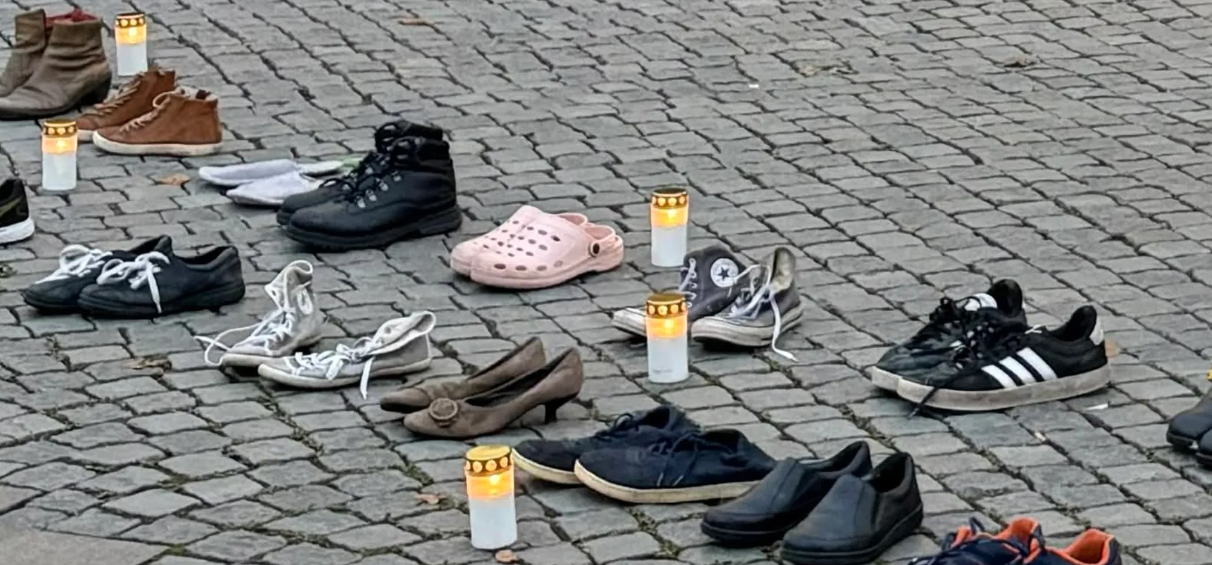
Global: Acciona joins global union BWI’s Workers’ Memorial Day events across multiple countries

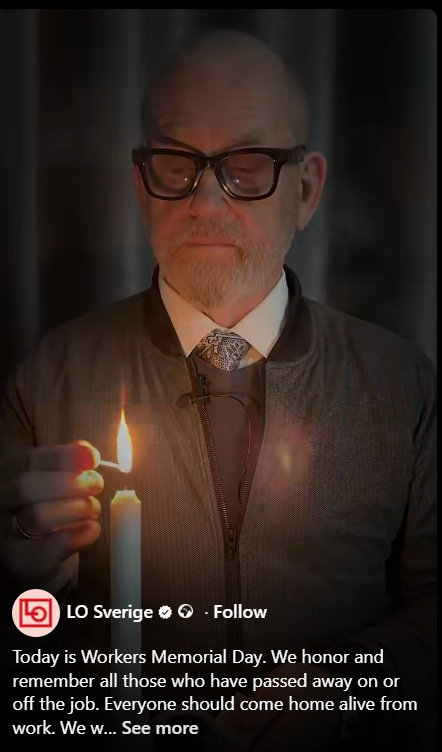
Acciona Group marked Workers’ Memorial Day across Spain, the Philippines, Brazil, Chile, Italy, Panama, Peru, the Netherlands and Mexico through a coordinated global safety initiative linked to BWI campaigns. Activities included minutes of silence, workplace training, awareness sessions and safety campaigns focused on occupational health, psychosocial risks, mental health and heat stress. The company also developed materials supporting the “Too Hot To Work” campaign, reinforcing prevention measures and safety culture across projects and construction sites in multiple countries.

Mexico: CIT backs heat stress campaign for Workers’ Memorial Day

In Mexico, BWI affiliate CIT marked Workers’ Memorial Day through a social media campaign supporting BWI’s action on heat stress. The initiative highlighted the dangers extreme temperatures pose to workers and promoted awareness of the need for stronger occupational health and safety protections.

Brazil: Unions mark Workers’ Memorial Day with remembrance, protests and workplace safety outreach

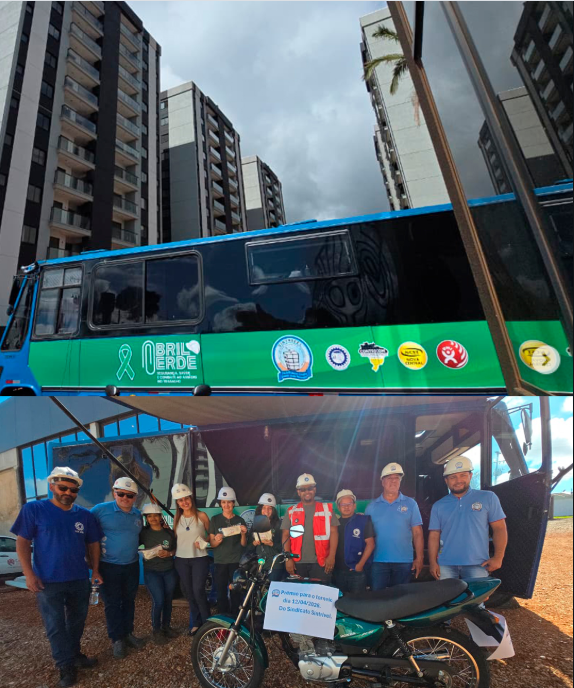
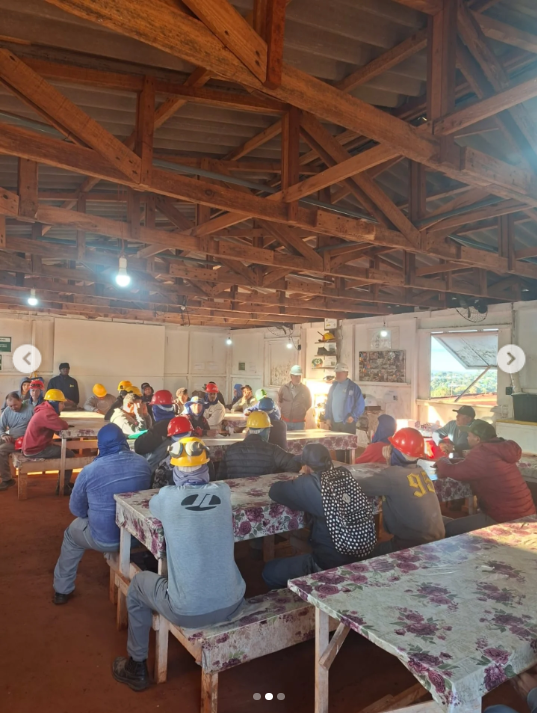
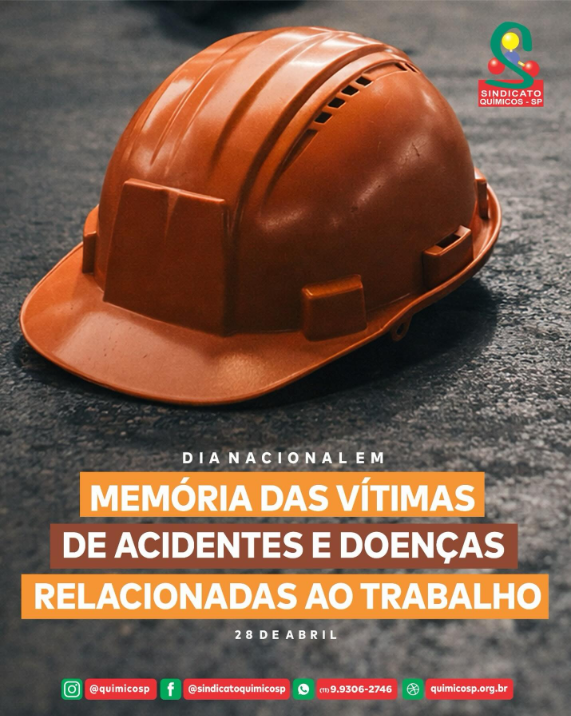
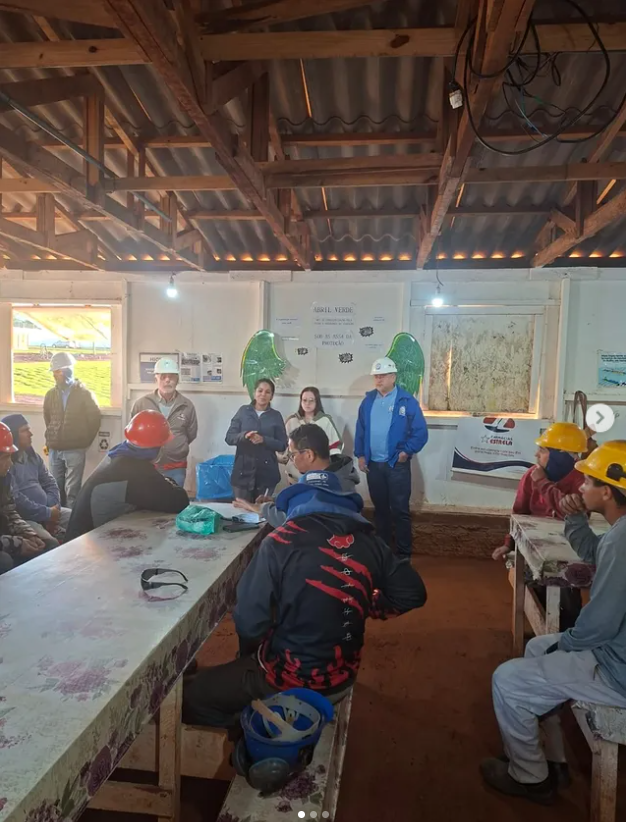
In Brazil, BWI affiliated unions including SINTRACOM Londrina, SINTRIVEL, Químicos Unificados, SINTEPAV-BA and others marked Workers’ Memorial Day through remembrance events, workplace training, demonstrations and safety campaigns involving around 1,000 participants. Activities highlighted the importance of occupational health and safety, workers’ rights and prevention of workplace accidents. A major protest at the Amanco plant denounced unsafe conditions following a serious injury in which a subcontracted worker lost his hand. Unions also carried out extensive worksite visits and awareness activities linked to the “Green April” campaign for safer workplaces.

Social Media


Panama: SUNTRACS expands nationwide safety campaign for Workers’ Memorial Day

In Panama, BWI affiliate SUNTRACS marked Workers’ Memorial Day with a nationwide programme of workplace assemblies, training sessions, videos and social media campaigns involving over 2,000 participants. Activities commemorated workers killed in past accidents while promoting occupational health and safety, mental health and stronger prevention measures. The union carried out on-site talks and risk prevention training across multiple projects, highlighting workers’ rights secured through collective bargaining and reaffirming its long-standing campaign for safer working conditions and reduced workplace deaths.