UK: TUC urges ‘national mission’ to eliminate asbestos from UK workplaces
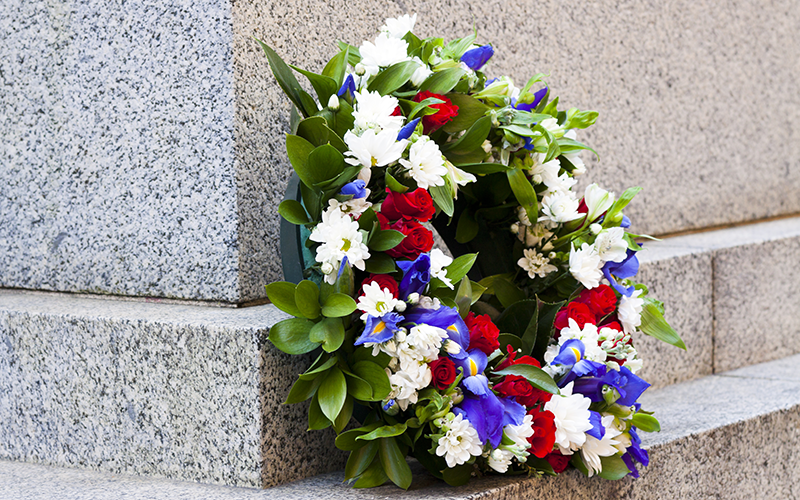
TUC urges ‘national mission’ to eliminate asbestos from UK workplaces

web Flower-Wreath CREDIT iStock-171335236.png - Credit: web Flower-Wreath CREDIT iStock-171335236.png

The Trades Union Congress (TUC) has called for a fully funded, government-led programme to remove asbestos from Britain’s workplaces, warning that the substance remains the country’s biggest occupational killer.

Laying a wreath at an event in Liverpool to mark International Workers’ Memorial Day (28 April), TUC general secretary Paul Nowak is expected to urge ministers to adopt what he describes as a ‘national mission’ to eradicate asbestos from public buildings, including schools and hospitals.

The TUC says more than 5,000 people die each year from asbestos-related diseases, with Britain recording the highest rate of asbestos cancers globally. Despite being banned, asbestos remains present in many older buildings, raising concerns about ongoing exposure among workers.

Nowak is set to highlight the scale of the challenge, arguing that managing asbestos in situ is no longer sufficient. He will call instead for a comprehensive removal strategy backed by government funding.

This is not just a policy ask – it is a public health necessity. Because prevention must mean elimination of risk, not just management of it

‘We have to be honest about the scale of the challenge we face. And none is bigger than asbestos,’ he is expected to say. ‘Each year, more than 5,000 people die because of asbestos. That cannot be allowed to stand.’

He will add that workers in schools, hospitals and other public sector buildings continue to face daily exposure risks, reinforcing the need for decisive action.

‘This is not just a policy ask – it is a public health necessity. Because prevention must mean elimination of risk, not just management of it,’ Nowak will say.

Separately, Nowak will attend a commemorative event at the Liverpool headquarters of the Health and Safety Executive (HSE), where he will lay a wreath in memory of those who have died due to work-related illness and injury.

International Workers’ Memorial Day is held annually to remember workers who have lost their lives at work and to campaign for stronger health and safety protections.

IOSH online

Latin America: Recordamos a trabajadores fallecidos y heridos, reforzando la ESSLA para las Américas

28 de abril: recordamos a personas trabajadoras fallecidas y heridas reforzando nuestra Estrategia Sindical en Salud Laboral para las Américas (ESSLA)

28 de abril de 2026

Este 28 de abril, Día Mundial de la Salud y Seguridad en el Trabajo, la CSA homenajea a todas las personas trabajadoras que fueron heridas o perdieron su vida, lanzando una nueva edición de la Estrategia Sindical en Salud Laboral para las Américas (ESSLA).

Esta plataforma colectiva, creada en conjunto con las afiliadas en el 2010, sirvió por más de una década de guía en el accionar sindical de la región para establecer objetivos claves que el sindicalismo buscaba alcanzar para asegurar entornos laborales sanos y saludables.

Tras más de 15 años, el contexto global cambiante con sus múltiples transiciones climática, tecnológica, demográfica, y geopolítica, y las diversas transformaciones del mundo del trabajo, demandaron un esfuerzo conjunto de las centrales sindicales de la región para construir un nuevo mecanismo que sirva para formar, comunicar, incidir y organizar a toda la clase trabajadora con miras a asegurar a este principio y derecho fundamental del trabajo.

Luego de varios meses de trabajo sumando los aportes brindados desde cada territorio de nuestro continente, hoy lanzamos este nuevo documento con 5 nuevos objetivos generales que busca planificar las estrategias a llevar adelante en el próximo periodo, con miras a:

  • Fortalecer la ACCIÓN SINDICAL en materia de salud laboral de la CSA y sus afiliadas, desde una perspectiva interseccional e integrada, de manera articulada y coordinada con la CSI, OIT y otras alianzas.
  • Fortalecer el DIÁLOGO SOCIAL TRIPARTITO Y LA NEGOCIACIÓN COLECTIVA como pilares para el desarrollo de una cultura preventiva en salud y seguridad en el trabajo.
  • Avanzar en la universalización del derecho a la salud laboral para TODAS LAS PERSONAS TRABAJADORAS, INDEPENDIENTEMENTE DE SU FORMA DE INSERCIÓN en el mundo del trabajo.
  • Reforzar la capacidad sindical para incidir en políticas públicas que permitan identificar, prevenir y controlar ENFERMEDADES PROFESIONALES reconocidas y emergentes y hacer el seguimiento de las condiciones de trabajo, especialmente en sectores estratégicos y de alta exposición.
  • Anticipar y responder a LOS NUEVOS Y EMERGENTES RIESGOS para la salud laboral en el mundo del trabajo.

Nos sumamos a los esfuerzos de OIT y CSI para en este 2026, especialmente recordar a cada trabajador y trabajadora afectada por los riesgos psicosociales laborales (en torno a 840.000 por año), una problemática que cada vez más genera más personas lesionadas debido a una errónea organización del trabajo que no cuida la carga y la extensión de la jornada laboral, la claridad de roles, los proceso justos y transparentes, remuneraciones justas, entre otros factores. Sin lugar a dudas será uno de los ejes de trabajo de CSA para implementar la ESSLA.

Les invitamos a compartir el documento con cada compañero y compañera desde sus espacios de lucha: Descarga ESPAÑOL

Próximamente en portugués, inglés y francés!

Una sola voz regional! Una estrategia unificada por la salud laboral! 

https://csa-csi.org/2026/04/28/28-de-abril-recordamos-a-personas-trabajadoras-fallecidas-y-heridas-reforzando-nuestra-estrategia-sindical-en-salud-laboral-para-las-americas-essla/

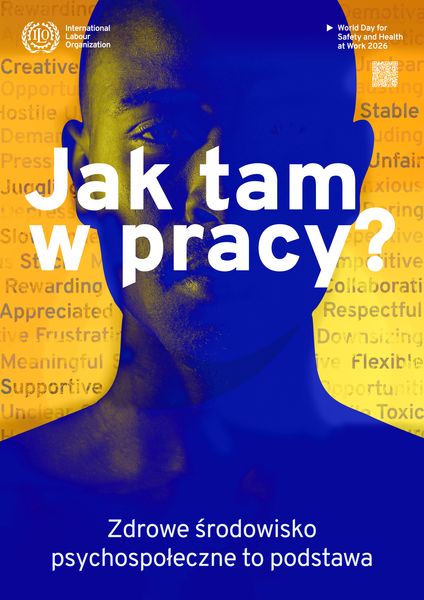
Poland: Jak tam w pracy? Nowy raport ILO poświęcony tematowi Światowego Dnia Bezpieczeństwa i Zdrowia w Pracy 2026

28 kwietnia – Światowy Dzień Bezpieczeństwa i Zdrowia w Pracy – to dobry moment, by przyjrzeć się danym z najnowszego raportu Międzynarodowej Organizacji Pracy (ILO).

 Psychospołeczne środowisko pracy to dziś jedno z najpoważniejszych wyzwań dla zdrowia pracowników. Z raportu wynika, że:

 • czynniki psychospołeczne odpowiadają za ponad 840 000 zgonów rocznie (m.in. w związku z chorobami serca i zaburzeniami psychicznymi)

• 35% pracowników na świecie pracuje ponad 48 godzin tygodniowo, co znacząco zwiększa ryzyko chorób i udaru

• 23% osób doświadcza przemocy lub molestowania w pracy, najczęściej psychicznego

 Problemy są powszechne, rosnące i wciąż niewystarczająco adresowane na poziomie systemowym.

 Dlatego w 2026 roku, wspólnie z Międzynarodową Organizacją Pracy, zwracamy szczególną uwagę na psychospołeczne środowisko pracy – obszar często pomijany, choć mający kluczowe znaczenie dla zdrowia i funkcjonowania pracowników.

 Dlaczego to ważne?

• zagrożenia psychospołeczne są powiązane z wieloma problemami – zarówno indywidualnymi, jak i zespołowymi

• stres i wypalenie wpływają na zdrowie, efektywność i relacje

• problemy często narastają stopniowo i długo pozostają niezauważone

 Psychospołeczne środowisko pracy to nie tylko atmosfera w zespole, ale także sposób zarządzania, organizacja pracy, relacje oraz poziom wsparcia.

 Zdrowe miejsce pracy to takie, w którym:

• role i oczekiwania są jasno określone

• pracownicy mają wpływ na swoją pracę

• komunikacja jest otwarta, a wsparcie realne

 Na naszej stronie udostępniliśmy pełną wersję raportu ILO przetłumaczoną na język polski:

https://www.ciop.pl/CIOPPortalWAR/file/101906/Raport_MOP-2026.pdf

 Więcej materiałów i informacji:

https://bit.ly/ciop-safeday-2026

Moldova: Construction union SINIDCONS commemorates 28 April

Moldovan construction union  and BWI affiliate SINIDCONS marked International Workers’ Memorial Day with a rally, meetings and a public statement.

Kyrgyzstan: Construction union marks International Workers’ Memorial Day

Kyrgyzstan construction union and BWI affiliate KBTU marked Workers’ Memorial Day with meetings, a public statement and a social media campaign.

Georgia: Construction union GCFTU marks International Workers’ Memorial

Georgian construction and BWI affiliate GCFTU marked International Workers’ Memorial Day in a number of ways with a rally, meetings and a public statement.

Italy: Construction union FILCA CISL marks International Workers’ Memorial Day

Italian construction union  and BWI affiliate FILCA CISL marked Workers’ Memorial Day with a public statement and the production of campaign materials.

Bulgaria: Construction union PODKREPA calls for ‘Too Hot To Work’ protection

In Bulgaria, BWI affiliate PODKREPA  marked Workers’ Memorial Day through online publications and public campaigning, calling for the adoption of “Too Hot To Work” measures in the construction sector in line with EU standards. The initiative highlights the need for stronger protections against heat stress and improved occupational safety for construction workers.

Global: ITUC calls for urgent action to tackle the global crisis of psychosocial risks at work

International Workers’ Memorial Day 2026: Tackling psychosocial risks at work

This International Workers’ Memorial Day, 28 April, the ITUC calls for urgent action to tackle the global crisis of psychosocial risks at work – now one of the leading causes of death, disease and distress for workers worldwide.

Behind the daily reality of work, millions of working people are facing relentless pressure: long hours, job insecurity, impossible targets and toxic workplace cultures.

These are not just bad jobs – they are dangerous jobs. Stress, anxiety and burnout are now causing more harm globally than traditional workplace hazards such as chemicals or dust.

ITUC’s new report shows the scale of the crisis:

  • Long working hours alone are responsible for around 745,000 deaths each year.
  • There are at least 70,000 work-related suicides annually.
  • 12 billion working days are lost every year due to depression and anxiety.
  • Burnout affects around one in five workers globally.
  • Psychosocial risks are linked to over 10 per cent of cases of heart disease, depression and suicides.

“Bad jobs can break anyone. When workers are pushed beyond their limits by job insecurity, excessive workloads and lack of control, the consequences can be fatal. This is not inevitable – it is a result of choices made in boardrooms and by governments.” ITUC General Secretary Luc Triangle

Across the world, unions are proving that change is possible. Evidence shows that a strong, democratic trade union presence in the workplace is the most effective protection against psychosocial risks, improving workers’ health and economic outcomes.

The ITUC is calling for:

  • Strong laws to prevent psychosocial risks at work.
  • Full involvement of trade unions in workplace health and safety.
  • Decent work, including secure jobs, fair pay and manageable workloads.
  • Recognition of mental health conditions as occupational diseases.

Luc Triangle concluded: “The solutions to these problems start with democracy in the workplace, with a voice for workers through their trade unions. Employers can ignore the psychosocial health of workers and break them, lose valuable skills and face the financial cost, or they can work with unions to ensure that workers are valued. If employers are struggling to recognise which is the correct choice, unions are ready and available to remind them. The fight for democracy in the workplace is the fight for the wellbeing of all working people.”

This 28 April, we remember the dead – and fight for the living. Work should not cost lives. It must protect lives, dignity and mental health.

Global: la CSI appelle à une action urgente visant à lutter contre la crise mondiale des risques psychosociaux au travail

Journée internationale de commémoration des travailleurs morts ou blessés au travail 2026: prendre en compte les risques psychosociaux au travail

Le 28 avril, à l’occasion de la Journée internationale de commémorations des travailleurs morts ou blessés au travail, la CSI appelle à une action urgente visant à lutter contre la crise mondiale des risques psychosociaux au travail, désormais l’une des principales causes de décès, de maladie et de souffrance pour les travailleurs et les travailleuses à travers le monde.

Derrière la réalité quotidienne du travail, des millions de personnes sont soumises à une pression incessante: longues heures de travail, insécurité de l’emploi, objectifs impossibles à atteindre et environnements de travail toxiques.

Il ne s’agit pas seulement d’emplois de mauvaise qualité, mais d’emplois dangereux. Le stress, l’anxiété et l’épuisement provoquent aujourd’hui plus de préjudice à l’échelle planétaire que les risques traditionnels sur les lieux de travail, tels que les produits chimiques ou la poussière.

Le nouveau rapport de la CSI (bientôt disponible en français) révèle l’ampleur de la crise:

  • La durée excessive des heures de travail est responsable à elle seule d’environ 745 000 décès chaque année.
  • Au moins 70 000 suicides liés au travail sont à déplorer annuellement.
  • Tous les ans, 12 milliards de jours de travail sont perdus en raison de la dépression et de l’anxiété.
  • L’épuisement au travail touche environ un travailleur sur cinq dans le monde.
  • Les risques psychosociaux sont associés, dans plus de 10 pour cent des cas, aux maladies cardiaques, à la dépression et aux suicides.

Luc Triangle, le secrétaire général de la CSI, a déclaré: «Les emplois de mauvaise qualité peuvent briser n’importe qui. Lorsque les travailleurs subissent des pressions au-delà des limites supportables, à cause de l’insécurité de l’emploi, de charges de travail excessives et d’un manque de contrôle, les conséquences peuvent être fatales. Cette situation n’est pas inévitable: elle résulte de décisions prises dans des salles de réunions et par les gouvernements.»

Sur l’ensemble du globe, les syndicats montrent qu’un changement est possible. Les faits indiquent qu’une présence syndicale forte et démocratique sur le lieu de travail constitue la plus efficace des protections contre les risques psychosociaux, en contribuant à améliorer la santé et les performances économiques des travailleurs et des travailleuses.

La CSI réclame:

  • Des lois rigoureuses destinées à prévenir les risques psychosociaux au travail.
  • La participation pleine et entière des syndicats aux questions de santé et de sécurité au travail.
  • Des emplois décents, c’est-à-dire des emplois sûrs, une rémunération équitable et des charges de travail supportables.
  • La reconnaissance des troubles de santé mentale comme maladies professionnelles.

Luc Triangle a conclu: «Les solutions à ces problèmes commencent par la démocratie au travail, pour permettre aux travailleurs de faire entendre leur voix par l’intermédiaire de leur syndicat. Les employeurs peuvent choisir d’ignorer la santé psychosociale de leurs employés et de les pousser à bout, de perdre leurs précieuses compétences et d’en payer le coût financier, ou choisir de collaborer avec les syndicats pour veiller à ce que les travailleurs soient valorisés. Si les employeurs peinent à savoir quel est le bon choix, les syndicats se tiennent prêts à le leur rappeler. La lutte pour la démocratie au travail est la lutte pour le bien-être de tous les travailleurs et travailleuses.»

Ce 28 avril, nous rendons hommage aux personnes décédées au travail, et nous nous battons pour les vivants. Le travail ne devrait pas coûter des vies. Il doit protéger la vie, la dignité et la santé mentale.

Remember the dead, fight like hell for the living