Category Archives: 2026 Europe

Italy: Sicurezza sul lavoro. Cisl: prevenzione deve diventare la vera priorità. Decisivo il ruolo delle rappresentanze nei luoghi di lavoro, presidio quotidiano e insostituibile

sicurezza sul lavoro

«Riaffermare un impegno univoco e diffuso per contrastare infortuni, malattie professionali e morti sul lavoro». Questo l’appello lanciato dalla CISL in occasione della Giornata Mondiale per la salute e la sicurezza sul lavoro. «Guardiamo avanti senza dimenticare quanto accaduto e quanto ancora accade, rivendicando il diritto a un lavoro che riconosca la dignità di ogni persona», afferma la Confederazione di via Po in una nota.

«La prevenzione deve diventare la priorità: significa salvare vite, tutelare l’integrità psico-fisica e promuovere un miglioramento continuo delle condizioni di lavoro. La centralità della persona non è negoziabile. L’amianto resta il simbolo di un rischio ancora attuale, eredità di un passato che non può essere ignorato: ogni rischio va affrontato e prevenuto con strumenti efficaci, valorizzando innovazione, tecnologia e competenze per un vero cambio di paradigma.

In questo percorso è decisivo il ruolo delle rappresentanze nei luoghi di lavoro, presidio quotidiano e insostituibile. È anche grazie all’impegno silenzioso di RLS, RLST e RSPP se molti rischi vengono prevenuti e si costruisce ogni giorno un lavoro più giusto, sano e sicuro».

La ricorrenza del 28 aprile è stata istituita nel 2003 dall’Organizzazione Internazionale del Lavoro come appuntamento globale dedicato alla promozione di ambienti di lavoro sicuri, salubri e orientati alla prevenzione. Per il 2026, il tema scelto dall’ILO è “Promuoviamo un ambiente di lavoro salutare per il benessere psicosociale“: un richiamo a una dimensione del rischio ancora troppo spesso invisibile, che secondo il rapporto mondiale dell’ILO è responsabile di 840.000 decessi all’anno a livello globale e che chiama in causa non solo le condizioni fisiche di lavoro, ma l’organizzazione, i ritmi, le relazioni e il carico emotivo che ogni lavoratore porta con sé ogni giorno.

Dal 2005, il 28 aprile coincide anche con la Giornata Mondiale delle vittime dell’amianto, istituita per sottolineare l’importanza della prevenzione verso questo minerale e per mantenere viva la memoria di chi ha pagato con la salute e con la vita l’esposizione a una sostanza a lungo sottovalutata e oggi vietata, ma i cui effetti continuano a manifestarsi.

Sicurezza sul lavoro. Cisl: prevenzione deve diventare la vera priorità. Decisivo il ruolo delle rappresentanze nei luoghi di lavoro, presidio quotidiano e insostituibile.

UK: TUC urges ‘national mission’ to eliminate asbestos from UK workplaces

TUC urges ‘national mission’ to eliminate asbestos from UK workplaces

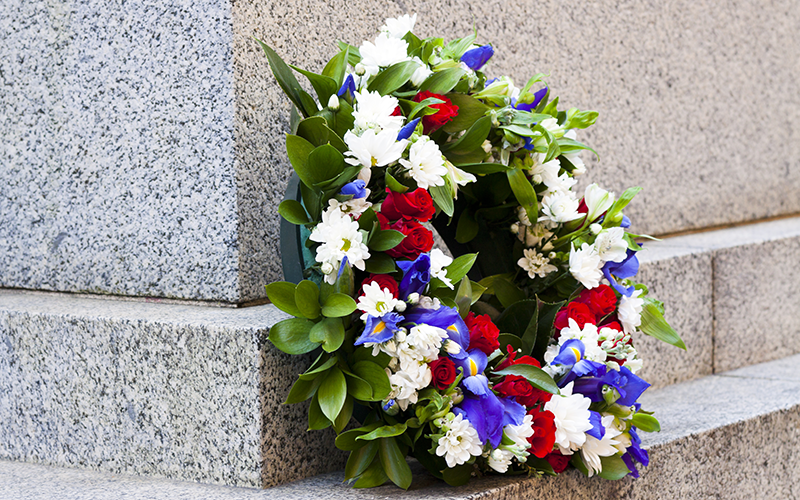
web Flower-Wreath CREDIT iStock-171335236.png - Credit: web Flower-Wreath CREDIT iStock-171335236.png

The Trades Union Congress (TUC) has called for a fully funded, government-led programme to remove asbestos from Britain’s workplaces, warning that the substance remains the country’s biggest occupational killer.

Laying a wreath at an event in Liverpool to mark International Workers’ Memorial Day (28 April), TUC general secretary Paul Nowak is expected to urge ministers to adopt what he describes as a ‘national mission’ to eradicate asbestos from public buildings, including schools and hospitals.

The TUC says more than 5,000 people die each year from asbestos-related diseases, with Britain recording the highest rate of asbestos cancers globally. Despite being banned, asbestos remains present in many older buildings, raising concerns about ongoing exposure among workers.

Nowak is set to highlight the scale of the challenge, arguing that managing asbestos in situ is no longer sufficient. He will call instead for a comprehensive removal strategy backed by government funding.

This is not just a policy ask – it is a public health necessity. Because prevention must mean elimination of risk, not just management of it

‘We have to be honest about the scale of the challenge we face. And none is bigger than asbestos,’ he is expected to say. ‘Each year, more than 5,000 people die because of asbestos. That cannot be allowed to stand.’

He will add that workers in schools, hospitals and other public sector buildings continue to face daily exposure risks, reinforcing the need for decisive action.

‘This is not just a policy ask – it is a public health necessity. Because prevention must mean elimination of risk, not just management of it,’ Nowak will say.

Separately, Nowak will attend a commemorative event at the Liverpool headquarters of the Health and Safety Executive (HSE), where he will lay a wreath in memory of those who have died due to work-related illness and injury.

International Workers’ Memorial Day is held annually to remember workers who have lost their lives at work and to campaign for stronger health and safety protections.

IOSH online

Moldova: Construction union SINIDCONS commemorates 28 April

Moldovan construction union  and BWI affiliate SINIDCONS marked International Workers’ Memorial Day with a rally, meetings and a public statement.

Italy: Construction union FILCA CISL marks International Workers’ Memorial Day

Italian construction union  and BWI affiliate FILCA CISL marked Workers’ Memorial Day with a public statement and the production of campaign materials.

Bulgaria: Construction union PODKREPA calls for ‘Too Hot To Work’ protection

In Bulgaria, BWI affiliate PODKREPA  marked Workers’ Memorial Day through online publications and public campaigning, calling for the adoption of “Too Hot To Work” measures in the construction sector in line with EU standards. The initiative highlights the need for stronger protections against heat stress and improved occupational safety for construction workers.

Greece: 28 April action program of OSETEE

Colleagues,


We send you the so far formulated program of actions of OSETEE and comrade Andreas Stoimenidis, for the three-day period 27-29/04 on the occasion of April 28, World Day for Safety and Health at Work and Day of Remembrance for Workers who lost their lives.

This year, the World Day coincides with the maintenance of the escalation of human losses in our country and is dedicated to Mental Health and Psychosocial Risks at Work. At the same time, the European Trade Unions and their European Confederation (ETUC) are intensifying their struggle for the inclusion of a legislative framework for heat stress in the European Framework of Quality Jobs.

  At the same time, Trade Unions around the world have designated April 28 as the Day of Remembrance for Workers who lost their lives in work accidents or from occupational diseases, to whom they pay tribute and promise to fight.

· Press Conference

Tuesday 28/04, 11.00 am. Press Conference by Andreas Stoimenidis at the Municipal Council Hall of the Municipality of Athens. New data will be provided on human losses in the workplace.

· Meetings

– Tuesday 28/04, 14.30, meeting with the President of GSEVEE, Mr. Giorgos Kavvathas

– Wednesday 29/04, 10.30, meeting with the Rector of the Agricultural University of Athens, Mr. Spyros Kintzios

· Speeches

–  Tuesday 28/04, 12.30, POE-OTA event

– Tuesday 28/04, 16.30 zoom at event of Latvian Trade Unions

- Wednesday 29/04, 12.00, Event of the Health and Safety at Work Committee of Employees at ERT

  · Interviews

– Monday 27/04, 9.00 am, with Angela Doulgeraki on Radio 98.4 Crete

– Monday 27/04, 12.30 pm, with Lazaros Theodorakidis on Thessaloniki Municipal Radio FM 100

– Monday 27/04, 13.45 pm, with Elias Koutseris on Radio ENA, Volos

– Tuesday 28/04, 15.30 pm, with Panagiotis Krinis on Thessaloniki Municipal Television

– Tuesday 28/04, 20.15 pm, with Maria Arabatzi on Blue Sky Television Station

– Wednesday 29/04, 07.15 am, with Giorgos Psaltis, on SKAI Radio Station 100.3

– Wednesday 29/04, 08.00 am, with Manos Niflis and Yiannis Kolokythas, on OPEN TV

– Wednesday 29/04, 10.00 pm, with Giorgos Chondropoulos on Alexandroupolis Municipal Radio

Today, Tuesday 28/04 at 10.15 am, a wreath will be laid at Klafthmonos Square, by a delegation from OSETEE, in memory of the workers who lost their lives at work.

We all have a duty to be proactive in Occupational Health and Safety issues on a daily basis.

We are at the disposal of our colleagues to support any initiative.

We call on our colleagues in the unions to highlight the Awareness and Remembrance Day.

                                         The Press Office of the OSETEE

Sweden: Work-related stress kills – and it’s not an individual problem

On April 28, World Day of Work Environment or as it is also called Workers’ Memorial Day. The day when we pay special attention to those who unfortunately have had to put to life because of their work.

Ahead of this year’s 28 April, ILO releases a new global report on psychosocial work environment, or as we call it in Sweden: organizational and social work environment. It’s heavy reading, but nothing that surprises, unfortunately. We have long discussed the impact of the increased workload; when structural risks are taken to achieve the greatest possible economic gain, without regard to the health of workers. When workers are stressed by the high workload, it is not individuals’ “stress management” that is the problem. It’s a systemfelsystem failure.
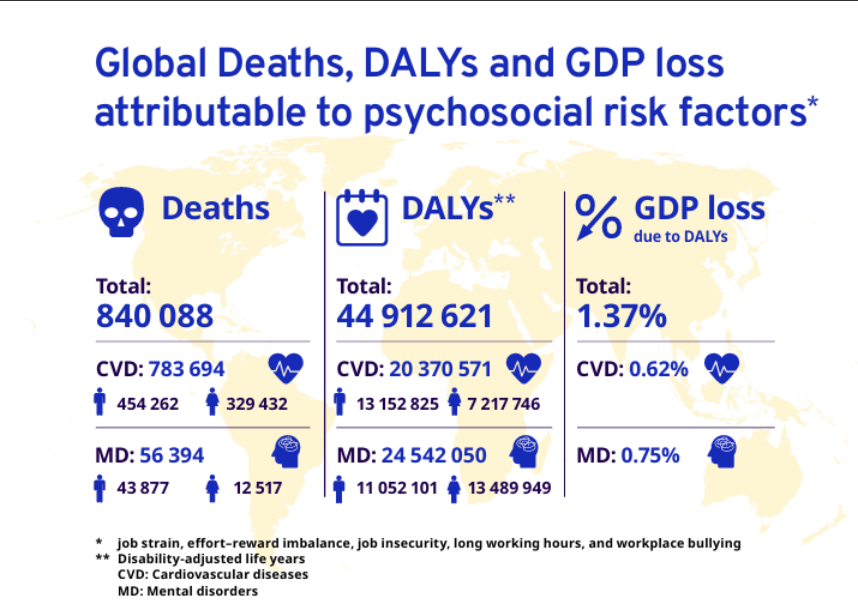
In its report, the ILO estimates that over 840 000 people die every year – mainly through cardiovascular diseases and mental illness – due to stress, unhealthy workload and major shortcomings in how work is organized. Nearly 45 million healthy years of life are lost each year, and costs represent 1.37 percent of global GDP. Long working days are a central risk factor – globally, 35 percent of all workers work more than 48 hours a week. Work-related violence and harassment is another area where the scale is high: almost one in four workers globally state that they have been subjected to violence and harassment at some point during their working life.

Also ITUC releases a very useful report, with global examples: Tackling psyhosocial risks at work. Among other things, work-related suicides are lifted, with terrible figures of at least 70 000 per year. Again, these are deaths that have all been avoided. This is not the case of workers’ “sensitivity”, lack of coping strategies or individual shortcomings. It is about how the work is organized, how requirements and resources are distributed and about power, i.e. influence over working conditions. The ability for the individual employee to influence their work situation varies greatly between countries, as deficiencies in democratic rights are increasing and compliance with fundamental human rights is reduced, such as the right to freely organise and negotiate their working conditions.

From a trade union perspective, the conclusion is self-evident: psychosocial work environment is a collective issue that requires collective solutions – through legislation, supervision, influence from employee representatives such as safety representatives and through improved working conditions through collective agreements. In Sweden we have our OSA (AFS 2023:2), but globally there is a lack of protection and influence for workers.

Swedish work environment statistics confirm the picture presented by the ILO in its report. According to the Swedish Work Environment Authority’s latest work environment survey, many employees state that the work is characterized by high workload, lack of opportunity for recovery and requirements that are not proportional to the resources.

Particularly vulnerable are female-dominated professions in health care, school and care – where stress-related mental illness is the most common cause of long-term sick leave. The Swedish Social Insurance Agency’s data shows that women are more than double the risk compared to men to be on sick leave due to stress-related mental illness. It should be clarified that it is not a women-related problem, but the problem lies in the fact that female-dominated professions often suffer cuts by staff, which in turn lead to excessive workload. An example of trying to counteract this is what Kommunal is now fighting for, removing minute control in elderly care. This leads to both a better working environment for employees and safer and more secure care for the elderly.

From individual focus to organizing work

A central point in ILO’s report is the need to shift focus: from treating mental illness as an individual problem to preventing psychosocial risks where they arise – in the organization of work.

ILO divides the psychosocial work environment into three levels:

  • Requirements and content of the work
  • How the work is led and organized
  • the overall systems: working time, governance, digitisation and influence

These three levels are clearly recognised from the fundamental rights of a safe working environment globally (Convention 155) and in our OSA regulations. Both the ILO report and the evaluation of OSA conducted in 2022 show that implementation often shortages, both globally and nationally. Risk assessments are made – but are not always followed by actual changes in how the work is organized. The fact that measures taken actually make a difference are also lacking.

Social dialogue – still a blind spot

Although mental illness, due to work is one of the greatest work environment risks, the issue is still surprisingly stepmotherly treated in many contexts. The ILO review of 338 cross-border collective agreements shows that only 18 percent explicitly address psychosocial factors or mental health in work environment management.

It shows how much the lack of knowledge about these issues is. There is a need for a substantial knowledge boost on how to prevent mental illness caused by work, both globally and nationally. The focus needs to be shifted to the organization of the work from what the employer so often focuses on: the individual’s private possible problems. Our now 10-year OSA regulation is precisely raising the requirement for knowledge in section 4 (AFS 2023:2):

The employer shall ensure that managers and supervisors have knowledge of how to prevent and handle unhealthy workload, and victimisation.

The employer must ensure that there are conditions to put these knowledge into practice.

From a trade union perspective, the way forward is clear:

  • Strengthen supervision and compliance with OSA Regulations nationally.
  • Move the focus from individual to organization – employers are and should be held responsible for how work is organized.
  • Strengthen the mandates and resources of safety representatives on issues of organisational and social work environment.
  • Integrate psychosocial risks more clearly into collective agreements and in systematic work environment management.
  • At a global level, collaboration between workers and employers needs to be strengthened.

The ILO’s message is clear: psychosocial risks are not an inevitable feature of a modern working life. They are the result of political choices, corporate strategies and power relations – and can therefore be changed. Together we can change the terms – the conclusion will therefore be as usual: don’t mourn – organize!

Cyrene Martinsson Waern – När arbetet dödar – LO Bloggen (When work kills…)

Regeringen måste göra mer för att stoppa hot och våld i arbetslivet – Altinget

https://www.facebook.com/reel/1968326160439577
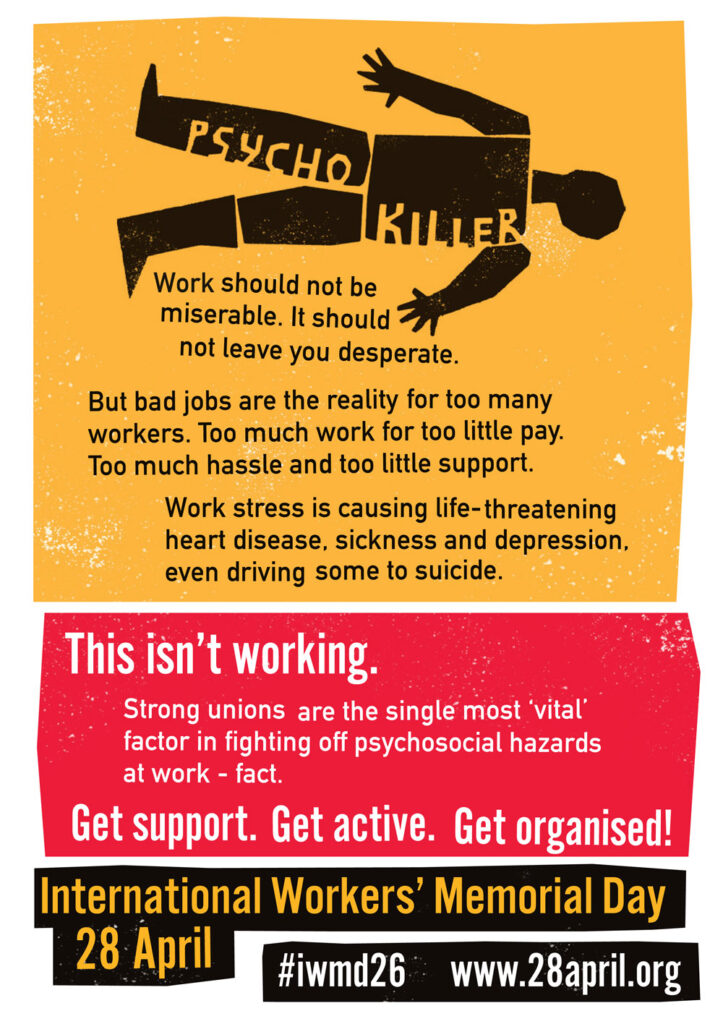
Sweden: När arbetet dödar (When work kills) – Landsorganisationen i Sverige

Arbetsrelaterad stress dödar – och det är inte ett individuellt problem

Den 28 april uppmärksammas Världsdagen för arbetsmiljö eller som den också kallas Workers’ Memorial Day. Den dag då vi särskilt uppmärksammar de som tyvärr har fått sätta livet till pga. sitt arbete.

Inför årets 28 april släpper ILO en ny global rapport om psykosocial arbetsmiljö, eller som vi benämner det i Sverige: organisatorisk och social arbetsmiljö. Det är tung läsning, men inget som förvånar, tyvärr. Vi har länge diskuterat den ökade arbetsbelastningens konsekvenser; när strukturella risker tas för att nå största möjliga ekonomiska vinst, utan hänsyn till arbetstagares hälsa. När arbetstagare stressas av den höga arbetsbelastningen är det inte individers ”stresshantering” som är problemet. Det är ett systemfel.

ILO uppskattar i sin rapport att över 840 000 människor dör varje år – främst genom hjärt‑kärlsjukdomar och psykisk ohälsa – till följd av stress, ohälsosam arbetsbelastning och stora brister i hur arbetet organiseras. Nästan 45 miljoner friska levnadsår går förlorade varje år, och kostnaderna motsvarar 1,37 procent av den globala BNP. Långa arbetsdagar är en central riskfaktor – globalt arbetar 35 procent av alla arbetstagare mer än 48 timmar i veckan. Arbetsrelaterat våld och trakasserier är ett annat område där omfattningen är stor: nästan var fjärde arbetstagare globalt uppger att de utsatts för våld och trakasserier någon gång under sitt arbetsliv.

Även ITUC släpper en mycket matnyttig rapport, med globala exempel: Tackling psyhosocial risks at work. Bland annat lyfts arbetsrelaterade suicid, med fruktansvärda siffror på minst 70 000 per år. Återigen, det här är dödsfall som alla har kunnat undvikas. Det handlar nämligen inte om arbetstagares ”känslighet”, bristande copingstrategier eller individuella tillkortakommanden. Det handlar om hur arbetet är organiserathur krav och resurser fördelas och om makt, dvs inflytande över arbetsvillkoren. Möjligheten för den enskilde arbetstagaren att påverka sin arbetssituation varierar stort mellan olika länder, i takt med att brister i demokratiska rättigheter ökar och efterlevnaden av grundläggande mänskliga rättigheter minskar, exempelvis rätten att fritt organisera sig och förhandla om sina arbetsvillkor.

Ur ett fackligt perspektiv är slutsatsen självklar: psykosocial arbetsmiljö är en kollektiv fråga som kräver kollektiva lösningar – via lagstiftning, tillsyn, inflytande från arbetstagarrepresentanter såsom skyddsombud och genom förbättrade arbetsvillkor genom kollektivavtal. I Sverige har vi vår OSA (AFS 2023:2), men globalt saknas det både skydd och inflytande för arbetstagare.

Svensk arbetsmiljöstatistik bekräftar bilden som ILO presenterar i sin rapport. Enligt Arbetsmiljöverkets senaste arbetsmiljöundersökning uppger många anställda att arbetet präglas av hög arbetsbelastning, bristande möjlighet till återhämtning och krav som inte står i proportion till resurserna.

Särskilt utsatta är kvinnodominerade yrken inom vård, skola och omsorg – där stressrelaterad psykisk ohälsa är den vanligaste orsaken till långtidssjukskrivningFörsäkringskassans data visar att kvinnor löper mer än dubbel risk jämfört med män att sjukskrivas på grund av stressrelaterad psykisk ohälsa. Det bör förtydligas att det är inte ett kvinnorelaterat problem, utan problemet ligger i att just kvinnodominerade yrken ofta drabbas av nedskärningar av personal, vilken i sin tur leder till alltför hög arbetsbelastning. Ett exempel i att försöka motverka detta är det som Kommunal nu kämpar för, att ta bort minutstyrningen inom äldreomsorgen. Något som leder till både bättre arbetsmiljö för de anställda och tryggare och säkrare omsorg för de äldre.

Från individfokus till organisering av arbete

En central poäng i ILOs rapport är behovet av att flytta fokus: från att behandla psykisk ohälsa som ett individuellt problem till att förebygga psykosociala risker där de uppstår – i organiseringen av arbetet.

ILO delar in den psykosociala arbetsmiljön i tre nivåer:

  • arbetets krav och innehåll
  • hur arbetet leds och organiseras
  • de övergripande systemen: arbetstid, styrning, digitalisering och inflytande

Dessa tre nivåer känns tydligt igen från de grundläggande rättigheterna för en säker arbetsmiljö globalt (konvention 155) och i våra OSA‑föreskrifter. Både ILOs rapport och den utvärdering av OSA som genomfördes 2022 visar att implementeringen ofta brister, både globalt och nationellt. Riskbedömningar görs – men följs inte alltid av faktiska förändringar i hur arbetet organiseras. Även kontroll på att vidtagna åtgärder faktiskt gör skillnad saknas ofta.

Social dialog – fortfarande en blind fläck

Trots att psykisk ohälsa, p g a arbetet är en av de största arbetsmiljöriskerna, behandlas frågan fortfarande förvånansvärt styvmoderligt i många sammanhang. ILO:s genomgång av 338 gränsöverskridande kollektivavtal visar att endast 18 procent explicit tar upp psykosociala faktorer eller mental hälsa inom arbetsmiljöarbetet.

Det visar på hur stor bristen på kunskap om dessa frågor är. Det behövs ett rejält kunskapslyft om hur man förebygger psykisk ohälsa orsakat av arbetet, både globalt och nationellt. Fokuset behövs flyttas till arbetets organisering från det som arbetsgivaren så ofta fokuserar på: individens privata eventuella problem. Vår nu 10-åriga OSA-föreskrift lyfter just kravet på kunskap i 4 § (AFS 2023:2):

 Arbetsgivaren ska se till att chefer och arbetsledare har kunskaper om hur man förebygger och hanterar ohälsosam arbetsbelastning, och kränkande särbehandling.

Arbetsgivaren ska se till att det finns förutsättningar att omsätta dessa kunskaper i praktiken.

Ur ett fackligt perspektiv är vägen framåt tydlig:

  • Stärk tillsynen och efterlevnaden av OSA‑föreskrifterna nationellt.
  • Flytta fokus från individ till organisation – arbetsgivare är och ska hållas  ansvariga för hur arbete organiseras.
  • Stärk skyddsombudens mandat och resurser i frågor om organisatorisk och social arbetsmiljö.
  • Integrera psykosociala risker tydligare i kollektivavtal och i det systematiska arbetsmiljöarbetet.
  • På global nivå behöver samverkan mellan arbetstagare och arbetsgivare stärkas.

ILO:s budskap är tydligt: psykosociala risker är inte ett oundvikligt inslag i ett modernt arbetsliv. De är ett resultat av politiska val, företagsstrategier och maktförhållanden – och kan därför förändras. Tillsammans kan vi ändra på villkoren – slutsatsen blir därför som vanligt: don’t mourn – organize!

Cyrene Martinsson Waern – När arbetet dödar – LO Bloggen (When work kills…)

Regeringen måste göra mer för att stoppa hot och våld i arbetslivet – Altinget

https://www.facebook.com/reel/1968326160439577
 

Belgium: ACV-CSC initiatives for 28 April

Dear colleagues,

 With this email, we would like to inform you about the initiatives of ACV‑CSC around 28 April 2026, Workers’ Memorial Day. In Belgium, workers are confronted with a government that is strongly committed to far‑reaching labour market flexibilisation. This has led, among other things, to a significant increase in the number of workers employed under various atypical short‑term contracts. These workers receive little or no information, training or guidance in the field of occupational safety and health. As a result, we see an increase in the number of occupational accidents and work‑related diseases among these workers. Increasingly, workers are no longer covered by occupational accident insurance because of their employment status, or they are unable to have a work-related disease recognised as an occupational disease.

 As the government plans are now being fully rolled out, we have decided to dedicate 28 April 2026 to a better protection for these atypical workers. All information can be found on our website (available only in French and Dutch).

 FR: La santé et la sécurité au travail ne sont pas un jeu!

NL: Veiligheid en gezondheid op het werk is geen spel! | ACV

 We would also like to thank the ITUC for annually promoting Workers’ Memorial Day and for fighting alongside us for safer and healthier workplaces for all workers.

 Best regards,

Kris Van Eyck

Head industrial relations department ACV-CSC

UK: Overworked health staff report stressed out, says UNISON

A third of employees in the UK National Health Service (NHS) have taken time off for mental health issues in the past year with many staff talking about reaching “breaking point”, according to the union UNISON.

A survey of health workers, including nurses, occupational therapists and paramedics, has also found more than four in five (85%) have experienced stress at work over the past 12 months.

UNISON says the findings – based on responses from more than 19,000 staff and released during the union’s annual health conference in Edinburgh and released two weeks ahead of the psychosocial hazards-themed International Workers’ Memorial Day on 28 April – paint a grim picture when the NHS workforce is under pressure to reduce waiting lists.

Staff say stress has had a significant impact on their mental and physical health, with symptoms including anxiety, PTSD, panic attacks, migraines, and sleep disturbance.

Some have experienced high blood pressure, stress-related vomiting, dizziness and breathlessness, according to the findings of the union survey. One NHS worker even reported suffering a heart attack due to understaffing and high workloads.

Many described reaching breaking point, feeling exhausted and overwhelmed by sustained levels of stress. This has affected their relationships and family lives, with some reporting suicidal thoughts, UNISON says.

NHS workers also described taking antidepressants and beta-blocker drugs, as well as undergoing cognitive behavioural therapy and counselling.

Almost a quarter (23%) of those taking sick leave didn’t tell their employer the real reason for their absence from work. Of those, most said they did not feel their manager would support them, while concerns about stigma and not wanting colleagues to know were also common.

Counselling, medication or other forms of support had been sought in the past year by more than one in four (28%) of those under stress. Almost two thirds (65%) of those who had taken time off for stress reported feeling that they were under pressure to come to work, despite feeling mentally unwell. This adds strain to an already overstretched workforce, UNISON says.

UNISON head of health Helga Pile said: “Such high levels of stress in the NHS should be ringing alarm bells. Staff who care for others are being pushed to the point that they’re becoming unwell themselves.” She added: “Government and employers must do more to help staff with their mental health, including providing fast-track access to treatment and moving away from punitive and counter-productive absence policies.”

Unison news release