Category Archives: 2026 Global

USA: Honor those we lost by fighting for stronger workplace safety – AFSCME


It’s not too much to ask to be safe at work. In fact, the US Occupational Safety and Health Act of 1971 says every worker has a fundamental right to a safe work environment.

And yet there are still too many avoidable accidents. Too many injuries. And way too many deaths.

In 2024, the most recent full year of data available, . And about 135,000 died from occupational diseases not including COVID-19.

“On Workers Memorial Day, we mourn the loss of all those who have died, been seriously injured or made ill while on the job. Going to work and earning a paycheck to support your family should not be hazardous to your health. Unfortunately, every year, thousands of families receive the devastating news that their loved one died or was seriously injured on the job, often because of a preventable workplace hazard,” said AFSCME President Lee Saunders.

Saunders said the Trump administration has weakened worker protections by cutting funding for inspections and enforcement. Stronger safeguards against extreme heat for those who work outside, like sanitation and highway workers, have not been approved, and those in health care, corrections and other fields continue to face unacceptable high rates of workplace violence, he said.

“These reckless decisions put more workers in harm’s way and make tragedies like the ones we commemorate today more likely. That’s why we’re organizing for stronger workplace protections — such as heat standards and workplace violence regulations — so sanitation workers, nurses, behavioral health workers, paramedics, corrections officers, and other public service workers can do their jobs without risking preventable injury or death. AFSCME members and all workers deserve a government that mandates and enforces strong worker safety protections,” Saunders said.

These attacks only make AFSCME members fight harder for improved safety programmes and stronger enforcement, the union said.

AFSCME members are leading efforts all over the country through advocating protective legislation, bargaining strong contracts or organizing members across sectors around health and safety:

  • Kaiser Permanente health care professionals in California and Hawaii won robust contracts this year, including provisions for stronger staffing, after going on a historic strike;
  • AFSCME library members in Washington state held a summit last year to address pressing health and safety concerns, such as workplace violence;
  • AFSCME members in Texas this year defended workplace protections for pregnant and postpartum corrections.

The union concluded that this Workers Memorial Day, we take inspiration from the AFSCME members around the country who serve their communities with dedication and skill, and stand together to fight for respect, dignity and safety all workers deserve.

Full AFSCME 28 April statement
https://www.afscme.org/blog/workers-memorial-day-honor-those-we-lost-by-fighting-for-stronger-workplace-safety

Global/Asia-Pacific: Psychosocial hazards at work: Why collective action Is essential

Psychosocial Hazards at Work: Why Collective Action Is Essential

Published: 27/04/2026

Editorial by Dr Hidayat Greenfield, IUF Asia/Pacific Regional Secretary

As unions mark International Workers’ Memorial Day on April 28, occupational safety and health must be understood in its full sense. The most widespread dangers workers face today are not only physical—they are psychosocial. Addressing them must become a central part of the trade union agenda.

ILO Convention No.155 on Occupational Safety and Health (1981) was recognized as a fundamental convention in 2022 and is now one of the ILO’s core labour standards. As such it applies everywhere to all workers regardless of whether governments have ratified the convention or not. It is a fundamental workers’ right – a human right.

But safety cannot be limited to physical protection. It must include freedom from psychological harm caused by how work is organized and managed.

Psychosocial hazards arise from the social context of work. They are rooted in the organization of work, systems of work, technologies, and the attitudes and behaviours of managers, supervisors, customers, and coworkers. While the effects are psychological, including stress, anxiety, depression, and loss of self-esteem, the causes are not personal. They are social.

This distinction is critical. It means that psychosocial hazards must be identified and addressed at their source. It also underlines the central role of unions in prevention.

Across the Asia Pacific region, union organizing has highlighted several key psychosocial hazards.

Precarious employment creates continuous uncertainty and insecurity. Contract workers, workers on standby, and workers employed through labour contractors experience constant anxiety about income, debt, and whether they will have work in the future. This inability to plan ahead is mentally and physically exhausting. It is debilitating. In addition, practices such as nepotism and abuse in hiring and rehiring deepen vulnerability and expose workers, especially women, to exploitation and harassment.

Piece rate wages, quotas, and performance targets generate excessive stress. In agriculture, failure to meet quotas leads directly to poverty wages and debt and has been identified as a driver of child labour. In hotels, excessive room quotas have been exposed as a major source of injury and illness. Across sectors, individual performance appraisal systems tied to wages increase surveillance, abuse of authority, and vulnerability to bullying and harassment. Targets are often constantly changing and influenced by favouritism, leading to demoralization, loss of motivation, and depression. Fear is central. Fear of not earning enough, fear of losing employment, and fear of being blamed all contribute to significant mental stress.

Continuous restructuring has created a work environment of ongoing uncertainty. Automation, digitalization, and new technologies, including algorithmic management, further increase stress and uncertainty. Workers face changing roles, unclear job descriptions, and increased responsibilities without recognition or reward. Self supervision and self reporting shift responsibility and blame onto individual workers, increasing stress and exhaustion. At the same time, there is a failure to address the long-term impact of this uncertainty on younger workers.

Behaviour-based safety has become a dominant approach to occupational safety and health. It places responsibility on individual workers rather than on employers and governments. As a result, psychosocial harm is treated as an individual mental health issue. Solutions such as counselling and wellbeing programs shift attention to workers’ attitudes and personal circumstances while leaving workplace hazards unchanged. This isolates workers and intensifies stress and anxiety.

In response, workers are organizing. Platform and gig economy workers, including food delivery riders, have formed unions to demand transparency, accountability, and protection from psychosocial harm.

The key role of unions is to use collective bargaining to shape how work is organized, ensure transparency in new technologies, and secure fair workloads, job security, and protection from harassment and discrimination. This is not about stopping change, but about assessing its impact, regulating its pace, ensuring training and support, and minimizing stress and anxiety while protecting workers’ health and dignity.

Collective action is essential. It transforms individual experiences of anxiety and stress into shared action and builds workers’ confidence that psychosocial hazards can be eliminated.

If unions fail to address psychosocial hazards, they risk losing relevance, especially among younger workers. By confronting these root causes and organizing around them, unions can strengthen their role and rebuild power.

On this International Workers’ Memorial Day, addressing psychosocial hazards at work must be a union priority. It is fundamental to protecting workers’ health, dignity, and rights.


This editorial is based on a presentation (in English) to the ITUC Asia Pacific webinar in commemoration of International Workers’ Memorial Day.

On this International Workers’ Memorial Day, addressing psychosocial hazards at work must be a union priority.

Dr Hidayat Greenfield, IUF Asia/Pacific Regional Secretary

Psychosocial Hazards at Work: Why Collective Action Is Essential

Global: International Workers’ Memorial Day 2026: Remember the dead, fight for the living | ITF Global


Every year on 28 April, we stop, we remember, we recommit.

This year, on International Workers’ Memorial Day, our collective grief is fresh and the urgency for change is acute. In the past twelve months, transport workers have been killed on runways, crushed by cargo, run over at picket lines, caught in the crossfire of wars they did not start – with many more suffering harms that still go uncounted: the stress, exhaustion, isolation and fear that too many carry alone.

We represent 16.6 million transport workers across more than 150 countries. We honour every one of them.

War and its human cost

In 2025 alone, armed conflicts killed more than 240,000 people globally – in Sudan, Gaza, Ukraine, Myanmar, the Democratic Republic of Congo and beyond, all theatres of mass civilian death. In 2026, the Middle East has become the epicentre of renewed devastation. Since the US/Israel-Iran war began on 28 February 2026, over 3,600 people have been killed in Iran – more than 1,700 of them civilians. In Lebanon, where Israeli strikes resumed in March 2026, at least 2,450 people have been killed and over 1 million displaced. In Venezuela, a US attack in January resulted in the deaths of military personnel and civilians, with the blockade further driving hardship for workers and their families.

Transport workers are on the front line of every conflict.

Since war erupted in Iran in February 2026, around 20,000 seafarers have been trapped aboard 2,000 vessels in the Persian Gulf. The International Maritime Organisation reports that at least ten seafarers have been killed in 21 confirmed attacks. Iranian authorities have also reported that 39 commercial vessels have been sunk, 110 fishing boats destroyed and 20 seafarers killed. The ITF has received nearly 1,900 requests for assistance and repatriated 450 seafarers from the region.

ITF General Secretary Stephen Cotton is unequivocal: “Seafarers are not soldiers. They are workers largely from the Global South, far from home, carrying the world’s cargo on behalf of all our economies. They did not start this war. They cannot end it. Yet they are being used as pawns.”

Aviation workers across the region have continued operating under exceptional pressure as attacks target airports. Pilots, cabin crew, air traffic controllers and ground crew are maintaining essential services amid airspace closures and the constant threat of danger.

Earlier this month, the ITF Executive Board called for an immediate end to hostilities, the full protection of civilian transport workers, and concrete measures from employers and governments to protect them. The ITF also joined global unions representing over 200 million workers worldwide in demanding a permanent, sustainable ceasefire across the Middle East.

The deadly impact of regional conflicts on transport workers is not confined to the Middle East. In West Africa, truck drivers have been caught in the crossfire of the escalating Sahel security crisis. On 29 January 2026, armed groups ambushed fuel convoys along the Diboli–Kayes corridor in western Mali, killing more than 15 tanker drivers – workers executed simply for doing their jobs.

The ITF stands for peace everywhere workers are forced to pay the price of decisions made by others.

OSH: The scale of the crisis

According to the most recent International Labour Organization (ILO) global estimates, nearly 3 million workers die from work-related causes every year – and the figure is rising, not falling. Transport is one of the most dangerous sectors to work in. And it is not only physical hazards that kill. Long working hours alone are estimated to cause nearly 750,000 deaths a year worldwide and psychosocial risks are still poorly captured, hidden behind a culture that tells workers to cope rather than addressing the structural risks that harm them.

When workers warn and no one listens

On 18 January 2026, two high-speed trains collided near Adamuz in southern Spain, killing 46 people and injuring 292, Spain’s worst rail disaster in more than a decade. Among the dead was the 28-year-old driver of the Renfe train. Two days later, a trainee driver was killed when a commuter train struck a collapsed wall in Gelida, near Barcelona.

What makes Adamuz a defining Workers’ Memorial Day story is not just the scale of the tragedy. Rail workers had been raising the alarm since August 2025, warning rail infrastructure operator ADIF of severe wear and tear on the very tracks where the crash later occurred. An investigation later confirmed a fractured track joint that had been deteriorating for some time.

After the crash, rail unions called a national strike. ITF and ETF affiliates CCOO and UGT joined other unions, demanding more maintenance workers and greater investment in infrastructure. By the end of the first day, unions secured an historic agreement with the government: €1.8 billion in maintenance investment over four years, 3,650 new jobs across the sector, and a joint safety committee giving workers a real voice in safety decision making.

Tragically, 46 people died because warnings were ignored.

When safety fails, workers carry the consequences

On 12 June 2025, Air India Flight AI171 crashed shortly after take-off from Ahmedabad, India, killing 241 of the 242 people on board – among them both pilots and all ten cabin crew – the deadliest aviation disaster this decade. The scale of the loss sent shockwaves across the global aviation community.

On 22 March 2026, Captain Antoine Forest and First Officer Mackenzie Gunther were killed when their Air Canada Express jet struck a fire truck on the runway at LaGuardia Airport in New York. Both were members of ALPA Canada, both were at the start of their careers.

Passengers said the pilots braked hard in their final seconds, protecting everyone on board. “I wouldn’t be here had it not been for the pilot acting quickly,” one passenger told reporters.

ALPA Canada president Capt. Tim Perry, speaking as hundreds of fellow pilots lined up in the rain to bring them home, said: “No family should go through this. It must be a promise: when a pilot goes to work, they must come home alive.”

The ITF stands with the families, unions, and aviation workers reeling from these tragedies.

In ports and at sea, preventable deaths continue

Ports are hubs of the global economy. They are also among its most dangerous workplaces.

The International Cargo Handling Co-ordination Association (ICHCA) tracks cargo-related workplace fatalities worldwide. Its June 2025 Severe Risks Dashboard lists over 500 deaths in ports since 2000, revealing a persistent, preventable pattern.

Every year, an estimated 100,000 fishers lose their lives in what is often labelled the deadliest profession in the world, carried out far from oversight, protection or accountability.

ITF research published this month exposed serious labour abuses – violence, wage theft, and forced labour – on fishing vessels operating in Marine Stewardship Council-certified fisheries.

Fishers work in isolation, far from ports and legal protection. Their deaths are not unavoidable tragedies. They are the result of weak enforcement and a system that too often treats workers as disposable.

Psychosocial risk: the crisis still hidden at work

This year, the International Trade Union Confederation’s (ITUC) Workers’ Memorial Day campaign focuses on the growing crisis of psychosocial hazards at work. Work-related stress, excessive workloads, long hours, job insecurity, bullying, harassment, and workplace violence are killing workers – just as better understood physical hazards can.

For too many transport workers, this is their daily, lived reality. Seafarers spend months at sea, cut off from families. Urban transport workers face an intensification of third-party violence, including gender-based violence, and schedules that do not bend to workers’ needs. Truck and coach drivers face significant safety and health risks due to the informality and precarity of the sector. Understaffing, competitive pressures and the looming threat of automation are driving high turnover and fatigue among aviation workers. Women and young workers are particularly exposed, often finding themselves in precarious roles with the least access to support.

Mental health is not an individual failing, it is the systemic outcome of how work is organised, how workers are valued and supported, and whether they have the power to shape their own conditions.

The ITF’s research report – Essential public services, essential workers’ health – documented union-led mental health initiatives for young workers in urban transport across seven countries, proving that protecting mental health is fundamental union work.

The ITUC’s call to action is one the ITF shares: recognise and enforce psychosocial hazards in law, conduct proper risk assessments, prevent bullying and harassment, and regulate excessive hours.

Violence against transport workers 

ILO Convention 190 on Violence and Harassment in the World of Work sets the global standard, yet ratification remains too slow and implementation too uneven. For transport workers, who face some of the highest rates of third-party violence of any sector, C190 must be ratified, resourced, and enforced.

The human cost of that violence is not abstract. On 5 January 2026, Alessandro Ambrosio, a 34-year-old Trenitalia conductor, was stabbed to death in the employee car park at Bologna station after his shift. Less than a month later, Serkan C., a 36-year-old Deutsche Bahn conductor and father of two, was beaten to death on a train in Germany after asking a passenger for a valid ticket. Both were simply doing their jobs. Both paid with their lives.

Remember the dead, fight for the living

Captain Antoine Forest and First Officer Mackenzie Gunther, killed at LaGuardia. The 28-year-old train driver killed at Adamuz, and the trainee driver killed days later in Gelida. Alessandro Ambrosio, stabbed to death at Bologna station. Serkan C., beaten to death on a train in Germany. The Korean trade union member killed on a picket line. The seafarers killed in the Strait of Hormuz. The ground workers killed at airports. The dockworkers crushed by cargo. The fishers lost at sea. The air traffic controllers who burned out in silence. The bus drivers injured and traumatised by violence on the route. And the thousands of transport workers killed in war and conflict.

We will not forget them. And we will not stop fighting until every transport worker comes home safe.

https://www.itfglobal.org/en/news/international-workers-memorial-day-2026-remember-dead-fight-living

Global/UK: Dead end job – How work stress can kill you and how unions can save you – Hazards magazine

Ahead of International Workers’ Memorial Day, Hazards magazine has published an in-depth survey of psychosocial workplace hazards, presenting evidence that unions are the most effective means of keeping workers safe.

Anxiety, depression and heart disease. Even suicide. The occupational diseases of the 21st century workplace are now outstripping the maladies caused by traditional dirty, difficult and dangerous work. Hazards magazine says new evidence proves unions are the best antidote to psychosocial hazards at work and boost the economy.
DEAD END JOBS | How work stress can kill you and how unions can save you

Global: Journée internationale de commémoration des travailleurs morts ou blessés au travail 2026 : prendre en compte les risques psychosociaux au travail

Le 28 avril, à l’occasion de la Journée internationale de commémorations des travailleurs morts ou blessés au travail, la CSI appelle à une action urgente visant à lutter contre la crise mondiale des risques psychosociaux au travail, désormais l’une des principales causes de décès, de maladie et de souffrance pour les travailleurs et les travailleuses à travers le monde.

Derrière la réalité quotidienne du travail, des millions de personnes sont soumises à une pression incessante : longues heures de travail, insécurité de l’emploi, objectifs impossibles à atteindre et environnements de travail toxiques.

Il ne s’agit pas seulement d’emplois de mauvaise qualité, mais d’emplois dangereux. Le stress, l’anxiété et l’épuisement provoquent aujourd’hui plus de préjudice à l’échelle planétaire que les risques traditionnels sur les lieux de travail, tels que les produits chimiques ou la poussière.

Le nouveau rapport de la CSI révèle l’ampleur de la crise :

  • La durée excessive des heures de travail est responsable à elle seule d’environ 745 000 décès chaque année.
  • Au moins 70 000 suicides liés au travail sont à déplorer annuellement.
  • Tous les ans, 12 milliards de jours de travail sont perdus en raison de la dépression et de l’anxiété.

L’épuisement au travail touche environ un travailleur sur cinq dans le monde.

Les risques psychosociaux sont associés, dans plus de 10 pour cent des cas, aux maladies cardiaques, à la dépression et aux suicides.

« Les emplois de mauvaise qualité peuvent briser n’importe qui. Lorsque les travailleurs subissent des pressions au-delà des limites supportables, à cause de l’insécurité de l’emploi, de charges de travail excessives et d’un manque de contrôle, les conséquences peuvent être fatales. Cette situation n’est pas inévitable : elle résulte de décisions prises dans des salles de réunions et par les gouvernements. »Luc Triangle, secrétaire général de la CSI.

Sur l’ensemble du globe, les syndicats montrent qu’un changement est possible. Les faits indiquent qu’une présence syndicale forte et démocratique sur le lieu de travail constitue la plus efficace des protections contre les risques psychosociaux, en contribuant à améliorer la santé et les performances économiques des travailleurs et des travailleuses.

La CSI réclame :

  • Des lois rigoureuses destinées à prévenir les risques psychosociaux au travail.
  • La participation pleine et entière des syndicats aux questions de santé et de sécurité au travail.
  • Des emplois décents, c’est-à-dire des emplois sûrs, une rémunération équitable et des charges de travail supportables.
  • La reconnaissance des troubles de santé mentale comme maladies professionnelles.

Luc Triangle a conclu : « Les solutions à ces problèmes commencent par la démocratie au travail, pour permettre aux travailleurs de faire entendre leur voix par l’intermédiaire de leur syndicat. Les employeurs peuvent choisir d’ignorer la santé psychosociale de leurs employés et de les pousser à bout, de perdre leurs précieuses compétences et d’en payer le coût financier, ou choisir de collaborer avec les syndicats pour veiller à ce que les travailleurs soient valorisés. Si les employeurs peinent à savoir quel est le bon choix, les syndicats se tiennent prêts à le leur rappeler. La lutte pour la démocratie au travail est la lutte pour le bien-être de tous les travailleurs et travailleuses. »

Ce 28 avril, nous rendons hommage aux personnes décédées au travail, et nous nous battons pour les vivants. Le travail ne devrait pas coûter des vies. Il doit protéger la vie, la dignité et la santé mentale.

https://www.ituc-csi.org/journee-internationale-de-commemoration-des-travailleurs-morts-ou-blesses-au-travail-2026

Global: International Workers’ Memorial Day 2026: Tackling psychosocial risks at work – ITUC

International Workers’ Memorial Day 2026: Tackling psychosocial risks at work

This International Workers’ Memorial Day, 28 April, the ITUC calls for urgent action to tackle the global crisis of psychosocial risks at work – now one of the leading causes of death, disease and distress for workers worldwide.


Behind the daily reality of work, millions of working people are facing relentless pressure: long hours, job insecurity, impossible targets and toxic workplace cultures.

These are not just bad jobs – they are dangerous jobs. Stress, anxiety and burnout are now causing more harm globally than traditional workplace hazards such as chemicals or dust.

The ITUC’s new report shows the scale of the crisis:

  • Long working hours alone are responsible for around 745,000 deaths each year.
  • There are at least 70,000 work-related suicides annually.
  • 12 billion working days are lost every year due to depression and anxiety.
  • Burnout affects around one in five workers globally.
  • Psychosocial risks are linked to over 10 per cent of cases of heart disease, depression and suicides.

“Bad jobs can break anyone. When workers are pushed beyond their limits by job insecurity, excessive workloads and lack of control, the consequences can be fatal. This is not inevitable – it is a result of choices made in boardrooms and by governments.”ITUC General Secretary Luc Triangle

Across the world, unions are proving that change is possible. Evidence shows that a strong, democratic trade union presence in the workplace is the most effective protection against psychosocial risks, improving workers’ health and economic outcomes.

The ITUC is calling for:

  • Strong laws to prevent psychosocial risks at work.
  • Full involvement of trade unions in workplace health and safety.
  • Decent work, including secure jobs, fair pay, safe staffing levels and manageable workloads.
  • Recognition of mental health conditions as occupational diseases.

Luc Triangle concluded: “The solutions to these problems start with democracy in the workplace, with a voice for workers through their trade unions. Employers can ignore the psychosocial health of workers and break them, lose valuable skills and face the financial cost, or they can work with unions to ensure that workers are valued. If employers are struggling to recognise which is the correct choice, unions are ready and available to remind them. The fight for democracy in the workplace is the fight for the wellbeing of all working people.”

This 28 April, we remember the dead – and fight for the living. Work should not cost lives. It must protect lives, dignity and mental health.

https://www.ituc-csi.org/International-Workers-Memorial-Day-2026

Global: Jornada Internacional de Conmemoración de los Trabajadores Fallecidos y Lesionados 2026

Jornada Internacional de Conmemoración de los Trabajadores Fallecidos y Lesionados 2026: abordar los riesgos psicosociales en el trabajo

Con motivo de la Jornada Internacional de Conmemoración de los Trabajadores y Trabajadoras Fallecidos y Lesionados, el 28 de abril, la CSI hace un llamamiento a la acción urgente para abordar la crisis mundial de los riesgos psicosociales en el trabajo, la cual se ha convertido en una de las principales causas de muerte, enfermedad y sufrimiento entre los trabajadores y las trabajadoras de todo el mundo.

Detrás de la realidad cotidiana del trabajo, millones de personas trabajadoras se enfrentan a una presión continua: largas jornadas de trabajo, inseguridad laboral, objetivos imposibles de alcanzar y culturas empresariales tóxicas.

No solamente son malos empleos, son empleos peligrosos. El estrés, la ansiedad y el agotamiento ocupacional causan ahora más daños a escala mundial que los riesgos laborales tradicionales, como los inducidos por productos químicos o el polvo.

El nuevo informe de la CSI muestra la magnitud de la crisis:

  • Solo las largas jornadas laborales son responsables de aproximadamente 745 000 muertes cada año.
  • Se registran al menos 70 000 suicidios anuales relacionados con el trabajo.
  • Se pierden 12 000 millones de días de trabajo cada año debido a la depresión y la ansiedad.
  • El agotamiento profesional afecta a aproximadamente uno de cada cinco trabajadores en todo el mundo.
  • Los riesgos psicosociales están relacionados con más del 10% de los casos de enfermedades cardíacas, depresión y suicidios.

Luc Triangle, secretario general de la CSI, afirmó en este sentido: “Los malos empleos pueden destrozar a cualquiera. Cuando la inseguridad laboral, las cargas de trabajo excesivas y la falta de control sobre el trabajo llevan a las personas trabajadoras más allá de sus límites, las consecuencias pueden ser fatales. No es algo inevitable: es el resultado de decisiones tomadas en las salas de juntas y por los gobiernos”.

En todo el mundo, los sindicatos demuestran que el cambio es posible. Los datos indican que una presencia sindical fuerte y democrática en el lugar de trabajo constituye la protección más eficaz contra los riesgos psicosociales, mejorando así la salud de las personas trabajadoras y los resultados económicos.

La CSI reclama:

  • Leyes estrictas para prevenir los riesgos psicosociales en el trabajo.
  • La plena implicación de los sindicatos en la salud y la seguridad en el trabajo.
  • Un trabajo decente, que incluya seguridad laboral, una remuneración justa, niveles de dotación de personal adecuados y cargas de trabajo asumibles.
  • El reconocimiento de los trastornos de salud mental como enfermedades profesionales.

Luc Triangle concluyó a este respecto: “Las soluciones a estos problemas comienzan por la democracia en el lugar de trabajo, con una voz para los trabajadores y trabajadoras a través de sus sindicatos. Los empleadores pueden pasar por alto
la salud psicosocial de las personas trabajadoras y agotarlas, perder valiosas competencias y sufrir las consecuencias económicas, o bien pueden colaborar con los sindicatos para garantizar que se valore a las personas trabajadoras. Si los empleadores tienen dificultades para reconocer cuál es la opción correcta, los sindicatos están preparados y dispuestos para recordárselo. La 
lucha por la democracia en el lugar de trabajo es la lucha por el bienestar de todos los trabajadores y trabajadoras”.

Este 28 de abril, conmemoramos a los fallecidos y luchamos por los vivos. El trabajo no debería costar vidas. Debe proteger las vidas, la dignidad y la salud mental.

https://www.ituc-csi.org/Jornada-Internacional-de-Conmemoracion-de-los-Trabajadores-Fallecidos-y-Lesionados-2026

Global: Webinar – Ensuring a healthy psychosocial working environment – ILO

Join or watch this event live or replay on ILO Live.


How’s work?

For many workers, the answer lies not only in what they do, but in how their work is designed, organized and managed, and in the broader policies, practices and procedures that govern work. Work can offer meaning, support and a sense of purpose. But when demands are excessive, roles are unclear, support is lacking, or systems fail to protect people, psychosocial risks can harm workers’ safety and health, affect organizational performance and carry wider social and economic costs. As work continues to evolve, the challenge is not only to respond to harm, but to foster healthier psychosocial working environments through preventive action.

In commemorating the World Day for Safety and Health at Work 2026, this event brings together ILO constituents, ministers and international experts to discuss global developments and practical pathways for ensuring a healthy psychosocial working environment.

Join or watch this event live or replay on ILO Live


Global: 840,000 deaths a year linked to psychosocial risks at work – ILO

More than 840,000 people die each year from health conditions linked to psychosocial risks, such as long working hours, job insecurity, and workplace harassment, according to a new global report by the International Labour Organization (ILO). These work-related psychosocial risks are mainly associated with cardiovascular diseases and mental disorders, including suicide.

The report also finds that these risks account for nearly 45 million disability-adjusted life years (DALYs) lost annually, reflecting years of healthy life lost due to illness, disability, or premature death, and are estimated to result in economic losses equivalent to 1.37 per cent of global GDP each year.

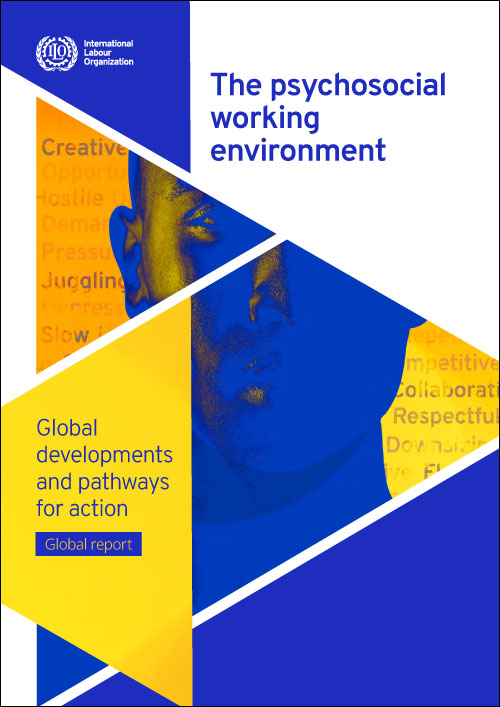
The report, The psychosocial working environment: Global developments and pathways for action, highlights the growing impact of how work is designed, organized, and managed on workers’ safety and health. It warns that psychosocial risk factors—including long working hours, job insecurity, high demands with low control, and workplace bullying and harassment—can create harmful working environments if not properly addressed.

Read more on the ILO webpages

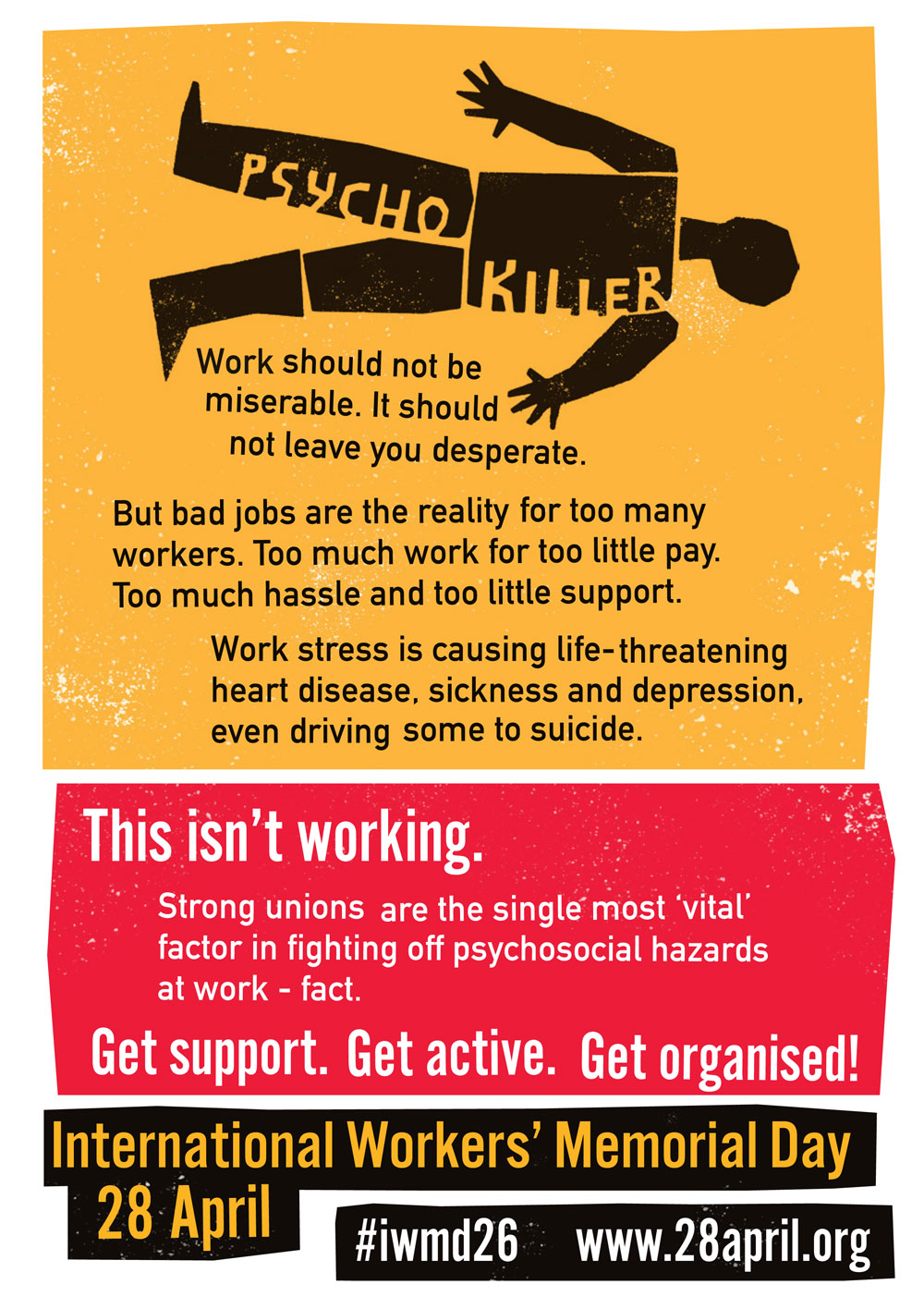
Global: Psychosocial hazards at work – Hazards magazine poster for International Workers’ Memorial Day

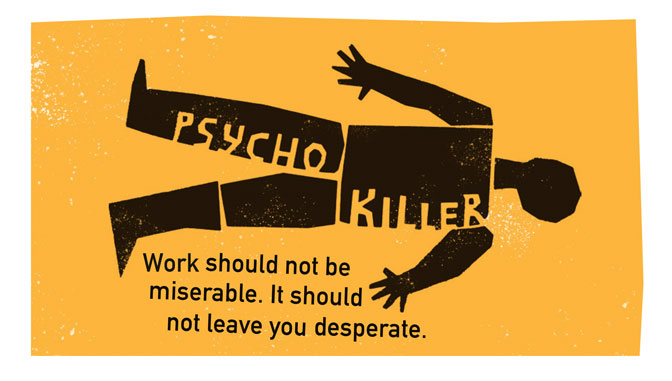
Psycho killer
Work should not be miserable. It should not leave you desperate…

Get support. Get active.
Get organised!

Download the poster from Hazards Magazine here

Hazards webpages