Tag Archives: USA

USA: Confined Space – Workers Memorial Day 2026

by Jordan Barab  May 13, 2026

I was traveling abroad over Workers Memorial Day this year, so I missed the  world-wide commemoration that will dwarf this nation’s upcoming Trumpian semiquincentennial. (at least in compassion.)

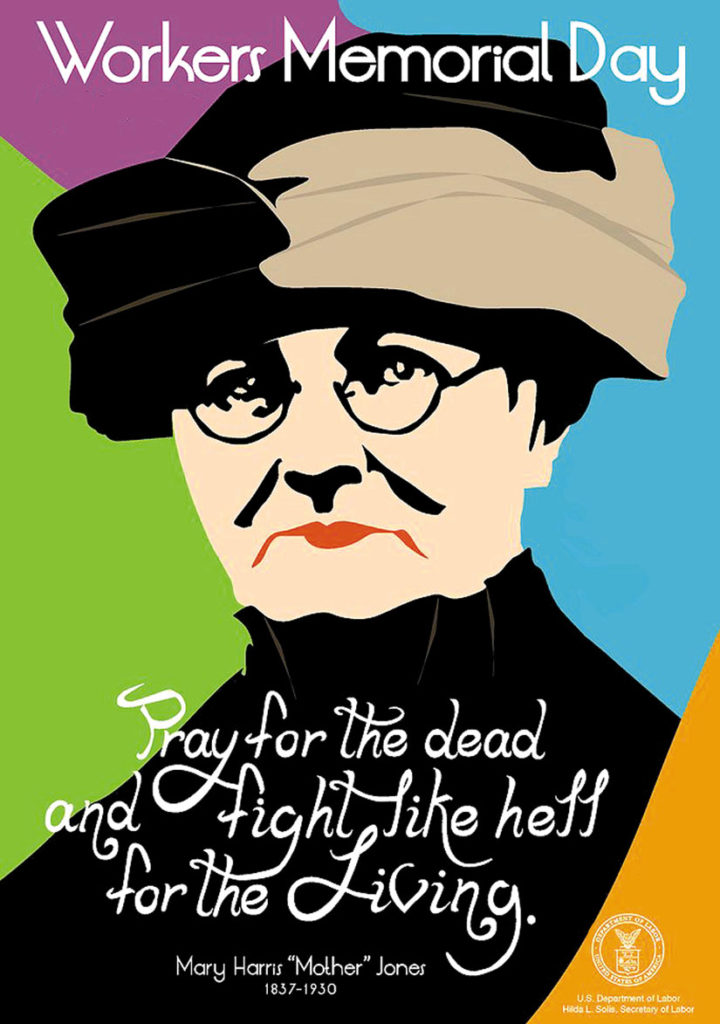
Workers Memorial Day, for those just tuning in, is an annual event to remember those killed in the workplace and re-energize ourselves to fight for safer work. Or, as Mother Jones said, “Pray for the dead, and fight like hell for the living.”

So, as I catch up, I figured I’d include you in my catching-up activities — and feel free to leave any of your Workers Memorial Day experiences in the comments below.

Death on the Job
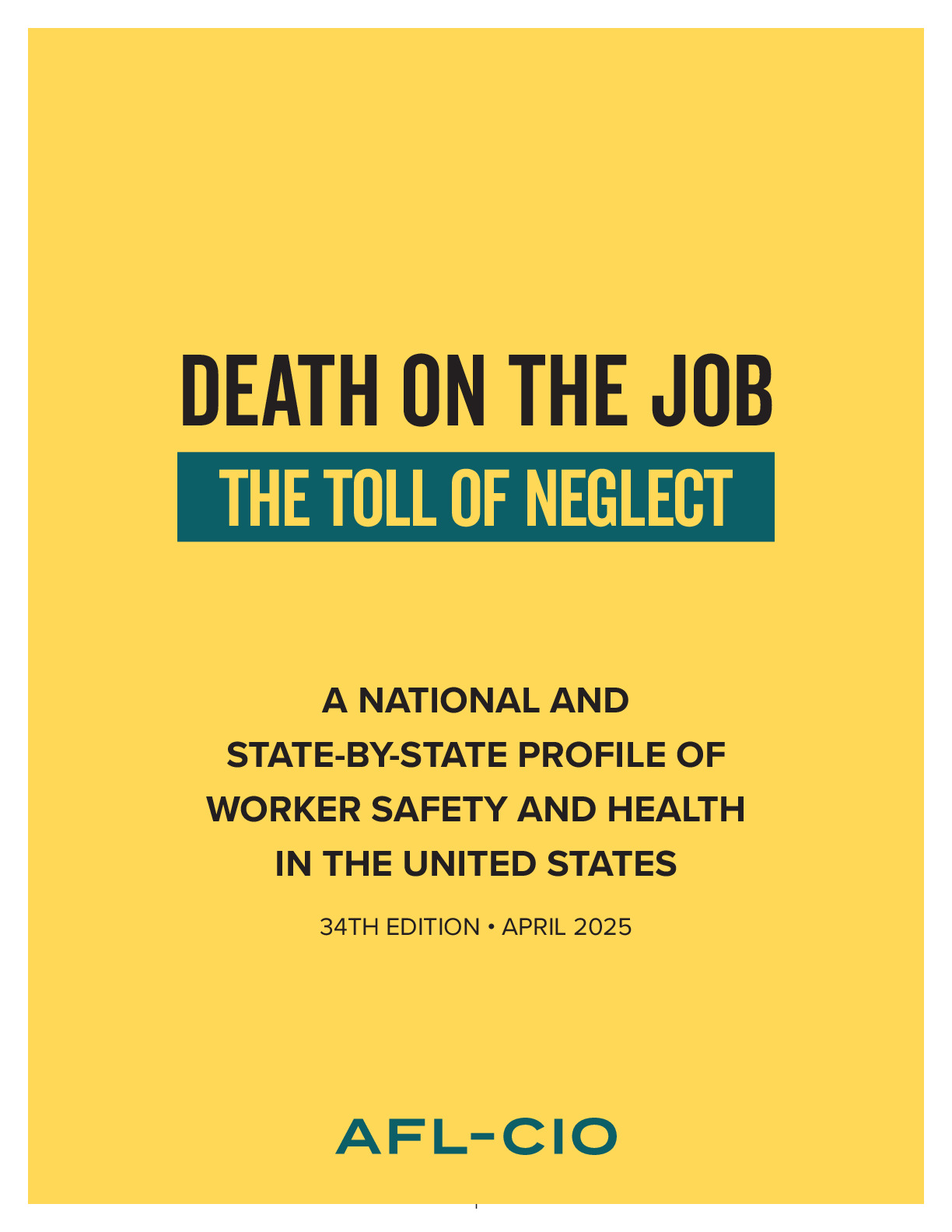
The highlight of this season is always the annual issuance of the AFL-CIO’s “Death on the Job,” now in its 35th edition. DOTJ is the bible of the occupational safety and health environment in the United States, an enormously detailed work containing not only a summary of the political environment that workplace safety and health finds itself in, but also injury and illness data in much more detail and clarity than the Bureau of Labor Statistics releases. Also current and historical budget and staffing information and what that means for workers. (For example, that it now takes 191 years for federal OSHA to visit each workplace in the country just once.)

And all of the information is available by state, e.g. injury, illness and death rates, number of inspectors, average and median penalties penalties, and how the states rank. You can find the summary points here and download the entire document here and you will mountains of information at your fingertips for any future meetings with journalists, legislators or that obnoxious MAGA uncle at Thanksgiving.

In summary, as the report documents:

Over the last 35 years of this report, job safety agencies’ resources have diminished dramatically, even as their responsibilities have grown immensely. For instance, the Occupational Safety and Health Administration is now in charge of 85% more establishments, 44% more workers and new hazards and technologies, yet Congress has reduced its budget by 10% and staffing by 26%, including a 16% reduction in inspectors. These percentages have massive impacts on such a tiny agency and very real personal effects on workers and their families. Agencies now have a paltry number of staff to write standards, analyze data, conduct inspections, perform oversight on states, orchestrate needed research on important hazards and respond to emerging threats. The number of OSHA inspectors has now hit a new low, and the Mine Safety and Health Administration (MSHA) does not have enough inspectors to meet its statutory requirement to inspect each mine multiple times a year.

And why?

Corporate power has eroded worker protections for years, but under the Trump administration, corporations and billionaires are aggressively accelerating efforts to dismantle hard-won progress and the democratic institutions that uphold it. These structures have safeguarded workers from employers who prioritize excessive profit over effective safety measures, resist workers’ rights and protections and seek to shift the responsibility for providing safe jobs from employers onto individual workers.

You can find specifics on the Trump Administration, OSHA resources, and action needed from Congress and job safety agencies.

And there’s plenty of ammunition for your next OSHA Trivia party. For example:

  1. Which state has the highest fatality rate in 2024?
  2. What percentage of workplace fatalities occurred among workers ages 55 and older?
  3. In what fiscal year did federal OSHA have Federal OSHA have the lowest number of inspectors in the history of the agency?
  4. What is the average penalty for a serious federal OSHA violation?
  5. What is the average penalty for a serious violation for OSHA state plans?
  6. How much does OSHA have to protect the health and safety of each worker it is responsible for?
  7. How much does the Workplace Safety Index (published by Liberty Mutual Insurance) estimate the cost of the most disabling workplace injuries to employers?
  8. How many public employees in how many states do not have OSHA coverage?
  9. What was the highest OSHA penalty ever issued? To what company? Who was the (Acting) Assistant Secretary?
  10. What percentage of all serious work-related injuries and illnesses in private industry do musculoskeletal disorders from repetitive motion injuries accounting for?
    (see below for answers)

Unions and Others

Workers Memorial Day is an international event, with hundreds of local events across the country conducted by unions, COSH groups and families of those killed or injured in the workplace. Throughout this country and around the world,  rallies, marches, protests, concerts, picnics, festivals, trainings and town halls were held with community and movement partners to support thousands more local events.  A partial list of worldwide events and graphics can be found here.

Dirty Dozen

Accompanying the annual release of the AFL-CIO’s Death on the Job is the National COSH’s Dirty Dozen report which you can download here. The Dirty Dozen report is “a list that shines a spotlight on twelve employers that have failed to protect their workers from preventable injuries, illnesses, and deaths.”  They were chosen due to

  • Repeated and serious violations of workplace safety laws
  • A history of ignoring known hazards
  • Power to set harmful industry standards
  • Active campaigns by workers and allies demanding change

This year’s lucky winners were:

  • Alliance Ground International: Repeated safety violations, unsafe equipment, and worker mistreatment allegations.
  • Cambria Company, LLC: Engineered stone products linked to deadly silica disease.
  • CommonSpirit Health: Unsafe staffing, workplace violence, and labor concerns impacting care.
  • Consolidated Catfish Producers, LLC: Amputations, machine hazards, and dangerous indoor heat.
  • D.R. Horton, Inc.: Repeated safety violations and hazardous construction jobsite conditions amid ICE enforcement actions.
  • Hyundai-Kia U.S. Supply Chain: Worker deaths, child labor findings, and subcontracted exploitation.
  • Jeny Sod and Nursery: Wage theft claims, heat risks, pesticide exposure, and housing concerns.
  • LSG Sky Chefs: Extreme heat and lack of cooling protections for workers.
  • Maker’s Pride LLC (formerly Hearthside, LLC): Amputations, child labor violations, and anti-union concerns.
  • Revoli Construction Co., Inc: Decades of trenching violations ending in fatal collapse.
  • Subway IP LLC: Wage theft, retaliation, and labor issues across franchises.
  • Wellmade Industries MFR. N.A LLC: safety violations, labor exploitation, and trafficking investigation.

Some of these you’ve never heard of; some you will live in infamy. We’ve written about some of these before, for example Cambria, the artificial countertop company whose product is killing workers due to silica exposure and their efforts to convince Congress to shield them from lawsuits.

Department of Labor Events
The Department of Labor this year held one of the biggest Workers Memorial Day events ever, with panel discussions, a tear-inducing video of family members, a panel discussion by family members, a candlelight ceremony at the Lincoln Memorial and a three day virtual training on fall prevention, trenching and lockout-tagout.  The program at the Department of Labor also featured two Republican Congressmen one of whom was Ryan McKenzie (R-PA), Chair of the House Workforce Protections subcommittee who frequently criticizes OSHA for overstepping its authority and accuses OSHA standards for creating more problems than they solve.

Pennsylvania Representative Dan Meuser also spoke at the event about the farmers he meets who “are missing a finger or two; some are missing arms.” But no mention of how farm workers are not covered by most OSHA standards and how Congress prohibits OSHA from setting foot on small farms even after workers are killed.

The OSHA effort is praiseworthy. I have heaped a lot of well-deserved criticism on Trump’s OSHA over the past year, but one area where they deserve praise is the continued employment of a one of my favorite people, OSHA Family Liaison Tonya Ford, and the Workers Memorial Day events they continue to support. Tonya lost her uncle Bobby in a fall in a grain elevator and was later the Executive Director of United Support and Memorial for Workplace Families, an organization dedicated to the family members of workers killed in the workplace.

But I also have mixed feelings about the DOL event.  Last year, Workers Memorial Day came only days after DOGE’s invasion of DOL and the near elimination of NIOSH and I couldn’t bring myself to attend.

My problem is DOL they did a very good — and necessary — job of recognizing the indescribably sorrow and loss that a preventable workplace death inflicts on the worker’s family, friends and co-workers. But that’s the mourning part of Workers Memorial Day. What was missing from these events were the “fight like hell for the living” part.

My problem is that DOL did a very good — and necessary — job of recognizing the indescribably sorrow and loss that a preventable workplace death inflicts on the worker’s family, friends and co-workers. That’s important.  And, again, I complement the agency for holding this event and giving such an important role to the grieving families.

But that’s only the mourning part of Workers Memorial Day. What’s missing from these events were the “fight like hell for the living” part.

There was no recognition of the merciless attacks on NIOSH or the drastic cuts to OSHA and MSHA proposed this year and last by the White House or the fact that OSHA now has the lowest number of inspectors in the agency’s history or the fact that the Trump regime has refused to enforce MSHA’s silica standard or the general hostile anti-worker political environment detailed so well in the AFL-CIO’s Death on the Job.

The only “solution” that comes out of this event — at least on the surface — is not fighting for more funding for workplace protection agencies, higher penalties for endangering workers and stronger standards; it’s mainly variations on “shit happens,” so “let’s be careful out there,” without any recognition of the evisceration of this country’s workplace safety and health infrastructure by the Administration that is staging this event.

OSHA Assistant Secretary Dave Keeling correctly stated that we need to “do all we can to work together to put the the safety and health of our workers first. At the end of the day, a safe workplace is not a privilege, it’s a promise that we owe one another.”

Nice words, but cutting the budgets of OSHA and MSHA, destroying NIOSH and eliminating the Chemical Safety Board are not the way to keep that promise.

MSHA Assistant Secretary Wayne Palmer remembered several workers by name who were killed on the job, but somehow failed to mention MSHA’s failure to enforce its silica standard.

About the closest it came to calling for action came from Stacy Sebald whose 19-year-old son, Mitchell, was killed in a grain auger — on a small farm that wasn’t covered by OSHA. Stacy has been on a campaign to eliminate that language: “I will not be at peace with that exemption.”

None of us should be at peace with what’s going on in this country and how this administration has treated workers.  We need to keep fighting like hell.

But let’s not be too depressed. Let’s sing. Then go back to fighting.

Lyrics and music by Bobby Cumberland, former USWA safety steward.

_________________
Quiz Answers
1. Wyoming
2. One third
3. FY 2025
4. $4,678
5. $2,720
6. $3.85
7. $59 billion a year
8. 7.9 million in 23 states
9. $81,340,000, BP Products North America, Acting Assistant Secretary Jordan Barab
10. 32%

Share this:

https://jordanbarab.com/confinedspace/2026/05/13/workers-memorial-day-2026/?jetpack_skip_subscription_popup

USA: Honor those we lost by fighting for stronger workplace safety – AFSCME


It’s not too much to ask to be safe at work. In fact, the US Occupational Safety and Health Act of 1971 says every worker has a fundamental right to a safe work environment.

And yet there are still too many avoidable accidents. Too many injuries. And way too many deaths.

In 2024, the most recent full year of data available, . And about 135,000 died from occupational diseases not including COVID-19.

“On Workers Memorial Day, we mourn the loss of all those who have died, been seriously injured or made ill while on the job. Going to work and earning a paycheck to support your family should not be hazardous to your health. Unfortunately, every year, thousands of families receive the devastating news that their loved one died or was seriously injured on the job, often because of a preventable workplace hazard,” said AFSCME President Lee Saunders.

Saunders said the Trump administration has weakened worker protections by cutting funding for inspections and enforcement. Stronger safeguards against extreme heat for those who work outside, like sanitation and highway workers, have not been approved, and those in health care, corrections and other fields continue to face unacceptable high rates of workplace violence, he said.

“These reckless decisions put more workers in harm’s way and make tragedies like the ones we commemorate today more likely. That’s why we’re organizing for stronger workplace protections — such as heat standards and workplace violence regulations — so sanitation workers, nurses, behavioral health workers, paramedics, corrections officers, and other public service workers can do their jobs without risking preventable injury or death. AFSCME members and all workers deserve a government that mandates and enforces strong worker safety protections,” Saunders said.

These attacks only make AFSCME members fight harder for improved safety programmes and stronger enforcement, the union said.

AFSCME members are leading efforts all over the country through advocating protective legislation, bargaining strong contracts or organizing members across sectors around health and safety:

  • Kaiser Permanente health care professionals in California and Hawaii won robust contracts this year, including provisions for stronger staffing, after going on a historic strike;
  • AFSCME library members in Washington state held a summit last year to address pressing health and safety concerns, such as workplace violence;
  • AFSCME members in Texas this year defended workplace protections for pregnant and postpartum corrections.

The union concluded that this Workers Memorial Day, we take inspiration from the AFSCME members around the country who serve their communities with dedication and skill, and stand together to fight for respect, dignity and safety all workers deserve.

Full AFSCME 28 April statement
https://www.afscme.org/blog/workers-memorial-day-honor-those-we-lost-by-fighting-for-stronger-workplace-safety

USA: 55 Years After OSHA Opened Its Doors, Trump Administration Attacks Workers’ Rights and Protections, Wiping Away Decades of Progress – ALF-CIO

The  US national union federation AFL-CIO has launched the 35th edition of the Death on the Job Report. You can find the report and all accompanying resources here: www.aflcio.org/dotj 

USA: NCOSH one worker dies every 104 minutes – ‘Dirty Dozen 2026’ exposes companies putting workers at risk

One Worker Dies Every 104 Minutes: National COSH Dirty Dozen 2026 Exposes Dangerous Companies Putting Workers at Risk 

  • New report released during Workers’ Memorial Week highlighting preventable workplace hazards and calls for urgent accountability.
  • Latino, immigrant, and Black workers disproportionately face dangerous conditions, exploitation, and barriers to workplace protections.
  • Released amid a sharp drop in workplace health and safety enforcement, as federal penalties decline 47 percent in 2025.

Los Angeles, CA – On April 22, marking the beginning of Workers’ Memorial Week—observed this year from April 22 to April 29—the National Council for Occupational Safety and Health (National COSH) has released its 2026 Dirty Dozen report, identifying twelve companies that have put workers’ lives at risk through unsafe practices, inadequate protections, and systemic neglect. The report comes as federal workplace health and safety penalties drop nearly 45 percent during the current administration, according to Good Jobs First, raising alarm about declining enforcement just as preventable deaths, injuries, and illnesses continue across the country. The Dirty Dozen underscores the urgent need for stronger enforcement and corporate accountability.

“Every year, we honor workers who have lost their lives on the job, and every year, we see the same pattern: companies prioritizing profit over people,” said Jessica E. Martinez, MPH, Executive Director of National COSH. “The Dirty Dozen 2026 makes clear that these tragedies are not accidents, they are the result of choices. Employers must be held accountable, and workers must be empowered to speak out without fear.”

Across industries, the report documents recurring corporate failures that placed workers at risk,  including extreme heat, hazardous machinery, toxic chemicals, wage theft, retaliation, and exploitative labor practices. Weak enforcement, reflected in a 47 percent drop in workplace health and safety penalties in 2025, and complex subcontracting systems allow companies to evade responsibility while workers bear the consequences.

The Dirty Dozen 2026 includes the following companies, listed in alphabetical order:

  • Alliance Ground International: Repeated safety violations, unsafe equipment, and worker mistreatment allegations.
  • Cambria Company, LLC: Engineered stone products linked to deadly silica disease.
  • CommonSpirit Health: Unsafe staffing, workplace violence, and labor concerns impacting care.
  • Consolidated Catfish Producers, LLC: Amputations, machine hazards, and dangerous indoor heat.
  • D.R. Horton, Inc.: Repeated safety violations and hazardous construction jobsite conditions amid ICE enforcement actions.
  • Hyundai-Kia U.S. Supply Chain: Worker deaths, child labor findings, and subcontracted exploitation.
  • Jeny Sod and Nursery: Wage theft claims, heat risks, pesticide exposure, and housing concerns.
  • LSG Sky Chefs: Extreme heat and lack of cooling protections for workers.
  • Maker’s Pride LLC (formerly Hearthside, LLC): Amputations, child labor violations, and anti-union concerns.
  • Revoli Construction Co., Inc: Decades of trenching violations ending in fatal   collapse.
  • Subway IP LLC: Wage theft, retaliation, and labor issues across franchises.
  • Wellmade Industries MFR. N.A LLC: safety violations, labor exploitation, and trafficking investigation.

Workers directly impacted by these conditions shared powerful testimonies that underscore the human cost of unsafe workplaces.

Gustavo Reyes Gonzalez, former engineered stonecutter who worked with Cambria products and is now living with silicosis, said: “For more than a decade, I cut and polished engineered stone without knowing the dust I was breathing could kill me. By the time I was diagnosed with silicosis, my lungs were already severely damaged. No one warned me about the risks or the silica in the product. If I had known, I would have chosen a different path to protect my life.”

A catfish processing worker at Consolidated Catfish Producers, LLC, who requested anonymity due to fear of retaliation, said: “The heat inside the plant is overwhelming. By the time we reach a break, we are dizzy and dehydrated, and we don’t always have safe access to water. People get seriously injured on the machines, and others are put in their place without proper training. It feels like safety is not a priority.”

Kissy Cox, an auto manufacturing worker at Hyundai Motor Manufacturing Company, part of the Hyundai-Kia U.S. supply chain, said: “I reported my injuries, but I was still required to work in pain for months before getting proper medical attention. Many of my coworkers are going through the same thing. The company says it’s a safe place to work, but the reality does not match what we experience.”

An auto manufacturing supply chain worker employed through a subcontractor connected to the Hyundai-Kia U.S. Supply Chain, who requested anonymity, said: “We see safety violations every day, from inadequate training to dangerous conditions that put lives at risk. Workers have been injured and even killed, yet there is little accountability. We want safe jobs, not just promises.”

A food processing worker at Maker’s Pride LLC (formerly Hearthside, LLC), who requested anonymity due to risk of retaliation, said: “We are pushed to work faster and faster, often skipping water or bathroom breaks because of the pressure. People get sick, dizzy, and injured, but many do not report it because they are afraid of losing their jobs. We are treated like machines instead of human beings.”

Martinez added: “No one should have to risk their life to earn a paycheck. These workers are showing tremendous courage by speaking out.   Their voices must  shape stronger protections, real accountability, and every worker’s right to return home safe.” National COSH calls on policymakers for stronger workplace protections, increased enforcement resources, accountability across supply chains, federal health protections, and safeguards against retaliation when workers speak out.

Dirty Dozen 2026 report

USA: New York memorial to mark 28 April

A memorial to mark Workers’ Memorial Day will be held in New York City on Tuesday 28 April 2026 at 12 pm at 345 Park Avenue. It is presented by New York Committee for Occupational Safety and Health (NYCOSH) together with AFL-CIO affiliate New York City Central Labor Council. 

Workers’ Memorial Day commemorates workers who have died, been injured, or made ill because of their jobs and is observed internationally by labour organisations and workplace safety groups.

USA: 28 April – Join us TODAY to honor workers and Families / Únete HOY para Honrar a las Personas Trabajadoras Fallecidas y a sus Familias

Each year National COSH releases the Dirty Dozen report of Unsafe Employers to commemorate Workers Memorial Week. This year we will release the report TODAY, April 24th at 2pm ET / 1pm CT / 12pm MT / 11am PTWe hope you will join us.

The Dirty Dozen highlights the courageous stories of workers and communities fighting for better protections to reduce fatalities, injuries and illnesses and puts a spotlight on irresponsible companies that put workers and communities at risk.

We’re inviting the news media to hear directly from workers and families who pay the price when an employer cuts corners. After presentations from workers about this year’s companies, we will open the session to members of the media in attendance to speak directly with workers about the conditions which they face on the job.

While this is primarily a media event, we invite you to stand in solidarity with the workers who dare to speak out.

We would be honored for you to join us TODAY, as we work together to build a powerful movement to protect all workers in all workplaces.

In solidarity,  Susi, for the National COSH Team.

National COSH

USA: New AFL-CIO report finds worker deaths on the job continue, will worsen under Trump administration policies

The AFL-CIO’s 34th annual ‘Death on the Job’ report provides a state-by-state analysis of threats to worker health and safety and policy recommendations for how the government can better protect workers

WASHINGTON, D.C.—Workers are dying and being injured on the job, and the Trump administration and DOGE are putting them at greater risk by enacting policies that will create deplorable working conditions, according to a new report released today by the AFL-CIO.

Ahead of Workers Memorial Day, the AFL-CIO released its 34th annual “Death on the Job: The Toll of Neglect” report, a comprehensive analysis of the state of workers’ health and safety at the national and state levels. Findings include:

  • Inadequate workplace safety laws and policies resulted in the deaths of 5,283 workers on the job in 2023, the latest year of data available, and an estimated 135,304 workers from occupational diseases.
  • Black and Latino workers are still disproportionately dying on the job, both at rates higher than the national job fatality rate.
  • The report shows 659 Black worker deaths, the second-highest number in more than two decades.
  • The report also shows 1,250 Latino worker deaths, making Latino workers the group at the greatest risk of dying on the job among all demographics.

The national job fatality rate was slightly lower in 2023 than in 2022, thanks to strong, pro-worker policies. But the Trump administration’s substantial cuts to—and in some cases, effective elimination of—federal agencies that protect the health and safety of 161 million American workers will likely increase mortality. These cuts include gutting the National Institute for Occupational Safety and Health (NIOSH), the agency that delivers critical health and safety expertise for both workers and employers; eliminating 11 offices of the Occupational Safety and Health Administration (OSHA) in states with the highest workplace fatality rates; eliminating 34 offices of the Mine Safety and Health Administration (MSHA), which protects coal miners from hazards like black lung disease, in 19 states, while simultaneously pausing a new silica rule that would prevent coal miners from acquiring silicosis; and allowing Elon Musk, whose companies are being investigated for dozens of workplace safety and health violations, to pursue access to sensitive OSHA data through his inquisition into the Department of Labor.

“Every worker has the fundamental right to come home safe at the end of their workday. But for too many workers, that basic right is under attack,” said Liz Shuler, president of the AFL-CIO. “Workers fought and died for generations for the health and safety laws and protections we have today, and this year’s report shows we need to do even more. The Trump administration and DOGE are gutting the federal agencies that hold bosses accountable for endangering workers, firing the federal workers who monitor and research health hazards, indicating that they will repeal crucial worker safety regulations, and giving billionaires like Elon Musk the power to access and even manipulate OSHA whistleblower records. We can’t bring back the thousands of workers lost each year, but we can fight to prevent more devastation to working families across this country and demand that the Trump administration reverse course.”

“This year’s ‘Death on the Job’ report once again shows that, as in every crisis, the crisis of worker mortality is hitting Black and Latino workers the hardest,” said Fred Redmond, secretary-treasurer of the AFL-CIO. “It is unacceptable that employers are continuing to fail all workers, and especially Black and Latino workers, by not providing them the safety measures and resources they need to stay safe on the job. Enough is enough. The AFL-CIO is fighting the scourge of workplace mortality, and we will not rest until the number of workers who die on the job is zero.”

The 2025 “Death on the Job” report comes just before Workers Memorial Day, the annual commemoration of workers who have died on the job and our fight to prevent these tragedies. The AFL-CIO, its state and local labor federations, and affiliated unions are raising awareness of the Trump administration’s threats to worker health and safety with events across the country this week and next, including a hearing about cuts to worker health and safety programs that took place on Monday, April 21. At the hearings, federal workers, union leaders and community members shared their stories about the impacts of the Trump administration’s actions.

Read the full report here.

AFL-CIO News release


USA: Death on the job report – 14 things you should know

Death on the Job graphic

Ahead of Workers Memorial Day, the AFL-CIO released its 34th annual “Death on the Job: The Toll of Neglect” report, a comprehensive analysis of the state of workers’ health and safety at the national and state levels. Workers are dying and being injured on the job, and the Trump administration and DOGE are putting them at greater risk by enacting policies that will create deplorable working conditions, according to the report.

“Every worker has the fundamental right to come home safe at the end of their workday. But for too many workers, that basic right is under attack,” said Liz Shuler, president of the AFL-CIO. “Workers fought and died for generations for the health and safety laws and protections we have today, and this year’s report shows we need to do even more. The Trump administration and DOGE are gutting the federal agencies that hold bosses accountable for endangering workers, firing the federal workers who monitor and research health hazards, indicating that they will repeal crucial worker safety regulations, and giving billionaires like Elon Musk the power to access and even manipulate OSHA whistleblower records. We can’t bring back the thousands of workers lost each year, but we can fight to prevent more devastation to working families across this country and demand that the Trump administration reverse course.”
This year’s ‘Death on the Job’ report once again shows that, as in every crisis, the crisis of worker mortality is hitting Black and Latino workers the hardest,” said Fred Redmond, secretary-treasurer of the AFL-CIO. “It is unacceptable that employers are continuing to fail all workers, and especially Black and Latino workers, by not providing them the safety measures and resources they need to stay safe on the job. Enough is enough. The AFL-CIO is fighting the scourge of workplace mortality, and we will not rest until the number of workers who die on the job is zero.”
Here are 14 things you need to know from the 2025 Death on the Job report:
  1. 385 workers died each day from hazardous working conditions.

  2. 5,283 workers were killed on the job in the United States.

  3. An estimated 135,304 workers died from occupational diseases.

  4. The overall job fatality rate decreased to 3.5 per 100,000 workers.

  5. Workers of color die on the job at a higher rate: Black and Latino worker job fatality rates are disproportionate compared with all other workers and they continue to remain high.

  6. Employers reported nearly 3.2 million work-related injuries and illnesses, a decrease from the previous year.

  7. At least 55 workers died from heat on the job, a 28% increase from 2022; fatal and nonfatal data are an undercount of the real problem.

  8. Workplace homicides continue to be a significant problem, even though they decreased 12.6% since 2022; workplace suicides increased 5.2% from 2022.

  9. Separately, unintentional overdoses at work decreased nearly 5% from 2022 to 2023, due to increased attention paid to and efforts to combat the opioid crisis.

  10. The rate of serious workplace violence injuries has increased to 4.3 per 10,000 workers.

  11. Musculoskeletal disorders from repetitive motion injuries continue to be a major problem, accounting for approximately 28% of all serious work-related injuries and illnesses in private industry.

  12. Underreporting of all workplace injuries and illnesses is widespread—the true toll of work-related injuries and illnesses is 5.2 million to 7.8 million each year in private industry.

  13. Chemical exposures continue to plague working people, leading to debilitating, life-threatening diseases that are totally preventable.

  14. The cost of job injuries and illnesses is enormous, estimated at $174 billion to $348 billion a year—an undercount of the real impact on society, families and communities.

The report also suggests solutions to these problems—actions that can be taken to improve these numbers.

USA: White House proclamation on 28 April

A Proclamation on Workers Memorial Day, 2024

A job is about more than a paycheck — it is about dignity and respect.  Our Nation’s workers built this country, and we need to have their backs.  On the most basic level, that means every worker in this Nation deserves to be safe on the job.  Too many still risk their lives or well-being in unsafe work conditions or dangerous roles.  On Workers Memorial Day, we honor our fallen and injured workers and recommit to making sure every worker has the peace of mind of knowing that they are protected at work and can return home safe to their families every night. read more

USA: CWPR on 28 April

CPWR

Workers Memorial Day takes place on 28 April. People around the world will honor the thousands killed each year on the job and the millions more who suffer serious occupational injuries and illnesses. The number of workplace fatalities and injuries remains unacceptably high: in construction alone, approximately 1,000 workers die on job sites annually.

Each year, April 28th offers the opportunity for us to remember those who have died and to strengthen our commitment to make sure every worker comes home safely every day. Fulfilling that commitment takes the dedication of people across the industry: owners, contractors, managers, government officials, unions, workers, and many others.

Improving the safety and health of construction workers must take many forms and respond to many hazards. This year we encourage everyone to focus on addressing:

  • Falls. One in three work-related deaths in construction is caused by a fall. The National Campaign to Prevent Falls in Construction brings together people from across the industry to raise awareness of this hazard and to show how to prevent these incidents. Participate in next week’s National Safety Stand-Down to Prevent Falls in Construction as part of making a year-round commitment to eliminating this hazard.
  • Mental Health. Mental health issues — especially opioid dependency and suicide – continue to affect construction workers at much higher rates than the average U.S. worker. CPWR’s resources, which include Hazard Alert Cards, Toolbox Talks, and training programs, all support prevention. Also, watch for the opportunity to sign up to receive a new newsletter highlighting mental health research and effective resources.
  • truck-by Incidents. The just-completed National Stand-Down to Prevent Struck-by Incidents raised awareness of these hazards, the second leading cause of death and the leading cause of nonfatal injuries among construction workers. Listen to the Stand-Down webinar on developing Internal Traffic Control Plans and check out other CPWR materials that address hazards such as dropped objects, heavy equipment, lift zone safety, and work zone safety.