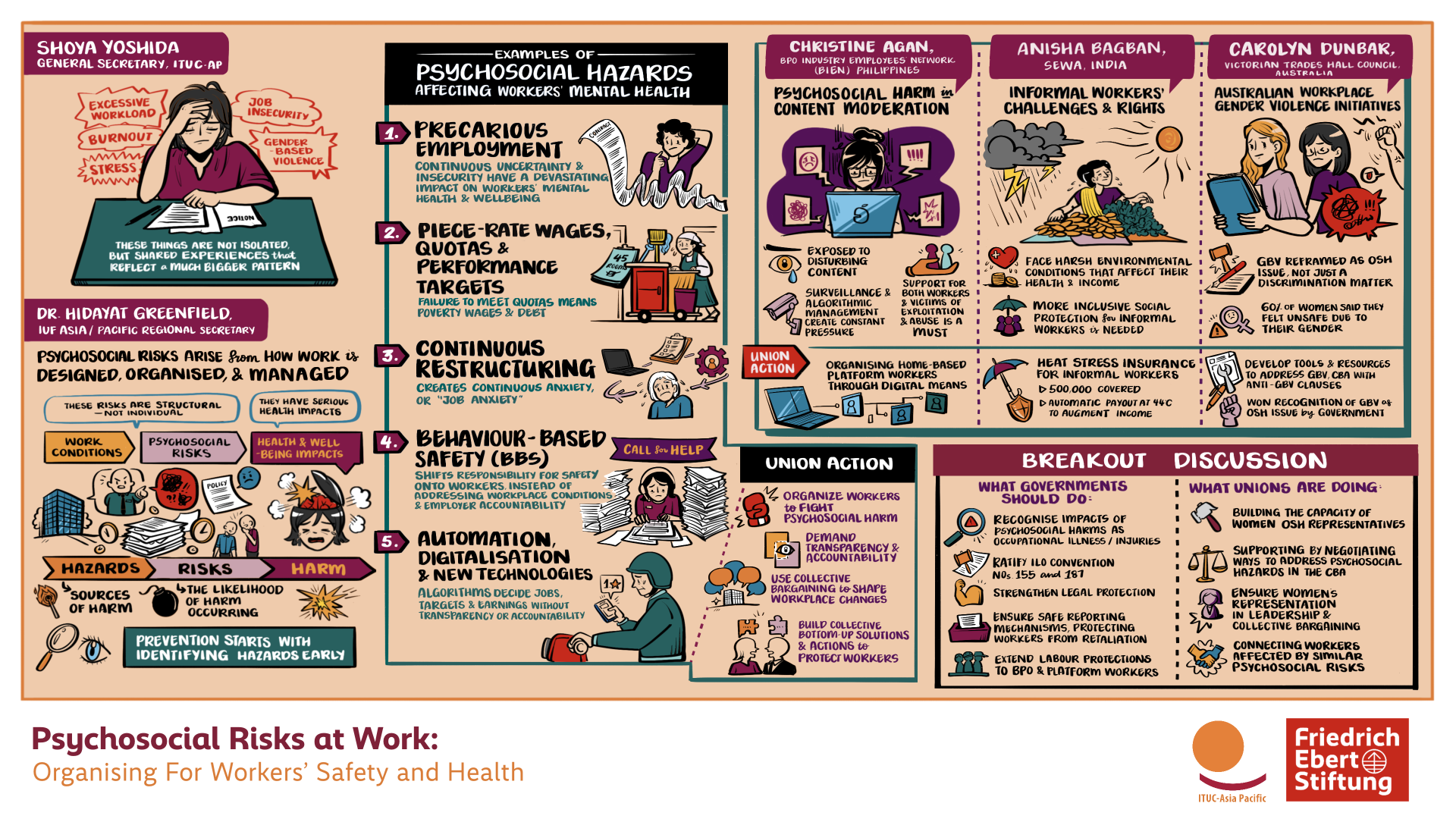
Hundreds of trade unionists attended a 24 April 2026 preparatory webinar for International Workers’ Memorial Day, organised by ITUC’s Asia Pacific office (ITUC-AP). The event, on the theme of how unions can challenge psychosocial hazards at work, included case histories on informal work, content moderation and gender, and featured presentations by ITUC-AP general secretary Shoya Yoshida and IUF-AP regional secretary and work safety expert Hidayat Greenfield.
ITUC-AP produced a graphic summary of the meeting, which including action points. It concluded unions should: organise to fight psychosocial harm; demand accountability and transparency; use collective bargaining to shape workplace changes; and build bottom-up solutions and actions to protect workers.
It noted unions were: building the capacity of women occupational safety and health representatives, including measures to address psychosocial risks in collective bargaining agreements; ensuring women’s participation in collective bargaining; and connecting workers affected by similar psychosocial risks.
Unions in the region agreed it was necessary to: call on governments to recognise psychosocial harms as occupational injuries and illnesses; ratify the fundamental ILO occupational health and safety conventions C155 and C187; strengthen legal protections from psychosocial harm; and extend labour protections to platform workers and BPOs (business processing outsourcing – a service subcontracting practice commonly used by major companies to provide content moderation, call centre and other services).
“Psychosocial risks are not only occupational safety and health issues; they are also issues of dignity, equality, and fundamental rights,” ITUC-AP general secretary Shoya Yoshida said.
“What trade unions are showing is that psychosocial risks are not invisible. They are being named, organised around, and challenged. Through collective action, workers are turning these issues into demands and concrete solutions for safer, healthier, and more dignified work.”

By initiative of the International Labour Organization, 28 April is observed every year as the World Day for Safety and Health at Work, with the aim of contributing to the prevention of workplace accidents and occupational diseases.
The theme of the 2026 World Day for Safety and Health at Work is: “Let us ensure a healthy psychosocial working environment.”
It emphasises that the psychosocial working environment is shaped through the organisation and management of work and everyday working conditions.
Today it is increasingly clear that a person’s health at work depends not only on physical conditions but also on working relationships and management culture. How work is organised, how clearly responsibilities are defined, how workloads are distributed, and the level of support provided to workers directly affect their mental and physical well-being.
Adverse psychosocial conditions can lead to stress, tension and reduced work capacity. If these factors are not assessed and managed in time, they become real risks affecting both workers’ health and overall organisational performance. For this reason, it is important that employers treat psychosocial risk management as an integral part of the occupational safety system.
The Confederation of Trade Unions of Armenia emphasises the importance of creating a working environment based on fairness and mutual respect. Only through a systematic and responsible approach can stable, safe and dignified working conditions be ensured.
Confederation of Trade Unions of Armenia

English translation below
Աշխատանքի միջազգային կազմակերպության նախաձեռնությամբ յուրաքանչյուր տարի ապրիլի 28-ը նշվում է որպես աշխատանքի անվտանգության և առողջության համաշխարհային օր, որի նպատակն է նպաստել աշխատավայրում դժբախտ դեպքերի և մասնագիտական հիվանդությունների կանխարգելմանը:
Աշխատանքի անվտանգության և առողջության 2026թ. համաշխարհային օրվա թեման է՝ «Եկեք ապահովենք առողջ հոգեսոցիալական աշխատանքային միջավայր»։
Այն ընդգծում է, որ աշխատավայրի հոգեսոցիալական միջավայրը ձևավորվում է աշխատանքի կազմակերպման, կառավարման և ամենօրյա աշխատանքային պայմանների միջոցով։
Այսօր ավելի ակնհայտ է դառնում, որ աշխատավայրում մարդու առողջությունը կախված է ոչ միայն ֆիզիկական պայմաններից, այլև աշխատանքային հարաբերություններից և կառավարման մշակույթից։ Այն, թե ինչպես է կազմակերպվում աշխատանքը, որքան հստակ են սահմանված պարտականությունները, ինչպես է բաշխվում ծանրաբեռնվածությունը և ինչ մակարդակի աջակցություն է ստանում աշխատողը, ուղղակիորեն ազդում են նրա հոգեկան և ֆիզիկական վիճակի վրա։
Անբարենպաստ հոգեսոցիալական պայմանները կարող են առաջացնել լարվածություն, սթրես և աշխատունակության անկում։ Եթե այդ գործոնները ժամանակին չեն գնահատվում և չեն կառավարվում, դրանք վերածվում են իրական ռիսկերի՝ ազդելով ինչպես աշխատողի առողջության, այնպես էլ կազմակերպության ընդհանուր արդյունավետության վրա։ Այդ պատճառով կարևոր է, որ գործատուները հոգեսոցիալական ռիսկերի կառավարումը դիտարկեն որպես աշխատանքի անվտանգության համակարգի անբաժանելի մաս։
Հայաստանի արհմիությունների կոնֆեդերացիան կարևորում է այնպիսի աշխատանքային միջավայրի ձևավորումը, որտեղ ապահովված են արդար մոտեցումները և փոխադարձ հարգանքը։ Միայն համակարգված և պատասխանատու մոտեցմամբ կարելի է ապահովել կայուն, անվտանգ և արժանապատիվ աշխատանքային պայմաններ։
ՀԱՅԱՍՏԱՆԻ ԱՐՀՄԻՈՒԹՅՈՒՆՆԵՐԻ ԿՈՆՖԵԴԵՐԱՑԻԱ
By initiative of the International Labour Organization, 28 April is observed every year as the World Day for Safety and Health at Work, with the aim of contributing to the prevention of workplace accidents and occupational diseases.
The theme of the 2026 World Day for Safety and Health at Work is: “Let us ensure a healthy psychosocial working environment.”
It emphasises that the psychosocial working environment is shaped through the organisation and management of work and everyday working conditions.
Today it is increasingly clear that a person’s health at work depends not only on physical conditions but also on working relationships and management culture. How work is organised, how clearly responsibilities are defined, how workloads are distributed, and the level of support provided to workers directly affect their mental and physical well-being.
Adverse psychosocial conditions can lead to stress, tension and reduced work capacity. If these factors are not assessed and managed in time, they become real risks affecting both workers’ health and overall organisational performance. For this reason, it is important that employers treat psychosocial risk management as an integral part of the occupational safety system.
The Confederation of Trade Unions of Armenia emphasises the importance of creating a working environment based on fairness and mutual respect. Only through a systematic and responsible approach can stable, safe and dignified working conditions be ensured.
Confederation of Trade Unions of Armenia
Kyrgyzstan construction union and BWI affiliate KBTU marked Workers’ Memorial Day with meetings, a public statement and a social media campaign.
Georgian construction and BWI affiliate GCFTU marked International Workers’ Memorial Day in a number of ways with a rally, meetings and a public statement.
Unions, workers, families, community members, and political leaders will gather today to mark International Workers’ Memorial Day (IWMD), a day of remembrance observed across the globe on the 28th of April each year.
Today’s service will take place at the Workers’ Commemorative Park in Invermay. After unveiling the significant works at the Park last year, this year’s service will see seven additional commemorative plaques laid to recognise Tasmanian workers who died because of their work. Each plaque represents a person who should have come home.
“IWMD is deeply important to unions because it is a day that reflects the heart of what we stand for: protecting workers so they can make it home safely. The day is a solemn reminder that for every safety campaign we run, there is a worker who did not make it home,” said Unions Tasmania Secretary, Jessica Munday.
The theme for IWMD in 2026 is ‘Fighting psychosocial hazards at work.’ Ms Munday says this is particularly relevant here in Tasmania.
“Psychological injuries are rising faster – and costing more – in Australia than any other type of workplace harm. The same is true here. Mental health related workers compensation claims have tripled from 5% in 2015/6 to 14.7% of all Tasmanian claims last year,” said Ms Munday.
“Because work doesn’t just break bodies anymore – it breaks minds. Workplace violence, work overload, burnout – they may not make the headlines but their impact on a worker can be catastrophic. Workplaces absolutely need to be doing more to support the mental health of their people.”
“A safe workplace is not just one where you survive the day – it’s one where you are not destroyed by it. Sometimes we hear a death at work called an ‘accident’. But most workplace deaths are predictable, preventable, and repeated. When the same hazards keep killing people, that’s not a coincidence – it’s a systemic failure to act and we all have a responsibility to prevent that harm,” Ms Munday said.
Ms Munday hopes that attendees, particularly political representatives, leave the service with a renewed commitment to act to making Tasmanian workplaces safer.
April 28 is International Workers Memorial Day— a time when unions, workers, and families gather in every state and territory to remember those who have lost their lives as a result of workplace injury or illness, and to renew the commitment to safer workplaces.
In 2026, the theme is Fighting Psychosocial Hazards at Work – a powerful reminder that workplace safety is about more than just physical risks.
What are psychosocial hazards?
Psychosocial hazards are aspects of work that can cause psychological harm. They include common workplace challenges such as excessive workloads, low job control, lack of role clarity, bullying, harassment, and exposure to traumatic events or material.
For decades, workplace health and safety focused primarily on physical risks such as machinery, hazardous materials, and unsafe working environments. While these are still important, there is now a much stronger understanding about the effects of psychological harm at work, making it equally relevant to the conversation about workplace safety.
According to Safe Work Australia’s Key Work Health and Safety Statistics 2025, the number of serious mental health injury claims increased by 14.7% in a single year, from 15,300 to 17,600 in 2023-24. Mental health conditions now account for 12% of all serious claims, the highest percentage ever recorded. Over the past decade, serious psychological claims have increased by 161%, the highest growth of any injury category [1].
The impact is also more severe. Workers with a psychological injury are absent from work for an average of 35.7 weeks, nearly five times longer than other serious injury types, and the financial costs are significantly higher. The median compensation cost is $67,400, compared to $16,300 for other injuries [1].
Where Australian workers are right now
The workplace conditions driving these numbers are well documented. The most common causes of psychological harm are harassment and workplace bullying (33.2%), work pressure (24.2%), and exposure to violence and aggression (15.7%). These are not individual issues. They are shaped by how work is designed, managed and led. [1].
Beyond compensation data, the broader picture is equally concerning. Recent survey data shows nearly half of Australian workers report experiencing some level of burnout, and a significant number are losing sleep due to work-related stress [2]. These are not personal failures; they are symptoms of workplace issues that have not been properly identified or addressed.
Safety applies to the whole person
International Workers Memorial Day exists to remind us that going to work should not come at the cost of a person’s health.
Under Australian work health and safety laws, employers have the same legal duty to protect workers from psychological harm as they do physical risks. This means identifying and addressing psychosocial hazards at work. In practice, that includes examining workload, job design, leadership behaviours and whether workers feel safe to raise concerns without fear of retaliation.
The primary goal is prevention. The evidence is clear: improving workplace cultures and work design reduces absenteeism, increases productivity, and boosts retention.
What good work looks like
All workers, health and safety representatives, managers, and employers play a role in recognising psychosocial hazards before they cause injury. The tools and frameworks exist to create mentally healthy workplaces. The evidence base is growing. What matters now is action
That is how we honour the workers we have lost and create the conditions that prevent future harm.
Sources: [1] Safe Work Australia, Key Work Health and Safety Statistics Australia 2025. [2] CMHAA, Leading Mentally Healthy Workplaces Survey 2025.
On 24 April 2013 garment workers in Dhaka arrived for another shift at Rana Plaza. The cracks in the walls had been visible the day before. Workers raised the alarm and were told the building was safe. Within hours, all eight floors had collapsed, killing 1,134 people, most of them women, and injuring thousands more.
It was not an accident but the outcome of an industry that had spent decades treating workers’ safety as someone else’s problem. The tragedy came just four days before the annual commemoration of workers killed or harmed by their work, International Workers’ Memorial Day on 28 April. And it illustrated how union action can deliver the fundamental changes necessary to make work safer and healthier.
Built from the rubble
Three weeks after the collapse, IndustriALL Global Union and UNI Global Union sat down with international garment brands. What they negotiated had never existed in the industry before: a legally binding agreement holding brands directly accountable for safety in their supply chains.
The Bangladesh Accord on Fire and Building Safety came into force in May 2013, signed by 43 brands from 13 countries. Its logic was straightforward and radical at the same time — that brands profiting from cheap labour in faraway factories could no longer outsource responsibility for what happened inside them.
What followed has been measurable, documented change. Over 48,000 factory inspections have been carried out so far, checking compliance with fire, electrical, boiler and structural safety standards. The remediation rate stands at 81 per cent. More than 2.5 million workers have been trained in workplace safety, including gender-based violence prevention. Over 1,831 complaints have been successfully resolved through enforceable grievance mechanisms. Around 12,632 workers now serve on factory safety committees in Bangladesh.
The path has not always been smooth. Legal challenges from factory owners threatened the Accord’s ability to operate in Bangladesh. Negotiations to renew the agreement were protracted and at times precarious. Some brands dragged their feet, and others left. But the framework held and it expanded.
From Bangladesh to the world
In November 2023, brands and trade unions renewed their commitments under a new International Accord. The agreement extended the model to Pakistan, where 351 factories were inspected by March 2026. Across both programmes, the International Accord now counts 297 brand signatories, covering around 2.5 million workers in Bangladesh alone.
The Accord also demonstrated something beyond its own borders: that binding, independently administered, transparent agreements deliver results where voluntary codes and self-regulation do not. That lesson shaped the global push for mandatory human rights due diligence legislation, culminating in the EU’s Corporate Sustainability Due Diligence Directive in 2024.
The current International Accord runs until the end of 2026. Renegotiations are coming, and IndustriALL Global Union is clear that the next iteration must build on what has been achieved — not retreat from it. IndustriALL and its Bangladeshi affiliates are now working on its proposals to ensure that the scope of coverage and complaint mechanism are expanded. Trade unions also want to ensure that the governance structure works effectively.
IndustriALL general secretary Atle Høie said: “Thirteen years ago, 1,134 workers died in a building that should never have been occupied. What was built in response, through years of campaigning, negotiation and organized worker power, has saved lives and changed what the industry considered possible. The question now is whether brands will honour that by committing to a stronger Accord, or whether they will treat the renegotiation as an opportunity to water it down.
“For IndustriALL Global Union, the answer is not in doubt. The workers who make the world’s clothes deserve no less than what the Accord at its best has always promised: safety, accountability and a voice.”
Christy Hoffman, general secretary of UNI Global Union, said “we remember all those who were killed, and the many thousands whose lives were changed forever in the garment industry’s worst ever disaster.”
She added: “UNI and IndustriALL founded the Bangladesh Accord because we knew that voluntary commitments to factory safety were not enough. Binding agreements, with unions at the table, are what make workplaces safe. Thirteen years on, that remains as true as ever. As we prepare to negotiate a new Bangladesh Safety Agreement, and as we push to extend the International Accord to other countries, we carry with us the memory of Rana Plaza and the responsibility it places on all of us.”