Category Archives: 2026 Europe

Turkey: At least 432 workers have died at work so far in 2026

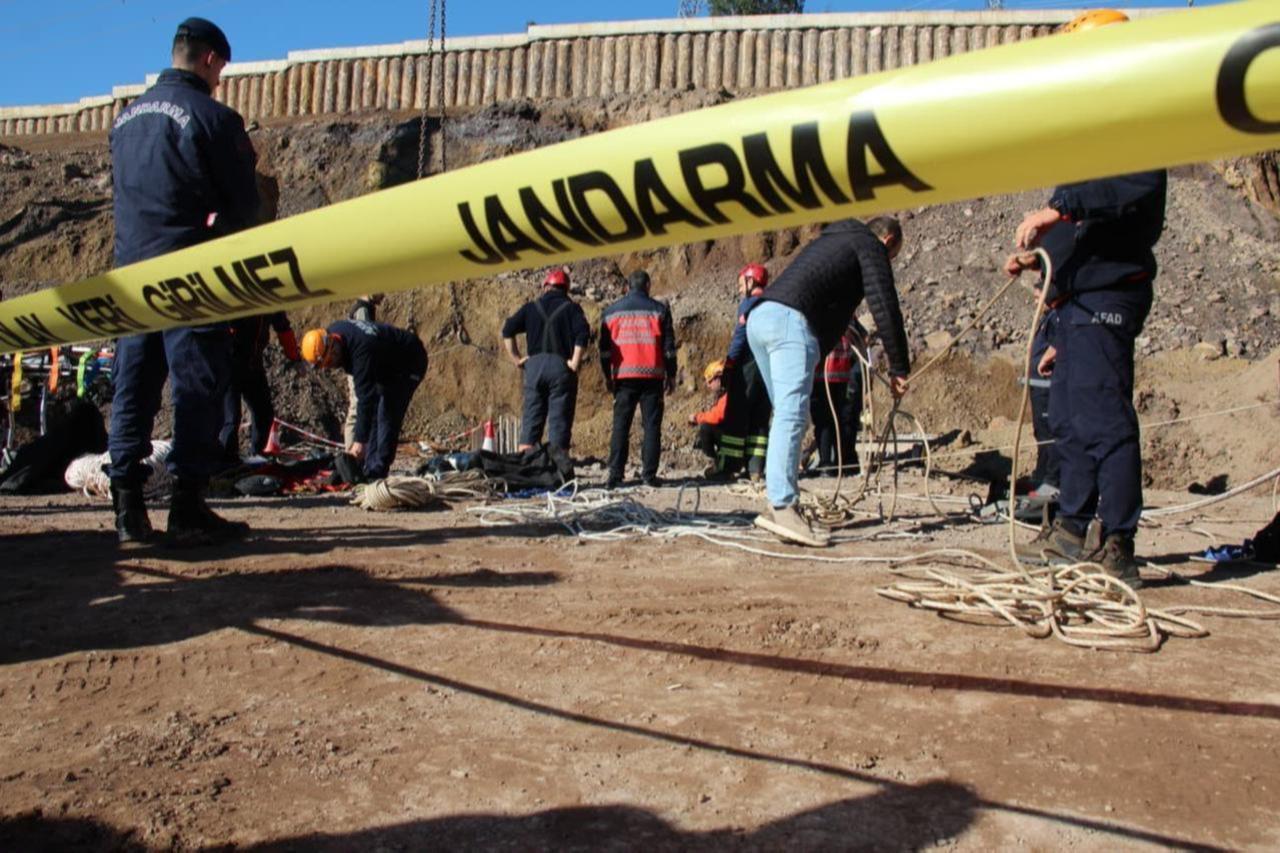
Search and rescue teams work at the scene after a worker was trapped during a collapse at a construction site. (IHA Photo)

At least 148 workers lost their lives in workplace-related incidents in Türkiye in March 2026, bringing the total number of deaths in the first three months of the year to 432, according to data compiled by the Health and Safety Labor Watch Council (ISIG). The labour safety group issued its findings ahead of International Workers’ Memorial Day on 28 April.

Structural risks highlighted over ‘accidents’

In its report, ISIG underlined that what are often described as workplace accidents should instead be seen as preventable deaths linked to working conditions. The report pointed to employer-driven cost pressures and insufficient safeguards as key factors behind the fatalities.

It also drew attention to vulnerable groups, particularly child workers and migrant labourers, who often face insecure and unregulated employment conditions.

Migrant workers, women among victims

Among those who died in March, 16 were women, while at least 15 were migrant workers. The report noted that migrant worker deaths were largely concentrated in agriculture and construction, sectors where informal employment is more widespread.

Union representation remained extremely limited, with only three of the deceased workers reported to be unionised.
Turkiye Today.

Norway: Young workers in Norway turn remembrance into action on heat stress and safety

In Norway, young union leaders marked Workers’ Memorial Day at the BWI Global Young Workers Forum in Utøya by combining commemoration with action. Participants held a minute of silence for workers who lost their lives due to unsafe conditions and political violence, including the victims of Utøya, and discussed how to push heat stress protections into collective bargaining. The forum emphasised the growing impact of climate risks and the need to prioritise worker safety, health and dignity in negotiations.

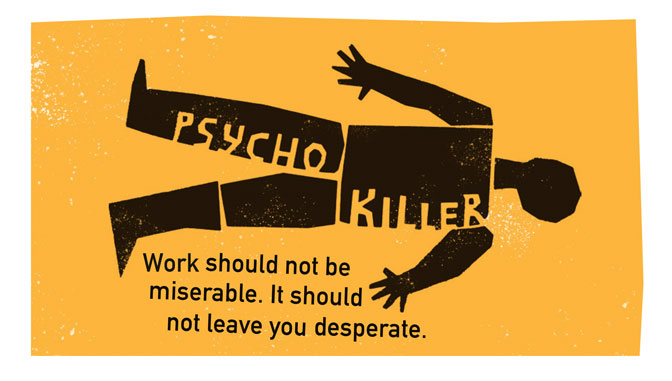
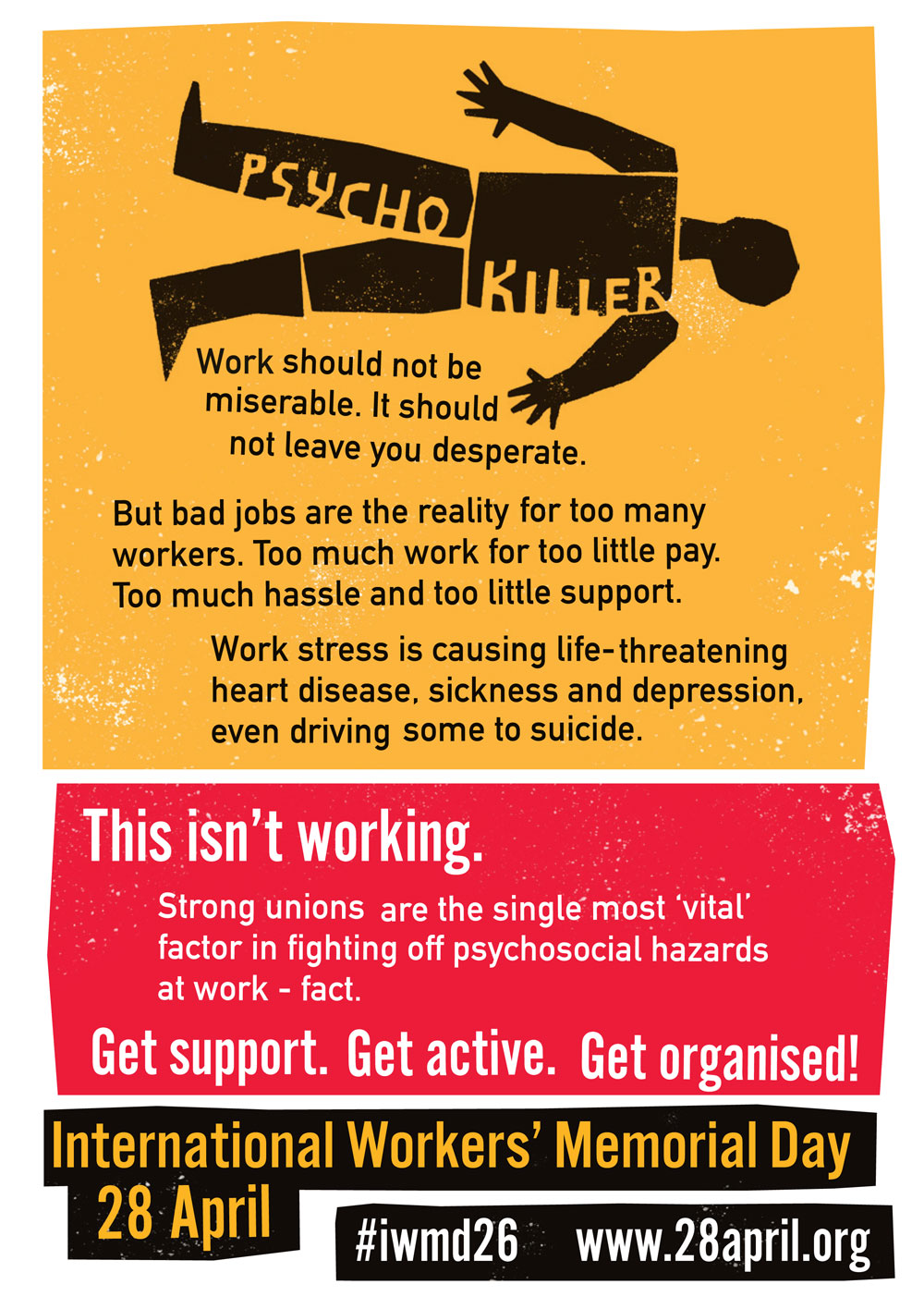
Europe: Psycho killer in focus on IWMD

April 28th is known as both International Workers Memorial Day and World Day for Safety and Health at Work, an opportunity to reflect on what must change for our working world to deliver safe and dignified jobs.

This year’s thematic approach focuses on psychosocial risks (PSR), with trade unions across the globe united in calling for not just recognition, but action, in an area where Europe continually fails to deliver.

Last week, the International Trade Union Confederation (ITUC) hosted a webinar exploring the differing approaches to tackling PSR, including an in-depth analysis of the European landscape from Eurocadres President Nayla Glaise. A full recording of the webinar can be found here.

Despite the public opinion of the “Brussels effect”, what was made clear throughout the event was how far behind Europe lags in comparison to other nations and regions. One such example comes from the other side of the world, with the Australian Council of Trade Union’s Liam O’Brien highlighted the excellent provisions within their national legislation, won through years of campaigning and advocacy with progressive political parties.

Adding to the presentation by PSC Observatory’s Maureen Dollard, Union Density and its Role in Shaping a Psychosocial Safety Climate, and efforts at the ILO level, what becomes clear is that Europe is dragging its feet in the protection of workers against psychosocial risks.

However, efforts are underway to change this.

“We are delighted to see International Workers’ Memorial Day focus on such a pivotal topic for professionals and managers. Eurocadres will continue to lead the push for European action, with the support of unions, as seen today, from right around the world”.

This month the European Parliament’s employment and social affairs (EMPL) committee were presented with MEP Estelle Ceulemans’ (S&D, BE) report on psychosocial risks, including a prominent call for a directive. The result of many months of discussions and drafting, the Belgian lawmaker has not only called on the Commission to act, but has outlined what a directive would look like in the annexe of the text.

While still a long way to go in the process, this report is an excellent starting point for yet another parliamentary call for action.

On the significance of IWMD, Eurocades President Nayla Glaise stated: “We are delighted to see International Workers’ Memorial Day focus on such a pivotal topic for professionals and managers. Eurocadres will continue to lead the push for European action, with the support of unions, as seen today, from right around the world.

“An integral part of this is the work of the European Parliament, and we commend Estelle for her terrific work in the proposal of this report. The coming months will be crucial to ensure support for the text, and we are looking forward to playing our part to help deliver a strong mandate to the Commission”.

Psycho killer in focus on IWMD

Global/UK: Suicide crisis – action call as more than one in 10 suicides is linked to work – Hazards magazine

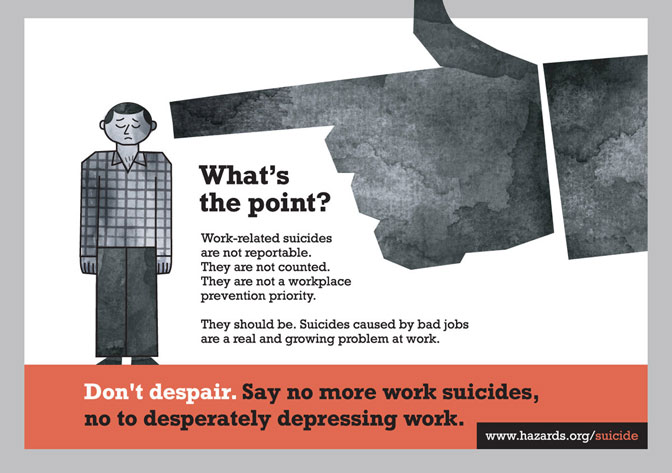
Who benefits when regulators and the courts pursue bosses whose brutal employment practices drive workers to the brink of suicide or to actually kill themselves? Well, says Hazards, new studies suggest we all do, as it leads to ‘significant’ and widespread safety improvements.

Hazards magazine argues that when regulators and the courts go after the employers who are driving their workers to suicide, we will all benefit. Read SUICIDE CRISIS | Action call as more than one in 10 suicides is linked to work


UK: MPs mark Workers’ Memorial Day, warning safety cuts are putting lives at risk – TUC

MPs mark Workers’ Memorial Day, warning safety cuts are putting lives at risk

Parliamentarians and bereaved families will come together in Parliament today to mark Workers’ Memorial Day and remember those who have lost their lives because of work.

The event, hosted by the All-Party Parliamentary Group on Occupational Safety and Health, will include contributions from:

·        Prof Julia Waters, sister of the late headteacher Ruth Perry, who took her own life following an Ofsted inspection

·        Fiona and Barry, who worked alongside murdered transport worker Jorge Ortega

·        Anne Davies, widow of firefighter Jeff Simpson, who died from cancer caused by chemicals he was exposed to in burning buildings

·        Kate Bell, Assistant General Secretary, Trades Union Congress

Workers’ Memorial Day is an international day of remembrance, backed by the United Nations, for those who have died due to work-related injury or illness.

The parliamentary memorial will bring together MPs, peers, trade unions, families and workers affected by preventable workplace deaths.

Background

MPs and peers in the APPG have raised serious concerns about the capacity of the Health and Safety Executive, which has seen its funding cut by almost half since 2010. These cuts have limited its ability to carry out proactive inspections and enforcement, increasing the risk that unsafe employers go unchecked.

At the same time, work-related mental ill health is rising, yet there are significant gaps in how the system responds. The Health and Safety Executive does not currently investigate work-related suicides, meaning potential systemic causes go unexamined.

Policymakers are calling for this to change, so that work-related suicides are treated with the same seriousness as other workplace deaths.

They are also calling for the regulator’s pre-2010 budget to be restored, in order for it to  respond to modern workplace risks, including the growing crisis of violence at work.

Ian Lavery, Chair of the All-Party Parliamentary Group on Occupational Safety and Health, said:

“Workers’ Memorial Day is about remembering those who have lost their lives because of work, but it is also about confronting the failures that continue to put workers at risk today.

There is a growing crisis of violence at work. When 8 in 10 public-facing workers are experiencing abuse, it is clear that far too many workers are being left without the protection they deserve.

We are also seeing rising levels of work-related mental ill health, yet work-related suicides are not even investigated by the Health and Safety Executive. That cannot be right. These deaths must be recognised, properly investigated, and used to prevent future tragedies.

At the same time, the Health and Safety Executive has had its funding cut in half over the last decade. That has real consequences: fewer inspections, weaker enforcement, and less capacity to deal with growing risks like stress and violence.

If we are serious about protecting workers, government must act — by restoring funding to the regulator and expanding its capacity. No one should lose their life or their health simply for doing their job.”

Julia Waters will say:

“Work-related suicides are not treated with the same seriousness as other workplace deaths. Until they are recognised, investigated and acted on, the risk of future deaths remains.”

Event details

Date: Tuesday 28 April 2026
Time: 09:00 – 10:00
Location: Cholmondeley Room and Terrace, House of Lords

Contact: Shelly, healthandsafety@tuc.org.uk 07897922813

Notes to Editors

·        Workers’ Memorial Day takes place annually on 28 April and is recognised internationally as a day to remember those who have died or been injured because of work, and to campaign for safer workplaces.

·        The Health and Safety Executive is Britain’s national regulator for workplace health and safety. Its funding has been reduced by around 45 per cent since 2010 (source: https://www.britsafe.org/safety-management/2023/a-perfect-storm-why-funding-cuts-are-affecting-hse-s-ability-to-regulate)

·        The number of inspections carried out by HSE has fallen by 35% in the last decade (source: https://www.hazards.org/deadlybusiness/hseisbroke.htm)

·        A TUC survey found 8 in 10 workers experienced abuse in the last year (source: https://www.tuc.org.uk/news/8-10-workers-have-experienced-abuse-work-past-year)

·        The number of people reporting work-related stress, anxiety or depression is on the rise, according to HSE’s 2024/25 statistics (source: https://www.ier.org.uk/news/tuc-record-levels-of-work-related-stress-in-britains-workplaces/)

·        The All-Party Parliamentary Group on Occupational Safety and Health brings together parliamentarians to promote better health and safety at work and to support those affected by occupational injury and disease: www.appgosh.org

Ukraine: PROFBUD marks Workers’ Memorial Day in Ukraine with safety conference and training sessions

BWI affiliate PROFBUD is observing Workers’ Memorial Day in Ukraine through occupational safety and health (OSH) activities, including a conference for 60 participants and a separate OSH training session for 30 workers. The events focus on strengthening workplace safety awareness and improving prevention of occupational risks.

Global/UK: Dead end job – How work stress can kill you and how unions can save you – Hazards magazine

Ahead of International Workers’ Memorial Day, Hazards magazine has published an in-depth survey of psychosocial workplace hazards, presenting evidence that unions are the most effective means of keeping workers safe.

Anxiety, depression and heart disease. Even suicide. The occupational diseases of the 21st century workplace are now outstripping the maladies caused by traditional dirty, difficult and dangerous work. Hazards magazine says new evidence proves unions are the best antidote to psychosocial hazards at work and boost the economy.
DEAD END JOBS | How work stress can kill you and how unions can save you

Slovenia: Mednarodni delavski dan spomina na umrle na delovnem mestu – ZSSS

Od leta 1996 sindikati po vsem svetu na 28. april obeležujejo Mednarodni spominski dan na umrle in poškodovane delavce (International Workers’ Memorial Day – International Commemoration Day for Dead and Injured Workers) z geslom: “Spominjaj se umrlih in bori se za žive!”  Namen je s kampanjami ozaveščanja počastiti spomin na žrtve poškodb pri delu in poklicnih bolezni. 28. aprila se po vsem svetu pregleda statistika umrlih zaradi nezgod pri delu in poklicnih bolezni. ZSSS od leta 2006 dalje na ta dan javnosti posreduje svoja sporočila o stanju varnosti in zdravja pri delu v Sloveniji. Glej spodaj sporočila po letih !

Več ITUC na tej povezavi in Organizacija 28. april na tej povezavi

Izhajajoč iz te tradicije Mednarodna organizacija dela (ILO / MOD) od leta 2003 vsako leto 28. aprila obeležuje Svetovni dan varnosti in zdravja pri delu (World Day for Safety and Health at Work) z namenom, da bi po vsem svetu spodbudila preprečevanje nezgod pri delu in poklicnih bolezni. Gre za kampanjo ozaveščanja, katere namen je usmeriti mednarodno pozornost na nove trende na področju varnosti in zdravja pri delu ter na obseg poškodb pri delu, bolezni in smrtnih žrtev po vsem svetu.

Več ILO na tej povezavi

28. april 2026:

Sporočila in pozivi ZSSS ob 28. aprilu 2026

Statistika varnosti in zdravja pri delu IRSD, MDDSZ, KIMPDŠ, ZZZS in ZPIZ za leto 2025

Poročilo o poklicnih boleznih v letu 2025

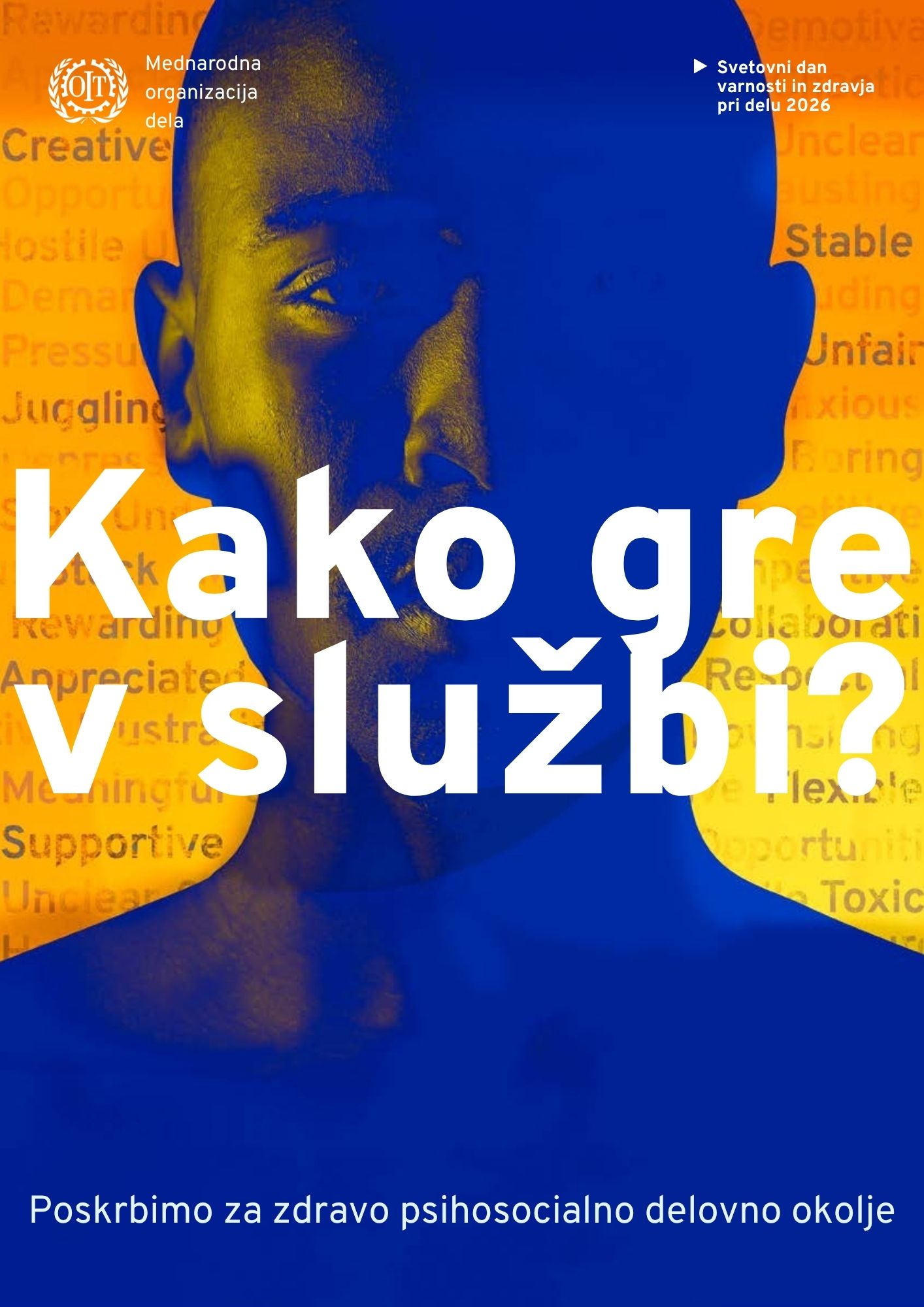
18/2026 e-novica ZSSS (22. 4. 2026): Globalno poročilo MOD o psihosocialnem delovnem okolju ob 28. aprilu 2026

19/2026 e-novica ZSSS (23. 4. 2026): Znanje je prvi korak k zaščiti – 40 informativnih listov o rakotvornih snoveh

20/2026 e-novica ZSSS (27. 4. 2026): Poziv ETUC za predpis EU o najvišjih delovnih temperaturah, 28. april 2026


Europe: Unions call for EU heat law on workers’ memorial day

Unions call for EU heat law on workers’ memorial day

The growing number of people dying because they are forced to keep working in extreme heat requires the EU to strengthen workers’ rights to meet the rising threat of climate change.

That is the message trade unions will give European Commission representatives on Tuesday at an event held to mark International Workers Memorial Day, the day on which the labour movement commemorates those who have lost their lives at work.

At the conference in Brussels organised by the European Trade Union Confederation (ETUC) and European Trade Union Institute, workers’ representatives will highlight the overwhelming evidence of the need for legislation to ensure employers work with unions to put in place common sense measures, such as the provision of drinking water, access to shade, and breaks in work.

  • There has been a 42% increase in heat-related workplace fatalities in the EU since 2000 – the fastest increase of any part of the world;

  • The number of people exposed to heat waves at work in the EU has increased by 60% over the last 20 years;

  • 47% of people say they have felt too hot at work, but just 15% say action has been taken to keep them safe;

  • When temperatures rise above 30°C, the risk of workplace accidents increases by 5-7% and, when temperatures exceed 38°C, accidents are between 10% to 15% more likely.

In 2023, the European Commission issued guidance on employers’ responsibility to people working in high temperatures. But research shows that employers have demonstrated “reluctance to adopt preventive measures” and a “refusal to accept the inclusion of [heat] specific measures” in collective bargaining agreements.

That contributed to a spate of preventable deaths last summer, including an agriculture worker who died in Spain after harvesting fruit in temperatures exceeding 40°C, two construction workers who died after collapsing with heat stroke, and a 50-year-old who died after his body temperature rose to 42,9 °C while working in a distribution centre in France.

That is why the ETUC is calling for legislation on maximum working temperatures to be included in the forthcoming Quality Jobs Act.

Speaking at the event, ETUC General Secretary Esther Lynch will say:

“Deaths from heat at work are not accidents – they are predictable and preventable, yet too many employers are still failing to take the risk seriously. 

“For many years now, our affiliates have been reporting tragic cases of workers dying as a result of exposure to extreme heat. These deaths are occurring across a wide range of sectors, including street cleaning, forestry, agriculture, construction, and even in indoor environments such as industry. Their loss underlines the urgent need to act.

“While the European Commission has taken steps in recent years, including issuing guidance, the reality on the ground is clear: guidance alone is not enough. As our members systematically report us, every summer, workers continue to fall ill, suffer accidents, and in the worst cases, lose their lives. This situation calls for urgent legislative action.”

ETUC Confederal Secretary Giulio Romani will say:

“Occupational heat is no longer an emerging issue – it is already a daily reality for millions of workers across Europe. As we have heard, this is not only about discomfort; it is about health, safety, and, increasingly, loss of life.

“There is, importantly, a window of opportunity. The ongoing work on the Quality Jobs Act provides a political space to integrate stronger protections for workers facing extreme weather conditions. This could be a key avenue to ensure that climate resilience becomes an integral part of quality employment in Europe.”

Photo: Carlos Costa/ European Union

https://www.etuc.org/en/pressrelease/unions-call-eu-heat-law-workers-memorial-day

Scotland: Multiple events to be held across Scotland – STUC / Scottish Hazards

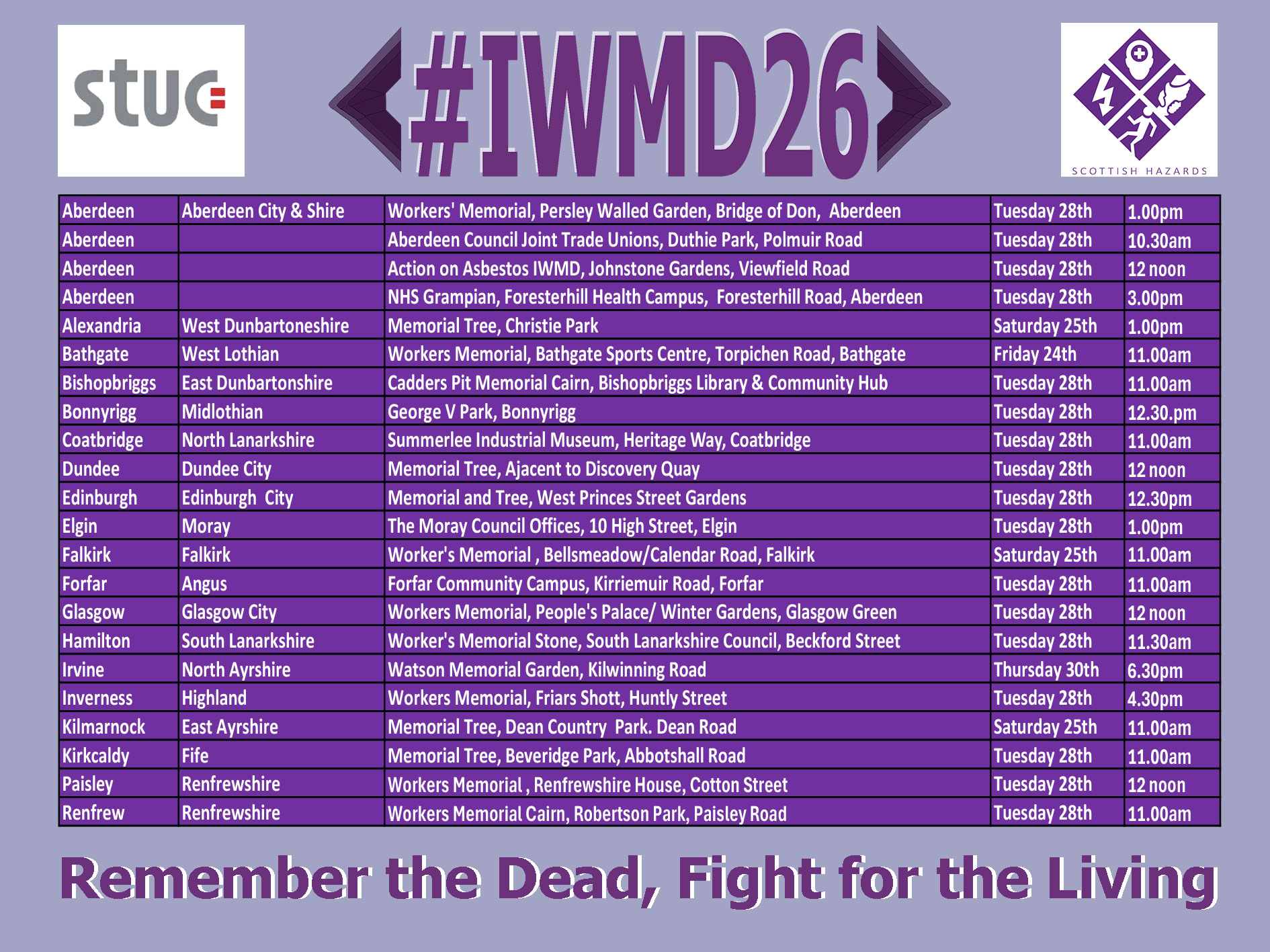
STUC and Scottish Hazards are listing a comprehensive listing of 28 April events across the country.

See the listing on the STUC’s 28 April webpage

Friday 24 April

Bathgate – 11:00am
Workers Memorial, Bathgate Sports Centre, Torpichen Road, Bathgate


Saturday 25 April

Alexandria – 1:00pm
Memorial Tree, Christie Park

Cumbernauld – 11:00am
Workers’ Memorial, Cloudon Road

Falkirk – 11:00am
Workers’ Memorial, Bellsmeadow / Calendar Road, Falkirk

Kilmarnock – 11:00am
Memorial Tree, Dean Country Park, Dean Road


Tuesday 28 April

Aberdeen – 10:30am
Aberdeen Council Joint Trade Unions, Duthie Park, Polmuir Road

Aberdeen – 12:00pm
Action on Asbestos IWMD, Johnstone Gardens, Viewfield Road

Aberdeen – 1:00pm
Workers’ Memorial, Persley Walled Garden, Bridge of Don

Aberdeen – 3:00pm
NHS Grampian, Foresterhill Health Campus, Foresterhill Road

Angus (Forfar) – 11:00am
Forfar Community Campus, Kirriemuir Road

Bishopbriggs – 11:00am
Cadders Pit Memorial Cairn, Bishopbriggs Library & Community Hub

Bonnyrigg – 12:30pm
George V Park, Bonnyrigg

Coatbridge – 1:00pm
Summerlee Industrial Museum, Heritage Way

Dundee – 12:00pm
Memorial Tree, adjacent to Discovery Quay

Edinburgh – 12:30pm
Memorial and Tree, West Princes Street Gardens

Elgin – 1:00pm
The Moray Council Offices, 10 High Street, Elgin

Forfar – 11:00am
Forfar Community Campus, Kirriemuir Road

Falkirk – 11:00am
Worker’s Memorial, Bellsmeadow / Calendar Road

Glasgow – 12:00pm
Workers’ Memorial, People’s Palace / Winter Gardens, Glasgow Green

Greenock – 12:00pm
Wellpark Park, Greenock

Hamilton – 11:30am
Workers’ Memorial Stone, South Lanarkshire Council, Beckford Street

Inverness – 4:30pm
Workers’ Memorial, Friars Shott, Huntly Street

Kirkcaldy – 11:00am
Memorial Tree, Beveridge Park, Abbotshall Road

Paisley – 12:00pm
Workers’ Memorial, Renfrewshire House, Cotton Street

Renfrewshire – 11:00am
Workers’ Memorial Cairn, Robertson Park, Paisley Road