Category Archives: News

Asia: ANROEV Statement on International Workers’ Memorial Day 2019

Constant Demand to Governments in Asia for Immediate Ratification of  ILO Convention 155 and 170

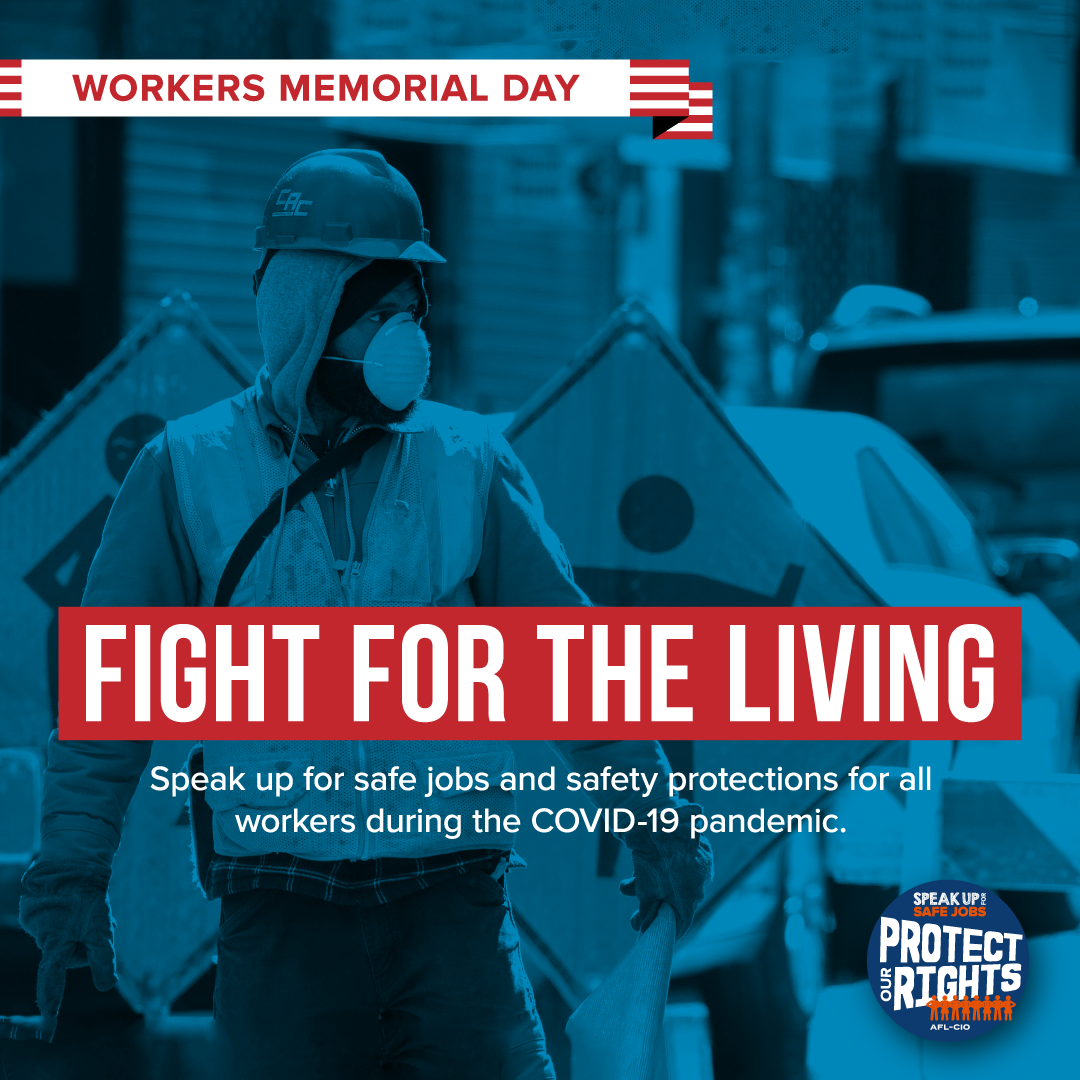
28 April a day of remembrance for workers who were killed, injured or disabled due to lack of proper health and safety at work. Workers’ Memorial Day is an opportunity to highlight the preventable nature of most workplace incidents and ill health and to promote campaigns for the fight of improvements in workplace safety.The basic slogan for the day is remembering the deadfight for the living.

According to recent report of the ILO, currently, more than 374 million people are being injured or affected by illness every year by work-related accidents. It is estimated that economic loss due to OSH-related causes represent almost 4 per cent of global GDP, in some countries the cost can be as high as 6 per cent. The developing Asia is one of a key region in the world constantly suffering with high number of work related deaths, diseases and injuries caused by unsafe working condition.

According to a new report from the International Labour Organization (ILO), Changes in working practices, demographics, technology and the environment are creating new occupational safety and health (OSH) concerns. Growing challenges include psychosocial risks, work-related stress and non-communicable diseases, notably circulatory and respiratory diseases, and cancers.  Death caused by hazardous substances at work are all time high linked to 1 million preventable death worldwide each year which is unacceptable.

It’s a great sorrow to mention that, the overall development approach in the field of OSH in Asia is mainly focused on workplace accident; addressing occupational diseases is still not a priority. Occupational diseases (silicosis, asbestosis and occupational cancers and many more) are invisible and imminent threat for workers in Asia. The absence of OSH Rights, social protection and just compensation for industrial accidents, injuries and diseases are pushing affected families deeper into poverty and making them vulnerable.

Recent tragic workplace accidents in various parts of Asia show that, health and safety of workers is not prioritized by employers or the enforcement authorities. Occupational accident victims specially women and young people are even being further marginalized as they find it even harder to find long term unemployment or forced to take precarious work that is low paid, unprotected and hazardous.

We must recognize the economic cost, the immeasurable human suffering such illnesses and accidents. These are all-the-more tragic because they are largely preventable.

According to UNHCR, exposing workers to substances that do not have a determination of a health-based safe level of exposure is a violation of their rights. At the most fundamental level, comprehensive information regarding the intrinsic health hazards of the vast majority of industrial chemicals continues to be absent, including their ability to cause cancer, to be mutagenic or to be toxic for reproduction Continued exposure of workers to such chemicals not only constitutes a challenge to the rights of these workers to information, but also may amount to exploitation by deception. Without such information about toxic exposures at work, this further limits the rights of workers to realize other related rights.

OSH legislations are outdated (regressive) as these generally fail to keep in step with emerging workplace issues and non-standard forms of employment. In many cases, workers in the informal economy, domestic workers, migrant workers are not covered under the legislations. Enforcement of OSH legislations are equally a serious concern in Asia and require joint responses at national and regional level. Updated OSH legislation in the Asian region reflecting the nature of work in Asia is crucial to prevent workplace accidents and diseases and to ensure just compensation for victims.

The ILO convention 155 (occupational health and safety) and 170 (chemicals convention) is considered as basic international labour standard for securing health and safety rights of all working people inside the national boundary; ensure safe chemical management and exposer fee workplaces. On the other hand, the important feature of the ILO convention 155 is applied to all workers in all branches of economic activity. Therefore, ratification of 155 by countries in Asia is very important to ensure state’s basic legal obligation, ensure occupational health and safety rights of all workers within the country. The formulation of harmonization of compensation systems and ratification of ILO Convention 155 is an urgent need in Asia.

Furthermore, the goal of ILO conversion 170 is to provide workers with information about the chemicals at their workplaces, and about appropriate preventive measures so that they can effectively participate in protective programmes; establishing principles for such programmes to ensure that chemicals are used safely, but regretfully it is found that, till now only few countries in Asia has ratified convention 155 such as China, Korea, Mongolia, Australia, Fiji and Kazakhstan. Its ratification status in south Asia and South East Asia is nil. On the other hand only 21 countries in the world ratified ILO convention 170 (chemical safety), and only China and Korea from Asian region are included that list.

The international community has long recognized health as a human right. But in a world where above 3 million workers continue to die every year as a result of occupational accidents and work-related diseases; it is time for safety and health at work to be recognized as a fundamental principle and right at work.

It has to be point out here that, one of key recommendations at just published Global Commission on the Future of Work report is a universal labour guarantee required that protects workers ’fundamental rights, an adequate living wage, limits on hours of work and safe and healthy workplaces.

On the International Workers’ Memorial Day 2019, ANROEV demanded to the governments in the region for immediately ratify the ILO Convention 155 and 170 as part of states obligation towards ensure safe, healthy and hazards free work places at national level.

Asian Network for the Rights of Occupational and Environmental Victims (ANROEV)

Global: Tomar el control – eliminar sustancias peligrosas del lugar de trabajo (CSI)

Cada 11 segundos una persona pierde la vida debido a condiciones de trabajo letales. Pese a que cada vez hay mayor conciencia del problema, en muchos países el cáncer sigue siendo la principal causa de muertes en el lugar de trabajo. En esta Jornada Internacional de Conmemoración de los Trabajadores y Trabajadoras fallecidos y heridos, la CSI reclama cáncer cero.

“Trabajar es sinónimo de ganarse la vida, sin embargo, los trabajadores y las trabajadoras siguen exponiéndose a substancias letales en el lugar de trabajo. Hoy rendimos tributo a todos aquellos que se dejaron la vida en el trabajo. En su memoria, continuaremos luchando por los vivos”, indicó Sharan Burrow, Secretaria General de la CSI.

Pese a que puede transcurrir cierto tiempo desde la exposición a una substancia peligrosa y el diagnóstico de un cáncer, los estudios cada vez dejan más patente el vínculo entre el cáncer y sus causas profesionales. La CSI, junto con la campaña Hazards, ha elaborado una breve guía donde se resumen los principales riesgos de cáncer en el trabajo.

“Los sindicatos hacen el trabajo más seguro. Las personas son quienes están más capacitadas para saber dónde está el peligro en sus lugares de trabajo, y es gracias a su comprensión y sus acciones colectivas que pueden introducirse mejoras duraderas respecto a salud y seguridad. Reclamamos condiciones aún más seguras, desde el lugar de trabajo hasta el nivel de las normas internacionales adoptadas por la Organización Internacional del Trabajo. Resulta fundamental garantizar la salud y seguridad en el trabajo. La Declaración del Centenario de la OIT supone una oportunidad real para lograr progresos significativos que podrían salvar millones de vidas. No debemos desaprovecharla”, afirmó la Sra. Burrow.

Se hizo eco de esta opinión el Sr. Baskut Tuncak, Relator Especial de las Naciones Unidas sobre las obligaciones de derechos humanos relacionadas con la gestión y eliminación ecológicamente racionales de las sustancias y los desechos peligrosos. Indicó que la comunidad internacional debe “aprovechar las oportunidades que se nos ofrecen de momento para eliminar algunas de las distintas normativas existentes entre países, que están siendo aprovechadas por empresarios sin escrúpulos a través de sus cadenas de suministro”. Comentando sobre la necesidad de reforzar la seguridad internacional, afirmó que “los instrumentos globales se limitan a prohibir o restringir la utilización o la emisión de menos del 0,1% de todos los pesticidas y productos industriales tóxicos que plantean inquietudes a nivel mundial y a los que están expuestos trabajadores/as y comunidades”.

Nuevos productos químicos se introducen en los lugares de trabajo continuamente, pero muy pocos de éstos han sido evaluados exhaustivamente en cuanto a sus efectos cancerígenos. Es necesario mejorar los estándares de control para evitar que se produzcan más muertes. La OIT es la principal institución encargada de garantizar mejores normas para millones de trabajadores y trabajadoras en todo el mundo. La CSI insta a empleadores y gobiernos a cumplir su mandato y aceptar la naturaleza fundamental de la salud y seguridad laboral, durante la Conferencia del Centenario de la OIT en junio de 2019.

Los sindicatos del mundo entero se movilizan hoy para rendir tributo y exigir mejores condiciones de salud y seguridad en el trabajo. Sigan las últimas novedades en 28April.org

Cartel – Reacción química
Infografía – Tipos de cáncer y causas relacionadas con el trabajo


Para más información, sírvanse ponerse en contacto con el Departamento de Prensa de la CSI llamando al +32 2 224 02 53 o por e-mail a: press@ituc-csi.org

Global: Prendre le contrôle – éliminer les substances dangereuses du lieu de travail (CSI)

Toutes les 11 secondes, une personne meurt en raison des conditions dangereuses dans lesquelles elle travaille. La prise de conscience gagne du terrain, mais le cancer est toujours la première cause de décès dû au travail dans de nombreux pays. Cette année, à l’occasion de la Journée internationale de commémoration des travailleuses et des travailleurs, la CSI appelle à «zéro cancer».

«Nous travaillons pour ‘gagner notre vie’ mais les travailleurs sont toujours exposés à des substances mortelles. Aujourd’hui, nous rendons hommage aux personnes qui ont perdu la vie au travail. En leur mémoire nous continuons à nous battre pour vivre,» a déclaré Sharan Burrow, la secrétaire générale de la CSI.

En dépit de la longue période qui peut se dérouler entre l’exposition à des substances dangereuses et le diagnostic du cancer, la recherche met de plus en plus souvent en évidence le lien existant entre le cancer et ses causes professionnelles. La CSI, en partenariat avec la campagne de la revue «Hazards», a réalisé un guide pratique qui résume les principaux risques de cancers professionnels.

«Grâce aux syndicats, le travail est plus sûr. Les travailleurs sont les mieux placés pour savoir où se trouvent les dangers sur leur lieu de travail et c’est leur connaissance et leur action collective qui permettent d’améliorer durablement la santé et la sécurité. Nous plaidons en faveur de conditions toujours plus sûres, depuis le lieu de travail jusqu’aux normes internationales élaborées par l’Organisation internationale du travail. Il est fondamental de garantir la santé et la sécurité au travail. La Déclaration du centenaire de l’OIT offre une réelle opportunité de réaliser les importantes avancées qui permettraient de sauver des millions de vies. Il ne faut pas la manquer,» a précisé Sharan Burrow.

C’est également ce qu’a annoncé M. Baskut Tuncak, le Rapporteur spécial des Nations Unies sur les droits de l’homme et les produits et déchets dangereux, pour qui la communauté internationale doit «veiller aux opportunités dont nous disposons actuellement pour éliminer les inégalités de traitement existantes entre les pays exploités par des entreprises peu scrupuleuses au travers de leurs chaînes d’approvisionnement.» Puis, s’exprimant sur la nécessité de renforcer la sécurité internationale, il a ajouté: «les instruments mondiaux interdisent ou limitent l’utilisation ou l’émission de moins de 0,1% seulement des substances chimiques industrielles toxiques et des pesticides suscitant une préoccupation mondiale auxquels les travailleurs et les populations locales sont exposés.»

De nouveaux produits chimiques arrivent sans cesse sur les sites de travail, et très peu ont fait l’objet d’un contrôle approfondi pour évaluer leur cancérogénicité. L’amélioration des normes de test est indispensable pour éviter d’autres décès. L’OIT est la principale organisation chargée d’améliorer les normes pour des millions de personnes à travers le monde. La CSI exhorte les employeurs et les gouvernements à se montrer à la hauteur de cette mission et à accepter la nature fondamentale de la santé et de la sécurité organisationnelle lors de la Conférence du centenaire de l’OIT en juin 2019.

Les syndicats de toute la planète se mobilisent aujourd’hui pour rendre hommage aux travailleuses et aux travailleurs et obtenir de meilleures conditions de santé et de sécurité au travail. Consultez les dernières nouvelles sur 28April.org.

Affiche – Réaction chimique
Infographie – Les cancers et leurs causes professionnelles


GLOBAL: Taking control – removing dangerous substances from the workplace (ITUC)

Every 11 seconds a person loses their life because of lethal working conditions. While awareness is growing, cancer remains the number one workplace killer in many countries. On this International Workers’ Memorial Day, the ITUC is calling for zero cancer.

“We call it making a living, yet working people continue to be exposed to lethal substances. Today we pay our respects to those who paid the ultimate price at work. In their memory we continue to fight for the living,” said Sharan Burrow, ITUC General Secretary.

While there is a delay between exposure to dangerous substances and the diagnosis of cancer, research sheds increasing light on the link between cancer and its workplace causes. The ITUC, together with Hazards campaign, has produced an at-a-glance guide that summarises the most prominent cancer hazards at work.

“Unions make work safer. People are best placed to know where dangers lie in their workplaces and it is through their collective understanding and action that lasting health and safety improvements are made. We are pushing for ever-safer conditions, from the workplace right up to the level of international standards at the International Labour Organization. It is fundamental to guarantee safety and health at work. The ILO’s Centenary Declaration is a real opportunity for meaningful progress that could save millions of lives. It must not be missed,” said Burrow.

This was echoed by Mr. Baskut Tuncak, United Nations Special Rapporteur on the implications for human rights of the environmentally sound management and disposal of hazardous substances and wastes. He said that the international community must “look at the opportunities that we have at present to eliminate some of the double standards that exist between countries that are being exploited by unscrupulous businesses, through their supply chains.” Commenting on the need to reinforce international safeties, he said, “global instruments only ban or restrict the use or emission of less than 0.1% of toxic industrial chemicals and pesticides of global concern to which workers and communities are exposed.”

New chemicals are entering workplaces all the time, very few of which have been comprehensively assessed for carcinogenicity. Improved standards for testing are needed in order to avoid more deaths. The ILO is the leading institution for securing better standards for millions of people around the world. The ITUC is calling on employers and governments to live up to this mandate and accept the fundamental nature of organisational safety and health at the ILO Centenary Conference in June 2019.

Trade unions around the world are mobilising today to pay respects and push for better safety and health conditions at work, follow the latest on 28April.org.

Poster – Chemical Reaction
Infographic – Cancers and their work causes


For more information, please contact the ITUC Press Department on +32 2 224 02 53 or by e-mail: press@ituc-csi.org

Germany: IG BAU-Bundesvorstandsmitglied Carsten Burckhardt über die Bedeutung des Workers’ Memorial Day.

IG BAU-Bundesvorstandsmitglied Carsten Burckhardt über die Bedeutung des Workers’ Memorial Day.

Global: On 28 April IndustriALL launches year long safety campaign

Ghana: April 28 government announcement that a work safety bill is to be passed this year

Occupational Safety and Health Bill to be passed this year

Parliament will pass the Occupational Safety and Health (OHS) Bill into law by the end of the year as part of efforts to promote workplace health and safety.

“It is vital we acknowledge that the future of work is now with us and it behoves on us to adopt, adapt and modify the nature of work and our workplaces to stay current and compliant with the OSH standards.”

Mr Ignatius Baffour-Awuah, the Minister of Employment and Labour Relations, said this on Friday on the “World Day for Safety and Health at Work” in Accra.

The event, on the theme: “Safety and Health and the Future of Work,” was organised by the Ministry in collaboration with the Volta River Authority (VRA).

Mr Baffour-Awuah called on all stakeholders in the working environment to conform to the requisite work and health safeties, as it was crucial to the attainment of the National Medium-Term Development Objectives.

He said the world of work was changing at a faster rate, with the influx of modern technology, artificial intelligence and the Internet of things among others, which came with hazards and deficiencies.

“We cannot act oblivious about the accidents and injuries these technologies may pose to the labour force,” he said.

Mr Baffour-Awuah said social partners had demonstrated enough commitment to the promotion of OSH standards to guarantee employees’ welfare and wellbeing, adding that stakeholders must not relent on that effort.

He said the significance of safety and health at the workplace was undeniably key to the full attainment of decent work agenda in Ghana.

Mr Baffour-Awuah said although there was overwhelming evidence that certain categories of the Ghanaian workplace were exposed to occupational risks and hazards, significant strides had also been made in the administration of the OSH standards through sensitisation, advocacy, compliance and enforcement.

“It is my fervent expectation that Ghana achieves the SDGs on OSH earlier than the stipulated timeframe; a task I employ all of us to embrace, other than that, our celebration of the World Day for Safety and Health at Work will be an exercise in futility,” he said.

He said the move would require investment, research, training, skills development and capacity building because employees wanted to work in an environment where their safety could be assured.

The Minister said employers, on the other hand, were seeking men and women with demonstrated safety consciousness to hire and engage, knowing that reliable assurance of safety was a guarantee of business development.

He noted that the Government was interested in a healthy workforce that could implement its policies and programmes towards growth and sustainable development of the country.

Mr Andrew A. Tagoe, the Deputy General Secretary, General Agriculture Workers Union of the Trades Union Congress (TUC), called on the Government to develop and implement a national OSH legislation and regulation.

He said the Labour Inspectorate Division of the Ministry of Employment and Labour Relations must be empowered to intensify its inspection at all workplaces to ensure safety.

Source: GNA

https://www.ghanabusinessnews.com/2019/04/27/occupational-safety-and-health-bill-to-be-passed-this-year/

Wales: Marking International Workers Memorial Day 2019

Safe work is a right, not a privilege. Each year on 28 April trade unionists mark Workers Memorial Day.
It is alarming to note that every year worldwide, more people are killed at work than in wars. Each year, 28 April is designated as Workers’ Memorial Day, providing the opportunity to reflect on the many people who are killed, seriously injured or made ill while doing their jobs.

Wales TUC  President Shavanah Taj honours those who have suffered by calling on people to join a union to fight for a stronger voice at work and improve workplace health and safety.

Most workers don’t die of mystery ailments, or in tragic accidents. They die because an employer decided their safety wasn’t that important. Workers’ Memorial Day commemorates those workers and so if you’re not in a union, join a union. If you’re a member of a union, become active and become a union heath and safety rep. Unionised workplaces are safer workplaces and today on International Workers’ Memorial Day we remember the dead and fight for the living.

Shavanah Taj, Wales TUC  President

Join a union today

Watch Shavanah’s full message for Workers’ Memorial Day 2019:

Take part in Workers’ Memorial Day 2019

This year Workers’ Memorial Day falls on a Sunday so you may like to organise an event in your workplace on the following Monday, 29 April. Your event could be a minute’s silence, a commemorative rally, a workplace meeting or just a small get-together. You could also arrange a larger commemorative event such as planting a memorial tree in a public place, putting up a plaque, dedicating a sculpture, a piece of art, or a bench, to remember workers who have been killed at the workplace or in the community.

Tell us how you’re marking Workers’ Memorial Day on Twitter (using #IWMD19) or Facebook.

Dangerous substances

The theme for Workers’ Memorial Day 2019 is: “dangerous substances – get them out of the workplace”.

Take a look at the TUC’s guides on AsbestosDiesel exhaust and Occupational cancer

Cymru: Diwrnod Coffa Gweithwyr Rhyngwladol 2019

Wales TUC Workers’ Memorial Day message on YouTube

Global: ITF adds its voice to the international campaign against dangerous substances

The International Transport Workers’ Federation has encouraged everyone to join the international call to take control and remove dangerous substances from work.