Ghana: Wood and Forestry union TWU holds social dialogue to improve OHS – #iwmd23

The Timber and Woodworkers Union (TWU), BWI affiliate in Ghana held a social dialogue meeting on occupational health and safety (OHS) policies in Kumasi on April 28th, 2023. The meeting brought together representatives from the TWU, government officials, employers, and workers to discuss ways to improve OHS policies and practices in the Wood and Forestry Sector.

Burkina Faso: SNTBB marks 28 April with safety seminar

The National Union of Building and Wood Workers (SNTBB) of Burkina Faso celebrated the International Commemorative Workers Day (#JICT2023) by a national seminar held in Tenkodogo on April 29, 2023 under the theme: “Role of the Union in ILO C167 ratification; Role of OST in enterprises for better worker health”

India: The 28 April message is ‘Health and safety is non-noegotiable!’ – #iwmd23

#MakeItHappen Health and safety is a non-negotiable! Unions in India conduct awareness meetings in Delhi (MAMU), Punjab (BMS) and Himachal Pradesh (AHPWDIPHCWU)

Senegal: Construction workers’ union calls on employers to implement OHS as a fundamental right – #iwmd23

The National Syndicate of Construction Workers and BPT (SNTC/BTP), an affiliated with the IBB in Senegal, commemorated the International Workers Commemoration Day 2023 with a workplace campaign in Eiffage Senegal and calling on employers to act for the implementation of SST as what a fundamental workers right.

India: Cement plant safety workshops on 28 April – #iwmd23

The Indian National Cement Workers Federation convened health and safety workshop at selected cement plants. Also, KSCWCU conducted health and safety meeting to mark the day.

Uganda: Energy and construction workers push for comprehensive PPE compliance

UBCCEWAU from Uganda took part in IWMD2023 with their members from Energy and construction sectors in a campaign to push for compliance for PPE in all infrastructure and construction projects.

Nigeria: NUCUCFWW joins with BWI affiliates around the world – #iwmd23

NUCUCFWW, from NIGERIA joined BWI affiliates around the world in commemoration of the IWMD2023. The Union is calling for the implementation of OHS as a fundamental right for workers in Construction Industry and for free PPE’s.

#iwmd23 – African unions commemorate International Workers’ Memorial Day | Industriall

African unions commemorate International Workers’ Memorial Day 

2 May, 2023

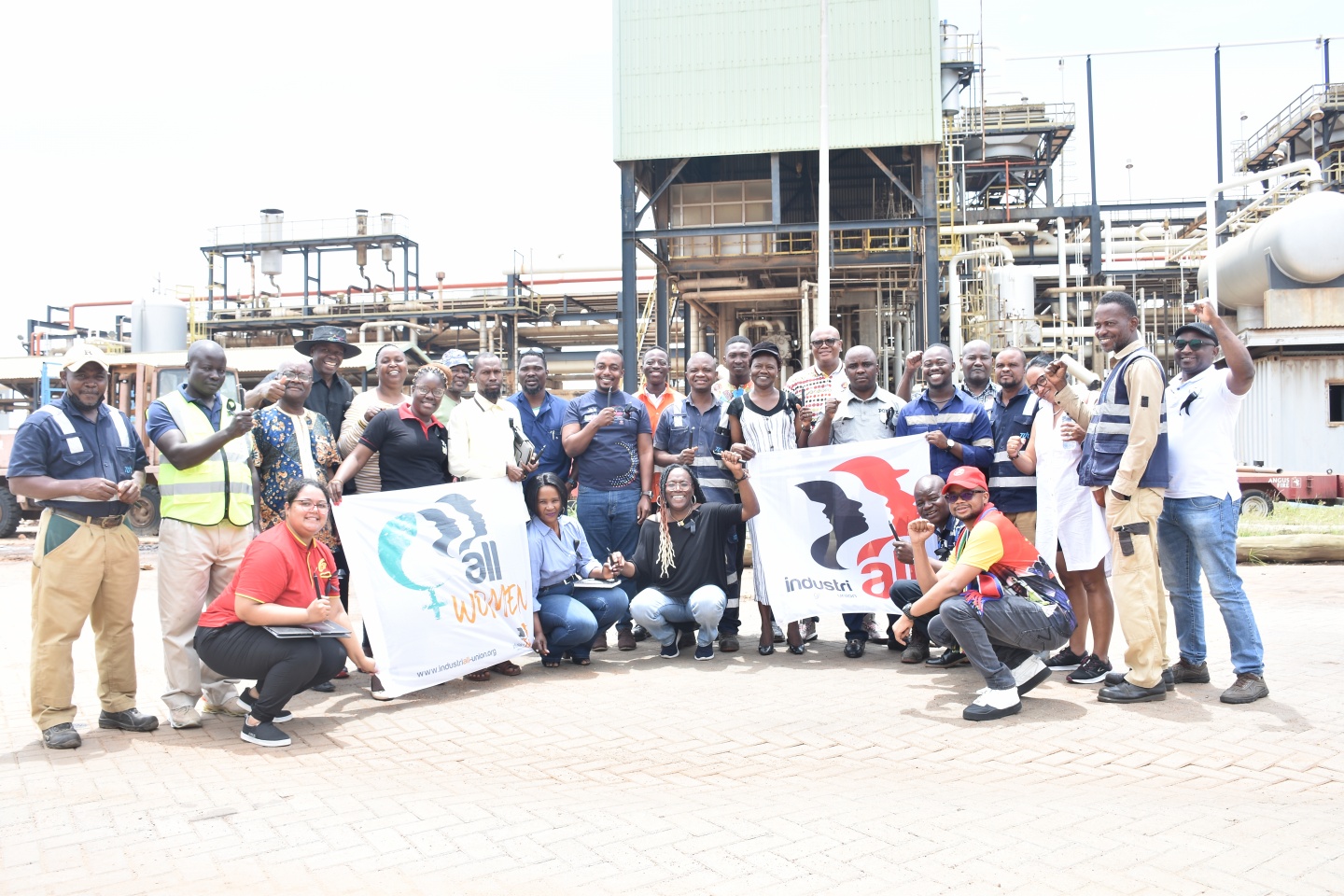
To commemorate International Workers’ Memorial Day a group of shop stewards from different trade unions in Sub-Saharan Africa came together, in Ghana, to visit and learn about adherence to occupational health and safety standards at state-owned Tema oil refinery and Trafigura’s Tema multiproduct terminal known as Blue Ocean. As symbols of remembrance the workers and delegation wore black ribbons and carried black candles.

Kofi Poku, the union branch chairperson at the terminal said,

“Blue Ocean is known to be conscious on health and safety issues and workers make significant contributions towards creating a safe working environment. The visit by IndustriALL is commendable and highlights the commitment of organised labour at global level to ensure health and safety at work.”

A meeting preceding the visit discussed country reports which focused on: accident reporting systems in Togo, campaigns for health and safety laws in mining that protected workers’ rights in South Africa, and campaigns against precarious work as workers, in Ghana, Nigeria, Kenya, and Uganda, with short contracts faced more health and safety risks than those on permanent contracts.

The meeting also heard that Madagascar’s garment and textile factories’ contract workers faced risks that were worsened by sexual harassment which was targeted at young women workers. The meeting discussed the positive impact of the Bangladesh Accord on Sub-Saharan Africa especially the involvement of brands through global framework agreements after the Rana Plaza disaster which happened a decade ago.

In Mauritius, unions were campaigning for proposed amendments to Articles 7, 10, 11, and 22, to the Rotterdam Convention, a global treaty to facilitate informed decision making by countries to manage chemicals in international trade and exchange information on hazardous chemicals and their potential risks. The campaign by the CTSP received government endorsement, and Mauritius’ position will be presented at the 11th conference of parties to the Rotterdam Convention that is currently taking place in Geneva, Switzerland.

Glen Mpufane, Industrial director for mining and lead on health and safety, said:

“Workers have made immense sacrifices on health and safety and as trade union activists we are in solidarity on their demands for safer workplaces. It is a victory for workers that health and safety is now one of the fundamental rights at work and this is why we must have knowledge on international labour conventions and recommendations. However, as we remember the injured and dead, we must adapt our programmes to include human rights’ due diligence and demand responsible business conduct from employers.”

Glen added that workers must remain vigilant on identifying hazards and risks at the workplaces including wearing of appropriate personal protective equipment in hazardous areas and exercising the right to refuse unfair and unsafework.

The participants are part of the Sub-Saharan Africa occupational health and safety committee whose members are drawn from the chemical, garment and textile, mining, oil and gas, and other industrial sectors. This visit was organized by IndustriALL affiliate, the Ghana Transport Petroleum and Chemical Workers Union which organizes workers at the Tema Oil Refinery and Blue Ocean.

https://www.industriall-union.org/african-unions-commemorate-international-workers-memorial-day

Global: #iwmd 23 – Safety for all – the need for gender-responsive OHS | IndustriALL

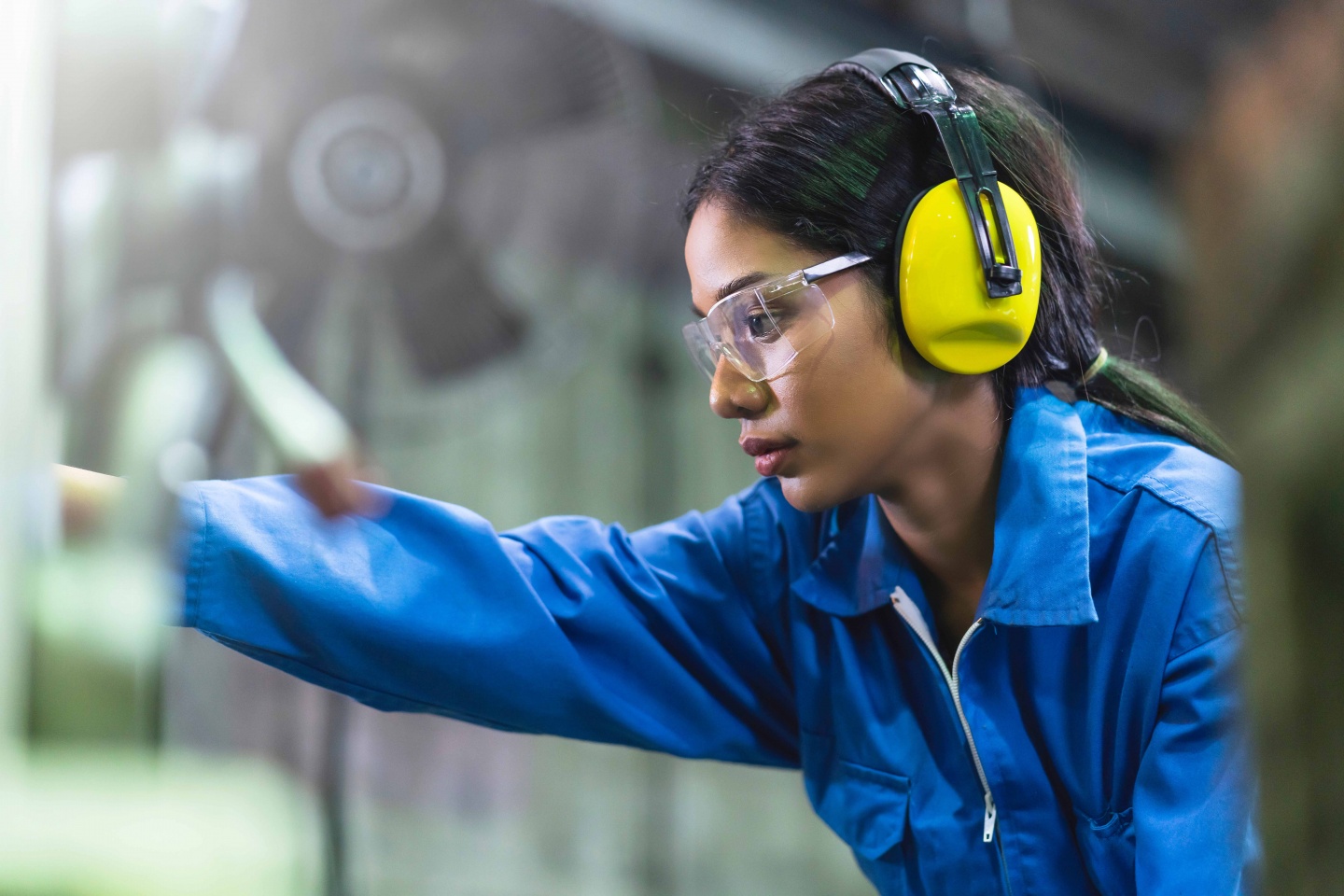
28 April, 2023 Gender based division of labour, sexual biological differences, employment patterns, social roles and social structures mean that women and men are exposed to different risks at work, and also exposed in different ways. These differences need to be identified and acknowledged, OHS policies should be gender-responsive to ensure workplaces that are safe for all workers.

The TUC’s guide for trade union activists on Gender in occupational safety and health illustrates that occupational health and safety often treats men and women as if they were the same. Less attention is given to the health and safety needs of women.

Traditional emphasis of health and safety, and related research, have been on risk prevention in visibly dangerous work largely carried out by men in sectors like construction and mining, where inadequate risk control can lead to fatalities. As a result, women’s occupational injuries and illnesses, like work-related stress or musculoskeletal disorders have been largely ignored, under-diagnosed, under-reported and under-compensated.

Across the world, work equipment, tools and personal protective equipment (PPE), have been traditionally designed for the male body size and shape. Moreover, as explained by the ILO, the design of most PPE is based on the sizes and characteristics of male populations from certain countries in Europe, Canada and the United States. As a result, not only women, but also many men experience problems finding suitable and comfortable PPE because they do not conform to this standard male worker model.

Gender inequality both inside and outside the workplace can affect women’s occupational safety and health and there are important links between wider discrimination issues and health. According to the ILO, in general, women are more exposed than men to psychosocial risks that can cause work-related stress, burnout, violence, discrimination and harassment.

The extra responsibilities that women face as paid workers and unpaid carers for their families make that women’s stress levels remain high after work. Not acknowledging gender differences may mean that apparently neutral policies impact differently on women and men and reinforce existing inequalities. OSH is a core aspect of promoting gender equality.

“We need a gender-responsive approach, based on the analysis of sex and gender disaggregated data, that acknowledges and makes visible differences between male and female workers, identifies their differing risks and propose control measures so that effective solutions are provided for everyone,”

says Glen Mpufane, IndustriALL OSH director.

ILO Convention 190 on violence and harassment in the world of work is a, calling on employers to conduct gender responsive risk assessment, taking into account gender stereotypes, multiple and intersecting forms of discrimination, and unequal gender-based power relations.

Consultation with women workers and the women health and safety representatives in health and safety committees are key for the development of gender responsive OHS.

Guidelines on out gender-responsive risk assessment on violence and harassment

https://www.industriall-union.org/safety-for-all-the-need-for-gender-responsive-ohs

UK: Health and Safety is won through struggle – FBU – #iwmd23

Remember the dead, fight for the living

On International Workers’ Memorial day, FBU National Officer Riccardo La Torre reflects on how health and safety has been won by struggle and solidarity, not gifted by bosses. 

If you visit the Fire Brigades Union head office and climb the stairs to the top floor, you will find yourself pausing in front of a wall covered with a long list of names. For those of us who work in the building, this list is a daily reminder of why we’re there and why the union exists. Each of these two thousand plus names belongs to a firefighter killed in service. It is in their memory that we continue to organise and fight for our lives.

If we had a national record of every firefighter death from cancer or other workplace diseases, there would be thousands more names to add. In 2022, the World Health Organisation confirmed what many of us in the FBU already knew from tragic experience: firefighting is a cancer-causing occupation.

Every year on April 28th, we come together for International Workers Memorial Day, to remember each of these, and all workers’, lives lost. If you work in the fire service, you will know that our memorials are not reflections on a distant past. The fight for safety and our future is sadly still very much an ongoing struggle which shapes our lives now.

For many, ‘health and safety’ conjures up images of top-down clipboard tapping, high vis vests and managerial risk assessments. In truth, workers have had to fight ferociously to protect our health at work, and for our safety from injury and harm. Nothing has been handed to us, nothing has been gifted by bosses. The history of health and safety is of organised, radical class action. In the memory of every worker who hasn’t returned home from a shift, what we demand for ourselves and our colleagues must stay rooted in this tradition.

Take breathing apparatus (BA): arguably one of the most iconic symbols of firefighter safety. The cylinder, set and mask are what allow firefighters to breathe safely during firefighting and rescue operations. But the BA sets we now wear on our backs were hard won. Following the deaths of two firefighters at the 1958 Smithfield fire, the FBU launched demands for modernised BA that would protect lives. As a line from the union magazine at the time read, “this is the age which has launched the Sputnik. But in the fire service our breathing apparatus set has remained substantially unchanged for over 40 years.”

We won that campaign and have continued to fight to keep improving our BA ever since. During my time as the union’s Health and Safety lead, I’ve seen bosses try to take BA away from firefighters attending high-rise building fires. I’ve seen them attempt to stop PCR-covid testing for firefighters at the peak of the pandemic, and to deny the link between firefighting and cancers.

These constant attacks are why FBU health and safety reps work tirelessly across fire services every single day. On the ground, our reps know that we cannot allow the rights we have won to be rolled back or blocked.

In 2016, the Trades Union Congress published The Union Effect, a report finding that the health of a workplace is directly impacted by whether workers are part of a union: ‘organised workplaces are safer workplaces’. In a profession as dangerous and volatile as fire and rescue, we cannot afford to let our organisation slip.

To make sure we return home safely at the end of each shift, we must demand safety committees,  our right to time off for training and facilities. We must use the Brown Book, speaking up for our rights every time they are threatened.

Right now, the need for a strong and fighting membership is as urgent as ever as we demand action on firefighter cancer.

Together we’ve already forced this issue on to the agenda. When the government and employers said there wasn’t enough evidence to act, we set up a lottery to fund and commission the research.

Where fire services fail to provide information on how firefighters can protect themselves from toxic fire effluents, we run our own decontamination training.

While there is currently no health monitoring for firefighters to help detect cancers early, we have now launched the first cancer testing research project for firefighters in the UK.

All progress has been down to firefighters organising and making it happen against the odds. But we’re miles behind other countries when it comes to legislation, protection and support for firefighters facing cancer. The US, Canada, Australia, and Poland, amongst others, all have laws in place that recognise these diseases as occupational – caused by going to work.

The UK government and employers are still failing to take any serious action. It’s our job as organised workers to demand, campaign for and win these protections. We’ve done it throughout our history, and we will do it again.

This Workers Memorial Day, we remember every firefighter who has fallen in the line of duty, and every firefighter killed by a disease or cancer caused by their work.

A failing HSE cut to the bone or NFCC bosses’ committees cannot be relied upon to protect and defend the health, safety and welfare of firefighters, in fact we often see the opposite. As our history demonstrates, it is often down to us, and only us, to organise and do for ourselves and each other.

No one, no one, should get ill or killed for going to work. Today and every day, we remember the dead and fight for the living.

https://www.fbu.org.uk/blog/health-and-safety-won-through-struggle
Remember the dead, fight like hell for the living