Category Archives: News

USA: Confined Space – Workers Memorial Day 2026

by Jordan Barab  May 13, 2026

I was traveling abroad over Workers Memorial Day this year, so I missed the  world-wide commemoration that will dwarf this nation’s upcoming Trumpian semiquincentennial. (at least in compassion.)

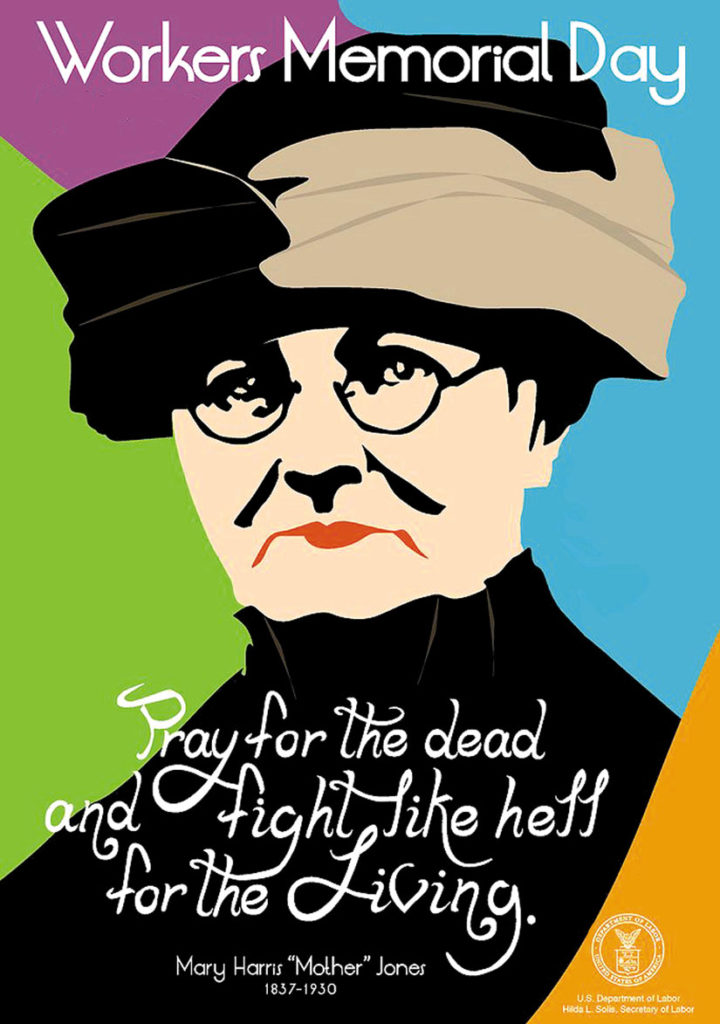
Workers Memorial Day, for those just tuning in, is an annual event to remember those killed in the workplace and re-energize ourselves to fight for safer work. Or, as Mother Jones said, “Pray for the dead, and fight like hell for the living.”

So, as I catch up, I figured I’d include you in my catching-up activities — and feel free to leave any of your Workers Memorial Day experiences in the comments below.

Death on the Job
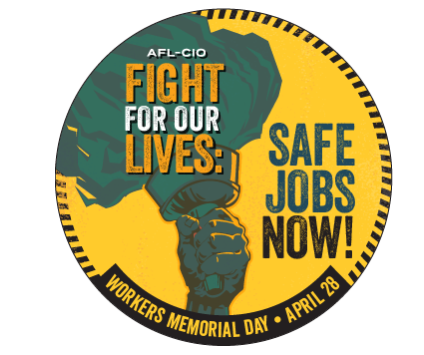
The highlight of this season is always the annual issuance of the AFL-CIO’s “Death on the Job,” now in its 35th edition. DOTJ is the bible of the occupational safety and health environment in the United States, an enormously detailed work containing not only a summary of the political environment that workplace safety and health finds itself in, but also injury and illness data in much more detail and clarity than the Bureau of Labor Statistics releases. Also current and historical budget and staffing information and what that means for workers. (For example, that it now takes 191 years for federal OSHA to visit each workplace in the country just once.)

And all of the information is available by state, e.g. injury, illness and death rates, number of inspectors, average and median penalties penalties, and how the states rank. You can find the summary points here and download the entire document here and you will mountains of information at your fingertips for any future meetings with journalists, legislators or that obnoxious MAGA uncle at Thanksgiving.

In summary, as the report documents:

Over the last 35 years of this report, job safety agencies’ resources have diminished dramatically, even as their responsibilities have grown immensely. For instance, the Occupational Safety and Health Administration is now in charge of 85% more establishments, 44% more workers and new hazards and technologies, yet Congress has reduced its budget by 10% and staffing by 26%, including a 16% reduction in inspectors. These percentages have massive impacts on such a tiny agency and very real personal effects on workers and their families. Agencies now have a paltry number of staff to write standards, analyze data, conduct inspections, perform oversight on states, orchestrate needed research on important hazards and respond to emerging threats. The number of OSHA inspectors has now hit a new low, and the Mine Safety and Health Administration (MSHA) does not have enough inspectors to meet its statutory requirement to inspect each mine multiple times a year.

And why?

Corporate power has eroded worker protections for years, but under the Trump administration, corporations and billionaires are aggressively accelerating efforts to dismantle hard-won progress and the democratic institutions that uphold it. These structures have safeguarded workers from employers who prioritize excessive profit over effective safety measures, resist workers’ rights and protections and seek to shift the responsibility for providing safe jobs from employers onto individual workers.

You can find specifics on the Trump Administration, OSHA resources, and action needed from Congress and job safety agencies.

And there’s plenty of ammunition for your next OSHA Trivia party. For example:

  1. Which state has the highest fatality rate in 2024?
  2. What percentage of workplace fatalities occurred among workers ages 55 and older?
  3. In what fiscal year did federal OSHA have Federal OSHA have the lowest number of inspectors in the history of the agency?
  4. What is the average penalty for a serious federal OSHA violation?
  5. What is the average penalty for a serious violation for OSHA state plans?
  6. How much does OSHA have to protect the health and safety of each worker it is responsible for?
  7. How much does the Workplace Safety Index (published by Liberty Mutual Insurance) estimate the cost of the most disabling workplace injuries to employers?
  8. How many public employees in how many states do not have OSHA coverage?
  9. What was the highest OSHA penalty ever issued? To what company? Who was the (Acting) Assistant Secretary?
  10. What percentage of all serious work-related injuries and illnesses in private industry do musculoskeletal disorders from repetitive motion injuries accounting for?
    (see below for answers)

Unions and Others

Workers Memorial Day is an international event, with hundreds of local events across the country conducted by unions, COSH groups and families of those killed or injured in the workplace. Throughout this country and around the world,  rallies, marches, protests, concerts, picnics, festivals, trainings and town halls were held with community and movement partners to support thousands more local events.  A partial list of worldwide events and graphics can be found here.

Dirty Dozen

Accompanying the annual release of the AFL-CIO’s Death on the Job is the National COSH’s Dirty Dozen report which you can download here. The Dirty Dozen report is “a list that shines a spotlight on twelve employers that have failed to protect their workers from preventable injuries, illnesses, and deaths.”  They were chosen due to

  • Repeated and serious violations of workplace safety laws
  • A history of ignoring known hazards
  • Power to set harmful industry standards
  • Active campaigns by workers and allies demanding change

This year’s lucky winners were:

  • Alliance Ground International: Repeated safety violations, unsafe equipment, and worker mistreatment allegations.
  • Cambria Company, LLC: Engineered stone products linked to deadly silica disease.
  • CommonSpirit Health: Unsafe staffing, workplace violence, and labor concerns impacting care.
  • Consolidated Catfish Producers, LLC: Amputations, machine hazards, and dangerous indoor heat.
  • D.R. Horton, Inc.: Repeated safety violations and hazardous construction jobsite conditions amid ICE enforcement actions.
  • Hyundai-Kia U.S. Supply Chain: Worker deaths, child labor findings, and subcontracted exploitation.
  • Jeny Sod and Nursery: Wage theft claims, heat risks, pesticide exposure, and housing concerns.
  • LSG Sky Chefs: Extreme heat and lack of cooling protections for workers.
  • Maker’s Pride LLC (formerly Hearthside, LLC): Amputations, child labor violations, and anti-union concerns.
  • Revoli Construction Co., Inc: Decades of trenching violations ending in fatal collapse.
  • Subway IP LLC: Wage theft, retaliation, and labor issues across franchises.
  • Wellmade Industries MFR. N.A LLC: safety violations, labor exploitation, and trafficking investigation.

Some of these you’ve never heard of; some you will live in infamy. We’ve written about some of these before, for example Cambria, the artificial countertop company whose product is killing workers due to silica exposure and their efforts to convince Congress to shield them from lawsuits.

Department of Labor Events
The Department of Labor this year held one of the biggest Workers Memorial Day events ever, with panel discussions, a tear-inducing video of family members, a panel discussion by family members, a candlelight ceremony at the Lincoln Memorial and a three day virtual training on fall prevention, trenching and lockout-tagout.  The program at the Department of Labor also featured two Republican Congressmen one of whom was Ryan McKenzie (R-PA), Chair of the House Workforce Protections subcommittee who frequently criticizes OSHA for overstepping its authority and accuses OSHA standards for creating more problems than they solve.

Pennsylvania Representative Dan Meuser also spoke at the event about the farmers he meets who “are missing a finger or two; some are missing arms.” But no mention of how farm workers are not covered by most OSHA standards and how Congress prohibits OSHA from setting foot on small farms even after workers are killed.

The OSHA effort is praiseworthy. I have heaped a lot of well-deserved criticism on Trump’s OSHA over the past year, but one area where they deserve praise is the continued employment of a one of my favorite people, OSHA Family Liaison Tonya Ford, and the Workers Memorial Day events they continue to support. Tonya lost her uncle Bobby in a fall in a grain elevator and was later the Executive Director of United Support and Memorial for Workplace Families, an organization dedicated to the family members of workers killed in the workplace.

But I also have mixed feelings about the DOL event.  Last year, Workers Memorial Day came only days after DOGE’s invasion of DOL and the near elimination of NIOSH and I couldn’t bring myself to attend.

My problem is DOL they did a very good — and necessary — job of recognizing the indescribably sorrow and loss that a preventable workplace death inflicts on the worker’s family, friends and co-workers. But that’s the mourning part of Workers Memorial Day. What was missing from these events were the “fight like hell for the living” part.

My problem is that DOL did a very good — and necessary — job of recognizing the indescribably sorrow and loss that a preventable workplace death inflicts on the worker’s family, friends and co-workers. That’s important.  And, again, I complement the agency for holding this event and giving such an important role to the grieving families.

But that’s only the mourning part of Workers Memorial Day. What’s missing from these events were the “fight like hell for the living” part.

There was no recognition of the merciless attacks on NIOSH or the drastic cuts to OSHA and MSHA proposed this year and last by the White House or the fact that OSHA now has the lowest number of inspectors in the agency’s history or the fact that the Trump regime has refused to enforce MSHA’s silica standard or the general hostile anti-worker political environment detailed so well in the AFL-CIO’s Death on the Job.

The only “solution” that comes out of this event — at least on the surface — is not fighting for more funding for workplace protection agencies, higher penalties for endangering workers and stronger standards; it’s mainly variations on “shit happens,” so “let’s be careful out there,” without any recognition of the evisceration of this country’s workplace safety and health infrastructure by the Administration that is staging this event.

OSHA Assistant Secretary Dave Keeling correctly stated that we need to “do all we can to work together to put the the safety and health of our workers first. At the end of the day, a safe workplace is not a privilege, it’s a promise that we owe one another.”

Nice words, but cutting the budgets of OSHA and MSHA, destroying NIOSH and eliminating the Chemical Safety Board are not the way to keep that promise.

MSHA Assistant Secretary Wayne Palmer remembered several workers by name who were killed on the job, but somehow failed to mention MSHA’s failure to enforce its silica standard.

About the closest it came to calling for action came from Stacy Sebald whose 19-year-old son, Mitchell, was killed in a grain auger — on a small farm that wasn’t covered by OSHA. Stacy has been on a campaign to eliminate that language: “I will not be at peace with that exemption.”

None of us should be at peace with what’s going on in this country and how this administration has treated workers.  We need to keep fighting like hell.

But let’s not be too depressed. Let’s sing. Then go back to fighting.

Lyrics and music by Bobby Cumberland, former USWA safety steward.

_________________
Quiz Answers
1. Wyoming
2. One third
3. FY 2025
4. $4,678
5. $2,720
6. $3.85
7. $59 billion a year
8. 7.9 million in 23 states
9. $81,340,000, BP Products North America, Acting Assistant Secretary Jordan Barab
10. 32%

Share this:
https://jordanbarab.com/confinedspace/2026/05/13/workers-memorial-day-2026/?jetpack_skip_subscription_popup

South Africa: ILO marks International Workers’ Memorial Day with workplace visits

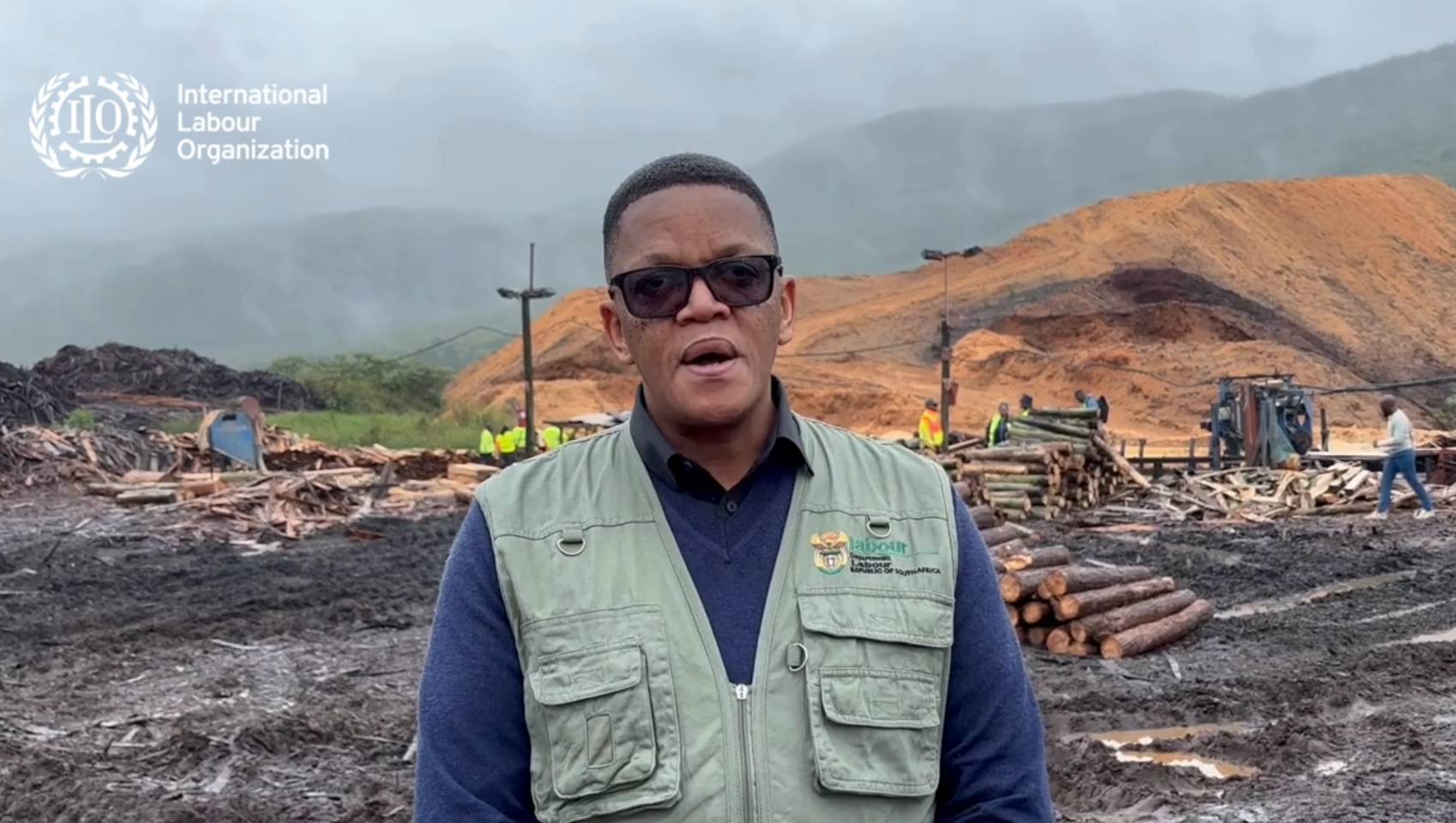
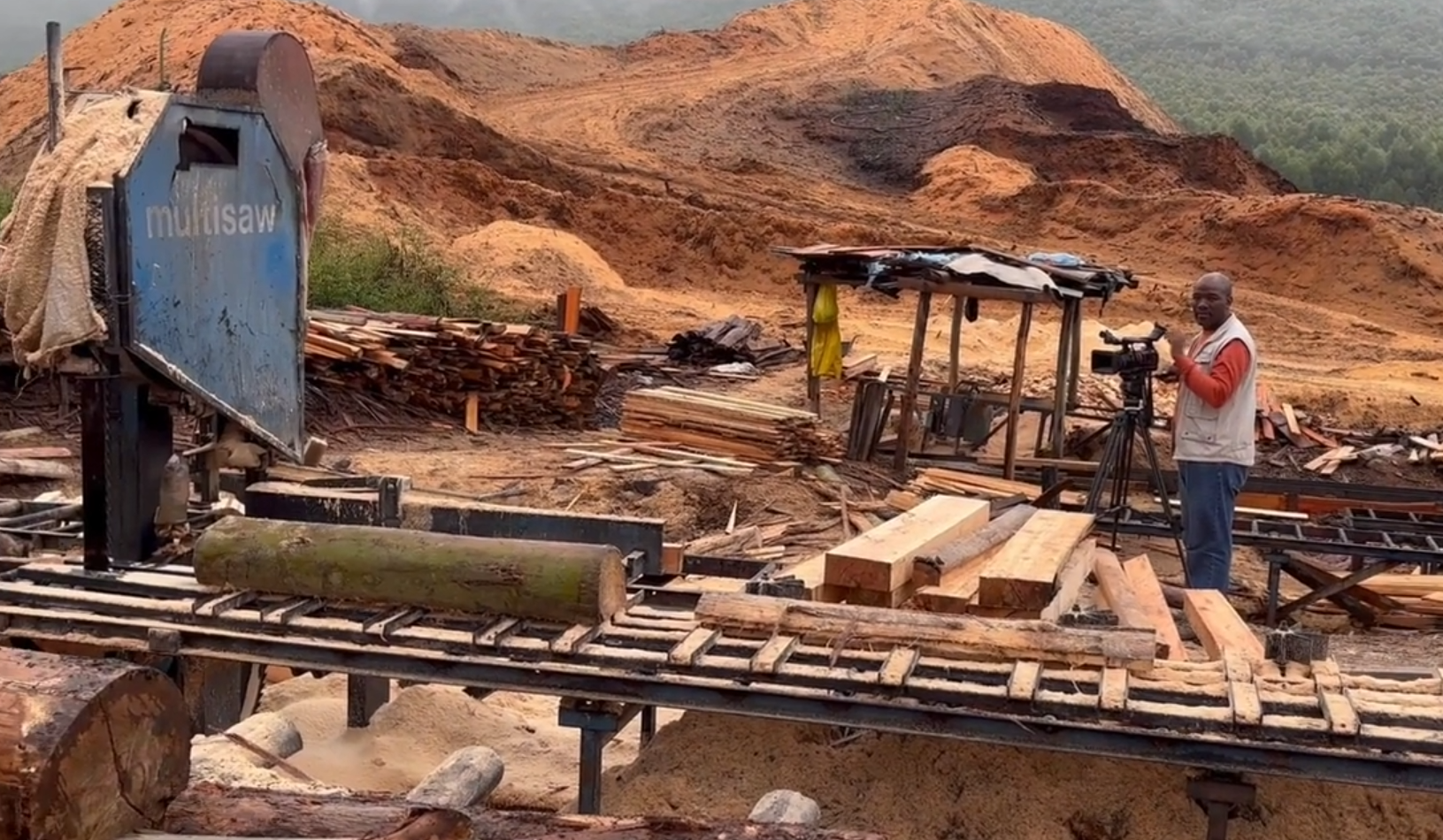
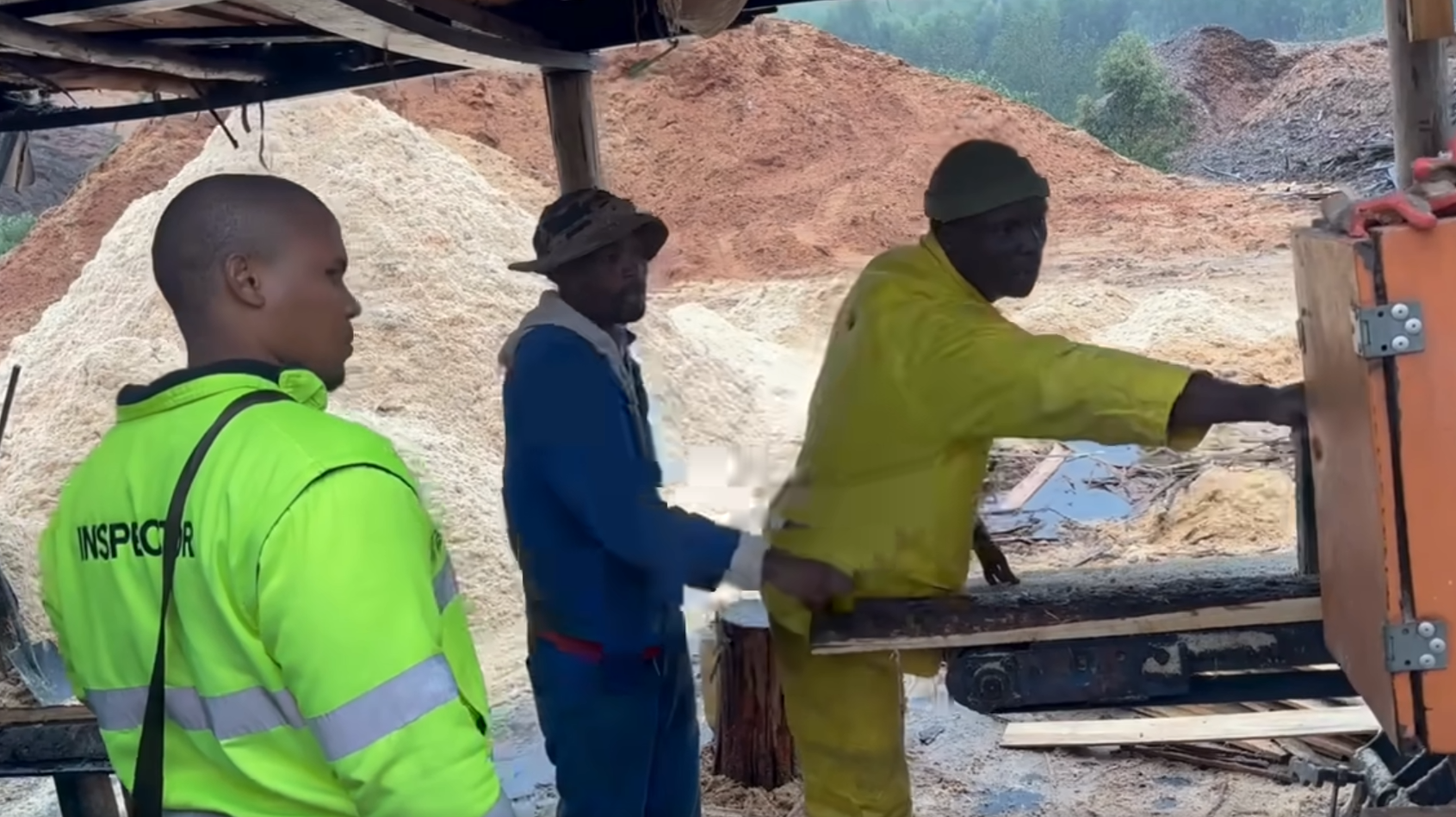
In Pretoria ILO  marked 28 April by joining South Africa’s Department of Labour and Employment on workplace safety visits. The activities highlighted the importance of safe and healthy working conditions as a fundamental right under ILO Conventions No. 155 and No. 187. The initiative emphasised prevention, shared responsibility and the human impact of workplace safety, encouraging stronger cultures of care, accountability and action to ensure workers return home safely each day.

LinkedIn post

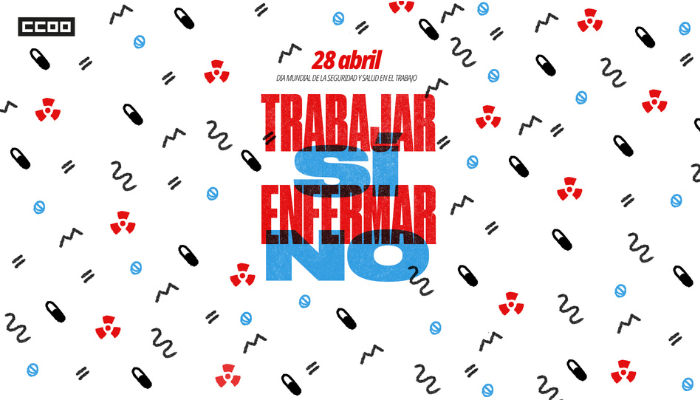
Spain: 28 de Abril, Día Mundial de la Seguridad y la Salud en el Trabajo – CCOO

En 2026 se han cumplido 30 años de la entrada en vigor de la Ley de Prevención de Riesgos Laborales. Una ley que en sus días modernizó el marco legal de la salud y la seguridad en el trabajo en España y que logró excelentes frutos, con un descenso significativo de los accidentes mortales de trabajo durante los primeros años.

En el año 2003, la Organización Internacional del Trabajo (OIT) declaró como Día Mundial de la Seguridad y Salud en el trabajo el día 28 de abril. Con ello pretendía visibilizar la prevención de riesgos desde su origen, para fomentar una cultura preventiva real. 

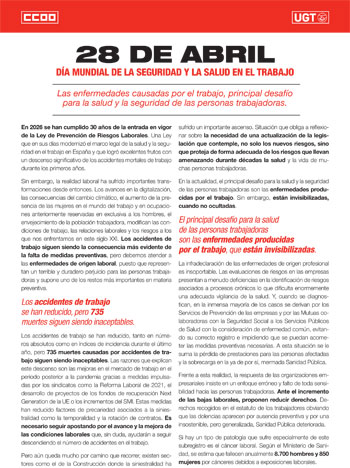
Documentación asociada – 28 de Abri: Día Mundial de la Seguridad y la Salud en el Trabajo.

Pero hemos de ser conscientes de que la realidad del mundo del trabajo en la actualidad difiere mucho de lo que existía en aquellos momentos. Los avances en la digitalización, las consecuencias del cambio climático, el aumento de la presencia de las mujeres en el mundo del trabajo y en ocupaciones anteriormente reservadas en exclusiva a los hombres, el envejecimiento de la población trabajadora,… han provocado que las condiciones de trabajo frente a las que nos encontramos sean diferentes, y en consecuencia los riesgos a los que debemos hacer frente también son distintos.

Los accidentes de trabajo se han reducido, tanto en números absolutos como en índices de incidencia durante el último año, pero 735 muertes causadas por accidentes de trabajo en 2025 siguen siendo inaceptables. Y es por este motivo por el que hay que seguir exigiendo que la prevención de riesgos laborales esté entre las prioridades organizativas de todas las empresas, algo que aún hoy no se ha conseguido.

Los problemas relacionados con la salud mental se han convertido en una nueva pandemia silenciosa en la que factores relacionados con la organización del trabajo están influyendo de manera inequívoca en la aparición de estrés, ansiedad y depresión, sin que nadie parezca querer hacer nada por evitarlo. Riesgos laborales psicosociales como los incrementos en las cargas y en los ritmos de trabajo derivados de introducción de nuevas tecnologías, la prolongación de las jornadas de trabajo, las horas extras no remuneradas, el bajo control sobre el trabajo o la imposibilidad de conciliar trabajo y vida personal, están detrás del aumento de las bajas por trastornos mentales.

Estos desórdenes mentales no se notifican como accidentes de trabajo porque no forman parte del cuadro de enfermedades profesionales en vigor en nuestro país. Este listado debe ser actualizado para incluir las enfermedades mentales ocasionadas por el trabajo, ya que de otro modo quedan invisibilizadas. Y lo que no se conoce, a efectos preventivos, no existe, por lo que no se evita.

Por tanto, las personas tienen que acudir al sistema público de salud para obtener un diagnóstico y un tratamiento que mejore su salud mental. Esto, consecuentemente, tiene dos problemas de partida:

– se incrementa la saturación del ya de por sí saturado sistema público de salud.

– Una vez que la persona está recuperada y vuelve al trabajo, al no haberse implantado medidas preventivas para que su salud mental no se vea perjudicada, puede volver a recaer en la misma patología que ya padeció, porque en su trabajo (que en muchas ocasiones es el origen de su patología) nada ha cambiado.

Además de todos los cambios que han sufrido las condiciones de trabajo en los últimos años, no podemos olvidarnos del cambio climático que, a pesar de que determinadas corrientes políticas extremas lo sigan negando, es una evidencia demostrada científicamente. Y ese cambio climático ya se está dejando ver en nuestro día a día. Sequías prolongadas, lluvias torrenciales, olas de calor extremas mucho más frecuentes y cada vez de mayor duración, fenómenos de frío polar o vientos huracanados,… son solo algunas de las pruebas que la naturaleza nos ofrece para demostrar su fuerza.

Esas condiciones climáticas afectan de forma directa en los puestos de trabajo. Y para evitar que produzcan riesgos irremediables en la vida de las personas trabajadoras, la normativa se ha actualizado mediante la modificación del Estatuto de las Personas Trabajadoras (EPT) con la inclusión del apartado g en el art 37.3, que reconoce un permiso retribuido de hasta 4 días de ausencia por riesgo grave provocado por catástrofes o fenómeno meteorológico adverso. Igualmente se ha recogido en el art 85.1 EPT la obligación de las empresas de negociar un protocolo de actuación frente a estas situaciones extremas.

La afectación que puede tener el cambio climático en los sectores de la Federación de Servicios de CCOO se manifiesta de forma clara y contundente con los fenómenos de calor extremos, que afectan a muchas de las funciones a desarrollar en empresas tan dispares como puede ser la hostelería, una consultoría de ingeniería energética o comercio.

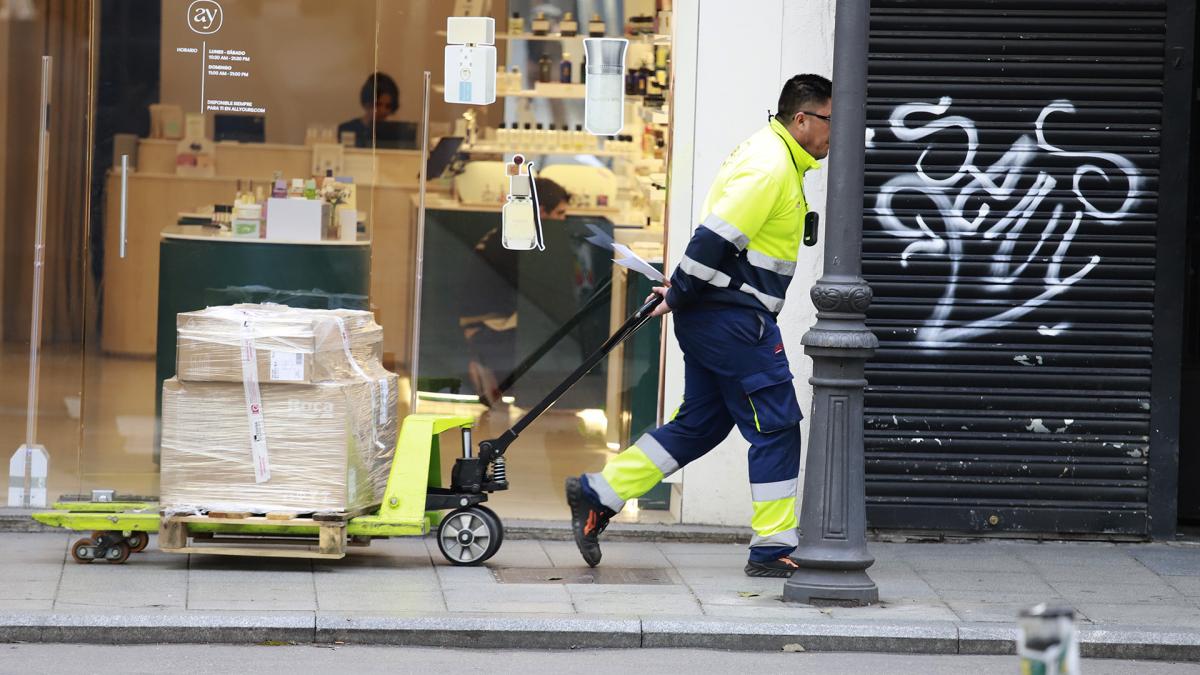
Personal de mantenimiento y limpieza, en cocinas, de servicio en terrazas de hostelería, de recepción, carga y descarga en almacenes, repartidores,… Existen multitud de empleos en nuestra federación que tienen características muy diferentes entre ellos, pero todos tienen una cosa en común: el calor puede afectar a su seguridad mientras realizan su trabajo. Son trabajos al aire libre, o que combinan interior y exterior, algunos con focos de calor propio que se une al calor ambiental.

Otro dato a tener en cuenta para evitar problemas provocados por las situaciones de calor extremo, es que muchas de las profesiones que están directamente afectadas por este fenómeno son trabajos precarizados, con horarios y turnos cambiantes, que tienen condiciones laborales que distan mucho de ser las idóneas, y que en muchos casos están desempeñados por mujeres. Mujeres que no han visto sus puestos correctamente evaluados, por considerar “medidas estándar” (considerando como estándar el cuerpo masculino), por lo que no se hace una adecuación correcta para sus diferencias biológicas específicas.

La obligación de las empresas es prevenir todos los riesgos que puedan existir en cada puesto de trabajo, pero no siempre se tienen en cuenta los efectos de la temperatura extrema, y casi nunca se considera si el trabajo lo realiza una mujer o un hombre, por lo que no te ponen las medidas adecuadas para evitar daños en la salud de las personas que los realizan.

Frente a esta realidad, la respuesta de las organizaciones empresariales insiste en un enfoque erróneo y falto de toda sensibilidad hacia las personas trabajadoras, acusando a las personas que enferman del incremento de las bajas laborales, y su única propuesta es la reducción de derechos, obviando que las dolencias aparecen por ausencia preventiva y por unas condiciones laborales que no se adecúan en función de las necesidades reales.

Desde la Federación de Servicios de CCOO tenemos el convencimiento de que ir a trabajar no puede suponer sufrir una enfermedad, ni ver deteriorada la salud por un ahorro de costes empresariales. Por ello, el 28 de abril, es un día para concienciar de que la prevención es la mejor herramienta para salvaguardar la salud de las personas trabajadoras.

CCOO

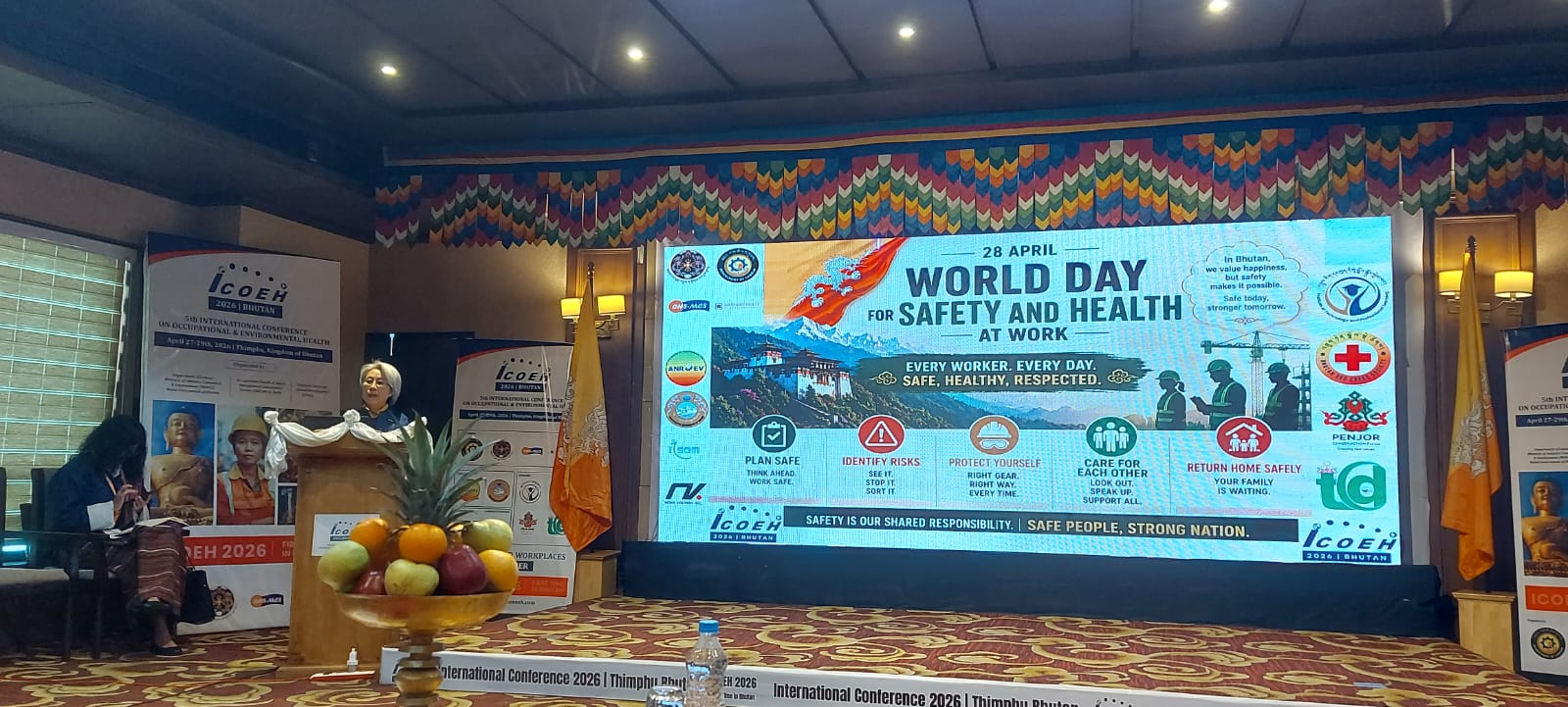
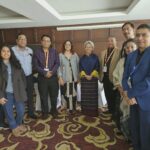
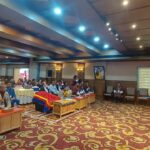
Bhutan: Landmark occupational health and safety conference on International Workers’ Memorial Day

The 5th International Conference on Occupational and Environmental Health (ICOEH 2026) was held in Thimphu, Bhutan from 27–29 April 2026, marking the country’s first occupational safety and health conference of its kind. More than 200 national and international participants from government, trade unions, employers, academia and OSH professions attended. Discussions focused on emerging OSH challenges, safety culture, victim rights, decent work, occupational diseases and vulnerable workers. Bhutan also unveiled a 10-year OHS roadmap, highlighting the country’s development of occupational safety and health systems through national initiatives and commitment. The conference concluded with commitments to strengthen occupational and environmental health systems nationally and internationally.

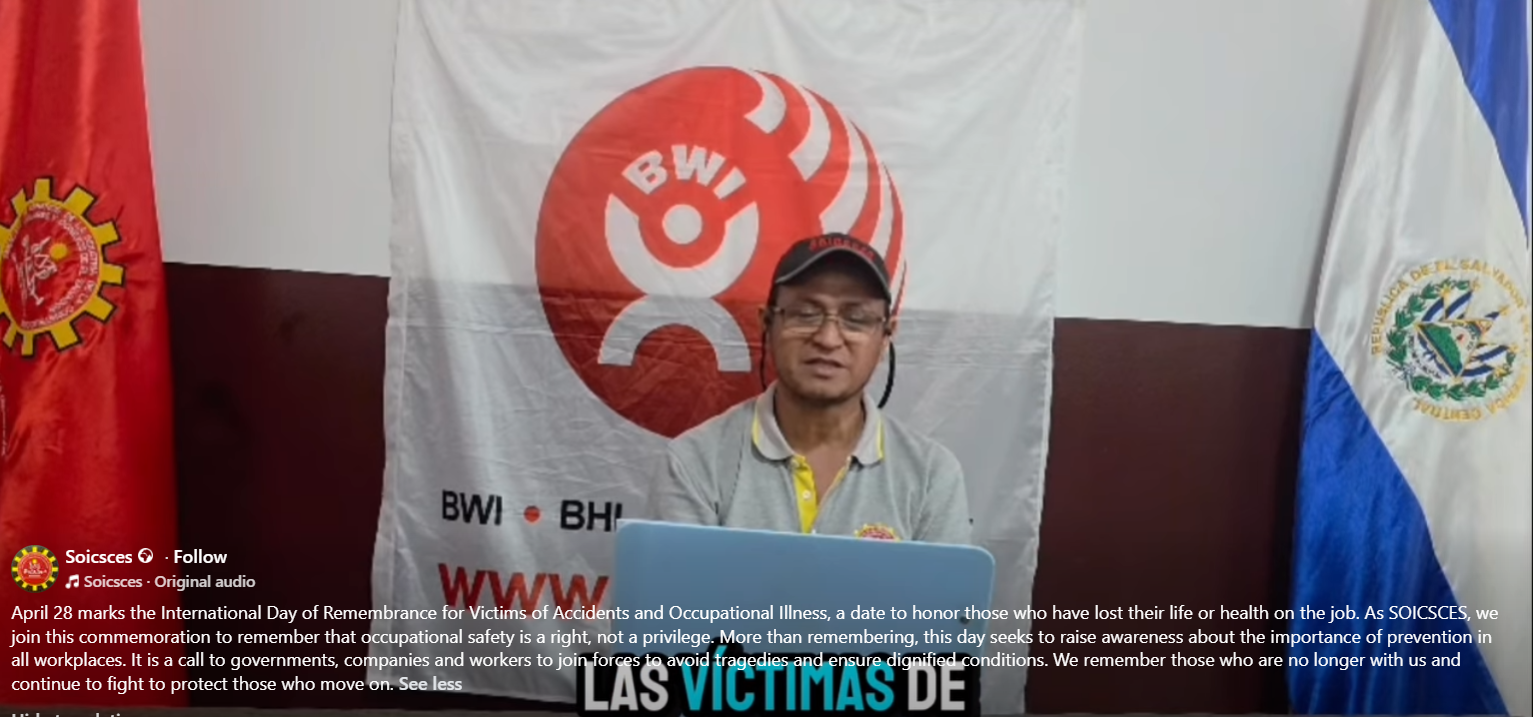
El Salvador: 28 April statement from SOICSCES

El 28 de abril se conmemora el Día Internacional en Memoria de las Víctimas de Accidentes y Enfermedades Laborales, una fecha para honrar a quienes han perdido la vida o la salud en su trabajo. Como SOICSCES, nos unimos a esta conmemoración para recordar que la seguridad laboral es un derecho, no un privilegio. Más que recordar, este día busca crear conciencia sobre la importancia de la prevención en todos los espacios laborales. Es un llamado a gobiernos, empresas y trabajadores a unir esfuerzos para evitar tragedias y garantizar condiciones dignas. Recordamos a los que ya no están y seguimos luchando por proteger a los que siguen adelante.

Facebook reel

April 28 marks the International Day of Remembrance for Victims of Accidents and Occupational Illness, a date to honor those who have lost their life or health on the job. As SOICSCES, we join this commemoration to remember that occupational safety is a right, not a privilege. More than remembering, this day seeks to raise awareness about the importance of prevention in all workplaces. It is a call to governments, companies and workers to join forces to avoid tragedies and ensure dignified conditions. We remember those who are no longer with us and continue to fight to protect those who move on.

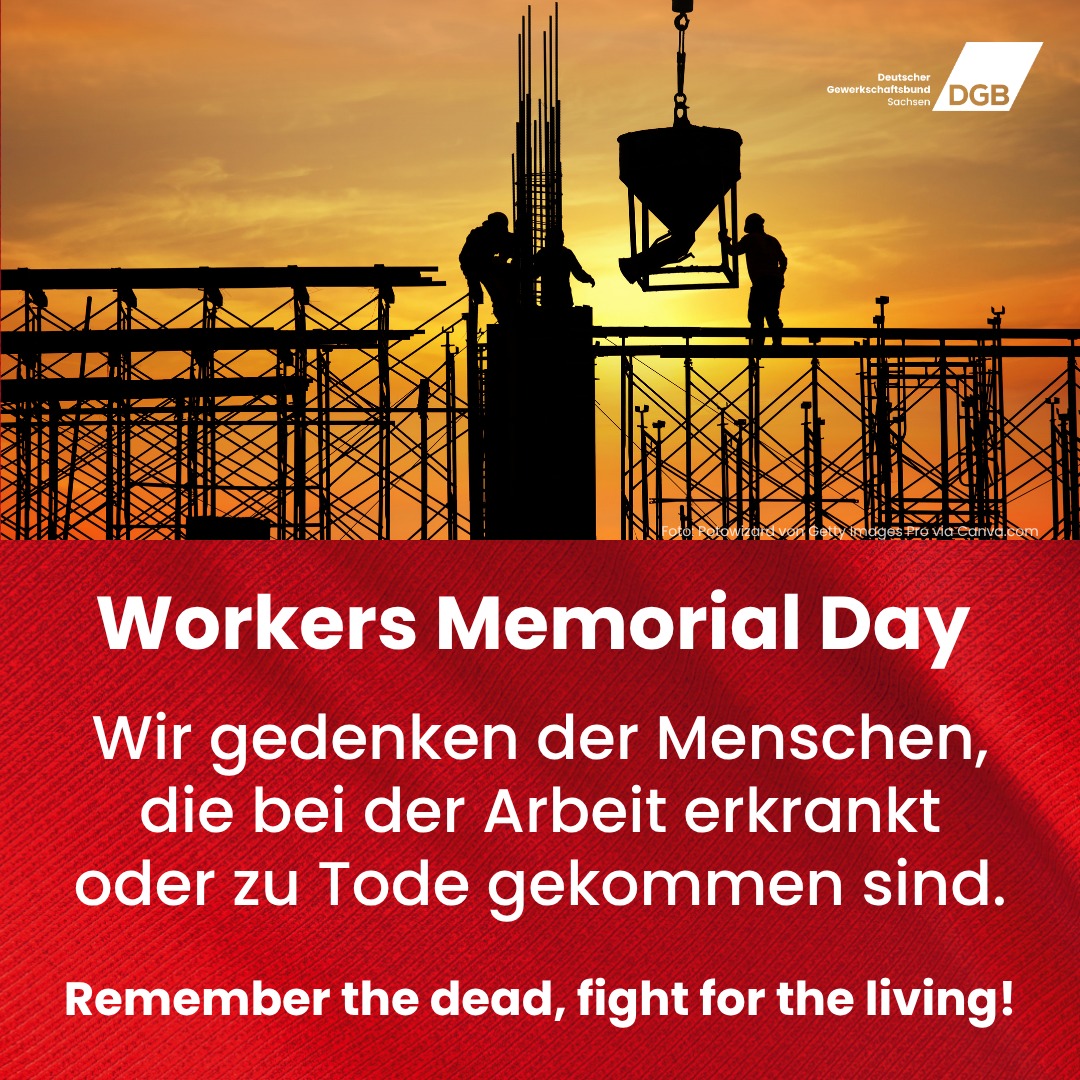
Germany: DGB 28 April statement – ‘Work is about people. Not numbers!’

Am 28. April ist Workers Memorial Day. Wir gedenken weltweit der Beschäftigten, die bei der Arbeit erkrankt oder zu Tode gekommen sind. Für uns ist klar: Jeder Arbeitsunfall ist einer zu viel und muss verhindert werden. Arbeit darf nicht krank machen und schon gar nicht tödlich sein! Es geht um Menschen und nicht um Zahlen! Wir stehen gemeinsam für sichere und gute Jobs. Das heißt auch, Risiken zu minimieren und für mehr Arbeitsschutz zu sorgen. Die Verlängerung der Arbeitszeit erhöht das Risiko von Arbeitsunfällen. Also: Hände weg vom 8-Stunden-Tag! Arbeitsschutz stärken! #WorkersMemorialDay #1Mai26 #StarkMitUns

On the 28th. April is Workers’ Memorial Day. We remember those working people around the world who have fallen ill or died on the job. It is clear for us: every accident at work is one too many and must be prevented. Work must not make you sick and not even be fatal! It’s about people, not numbers! We stand together for safe and good jobs. This also means minimizing risks and ensuring more safety at work. Prolonging working hours increases the risk of accidents at work. Well: hands off 8 hr day! Strengthen workplace safety! #WorkersMemorialDay #1May26 #StrongWithUs

Pakistan: PFBWW marks Workers’ Memorial Day with meetings at major dam sites

BWI affiliate PFBWW marked Workers’ Memorial Day through three workplace meetings held at Tarbela Dam, Balakot Dam and Mohmand Dam. The discussions focused on workplace safety and the risks faced by workers on large infrastructure projects, reinforcing the importance of protecting labour conditions at high-risk construction sites.

Sri Lanka: NTUF marks Workers’ Memorial Day with workplace discussions

BWI affiliate NTUF marked Workers’ Memorial Day through workplace discussions aimed at raising awareness of occupational safety and the importance of protecting workers.

Sweden: Unions mark workers’ memorial day through social media and commemorations

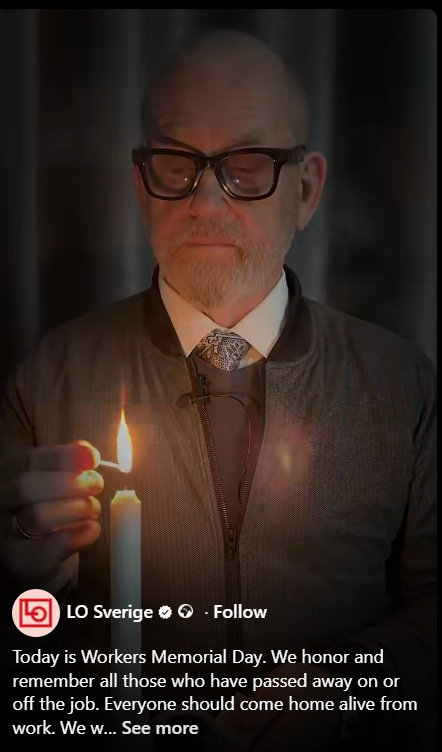
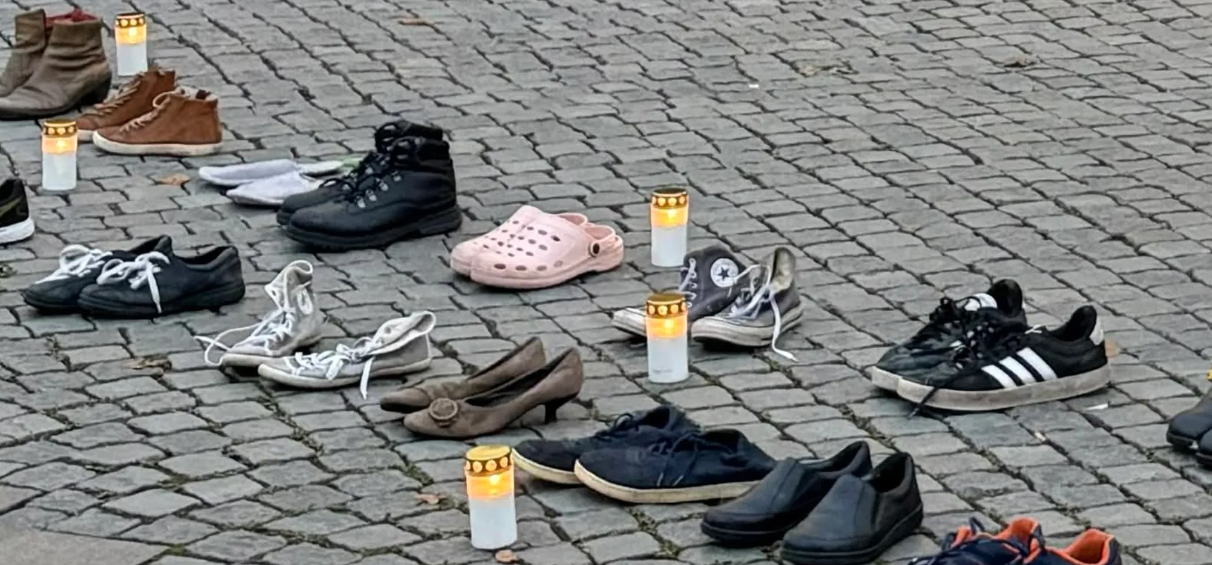
Byggnads, GS and Elektrikerna marked Workers’ Memorial Day through social media posts and posters, including a memorial in Stockholm shared online. LO/SBTF held an event featuring candles representing workers who lost their lives on the job and workers’ shoes symbolising missing colleagues, alongside related social media activity and news article: För dem som inte kom hem från jobbet.

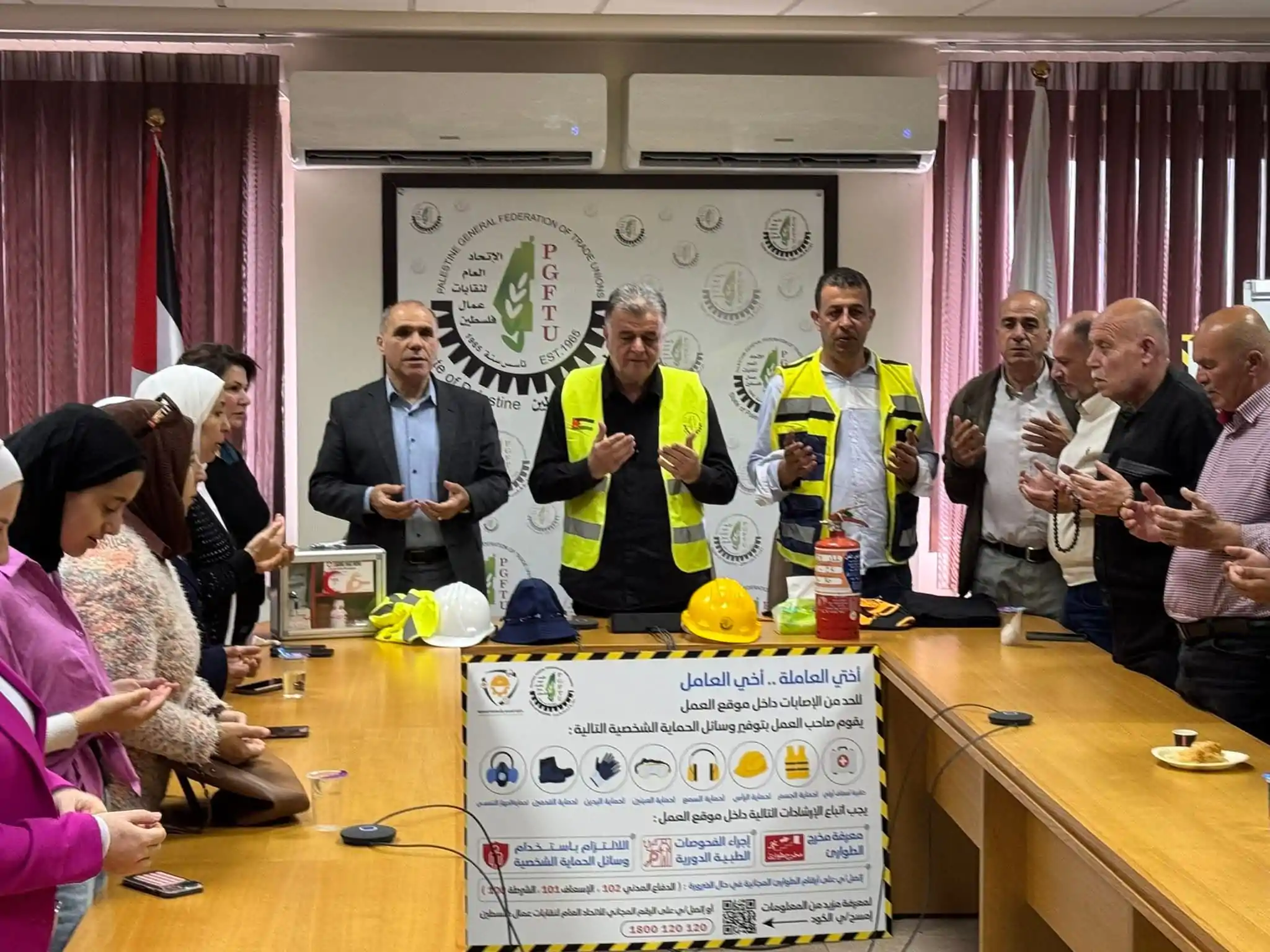
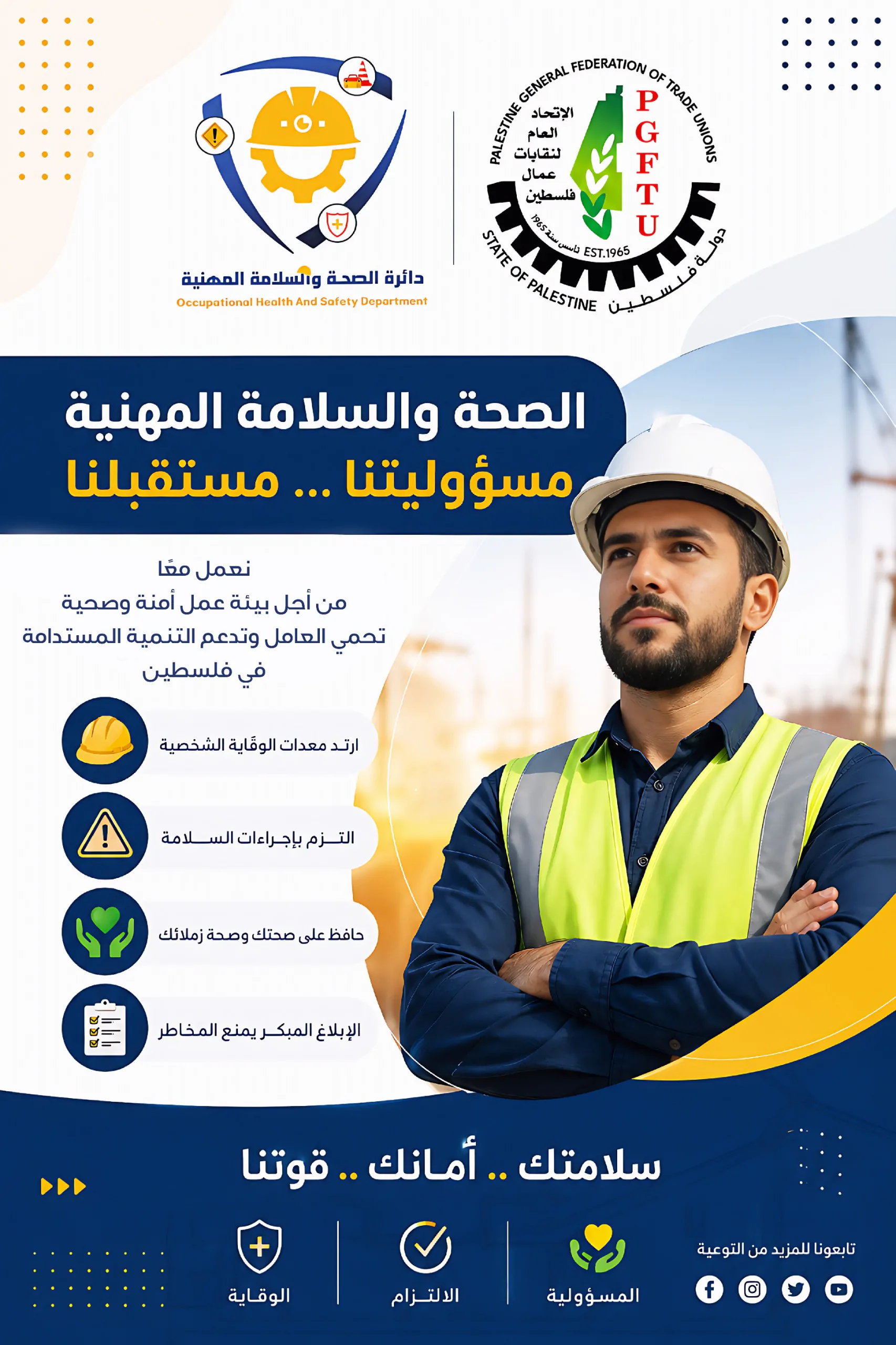
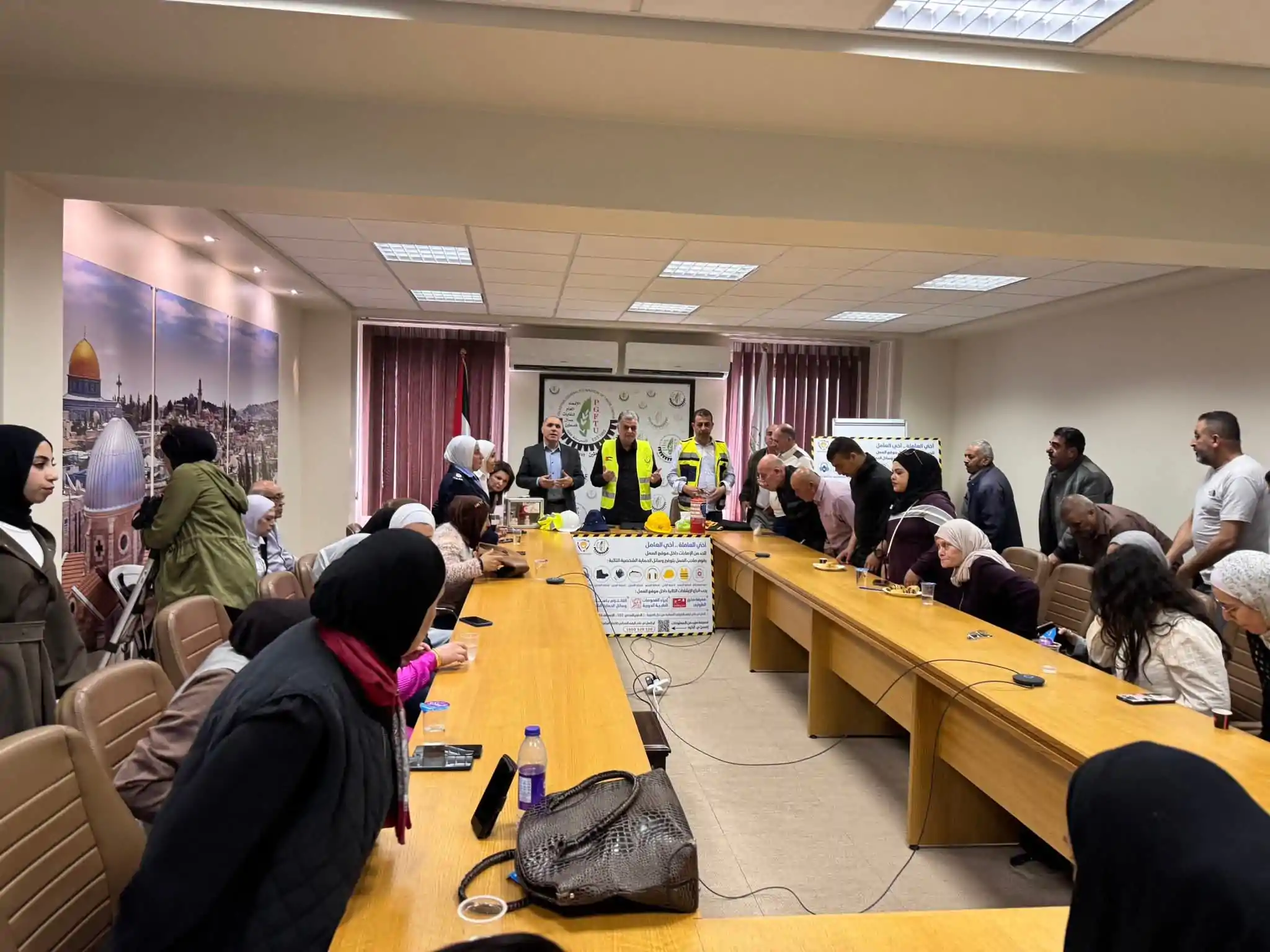
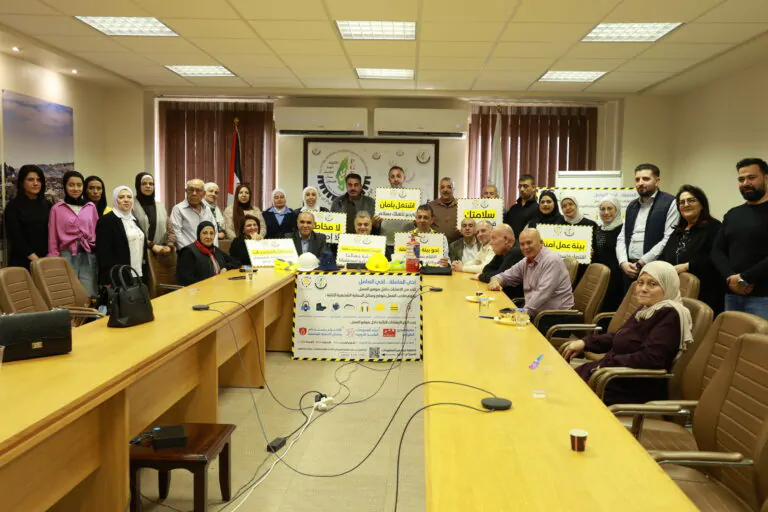
Palestine: 75 workers were killed at work in Palestine last year

جدّدت دائرة السلامة والصحة المهنية في اتحاد نقابات عمال فلسطين، اليوم، التزامها بالدفاع عن حق العمال في بيئة عمل آمنة وصحية، مؤكدة أن هذا الحق “أصيل ولا يقبل التنازل أو التأجيل”، وذلك بمناسبة اليوم العالمي للسلامة والصحة المهنية.

وأوضحت الدائرة، في بيان صحفي، أن هذا اليوم يأتي في ظل تحديات متفاقمة يواجهها العمال الفلسطينيون، في ظل الأوضاع الاقتصادية الصعبة وضعف الالتزام بمعايير السلامة في بعض مواقع العمل، ما يزيد من حجم المخاطر المهنية ويعرّض حياة العمال للخطر.

وكشف البيان عن استشهاد 74 عاملًا خلال الفترة من 1 كانون ثاني/يناير 2025 وحتى 30 كانون أول/ديسمبر 2025، توزّعوا بواقع 20 عاملًا داخل سوق العمل في الضفة الغربية، وعامل واحد نتيجة استهداف في البحر، و14 عاملًا أثناء محاولتهم الوصول أو العودة إلى أماكن عملهم، و39 عاملًا داخل أراضي الـ48. كما سُجّل استشهاد 18 عاملًا نتيجة إطلاق النار عليهم أو أثناء الاعتقال أو الملاحقة أو خلال اقتحام أماكن عملهم.

وأشار البيان إلى سقوط 47 “شهيد لقمة عيش” منذ 7 أكتوبر 2023 وحتى نهاية عام 2025، في ظل استمرار المخاطر التي تهدد العمال الفلسطينيين في مختلف أماكن عملهم.

وأكدت الدائرة أن السلامة المهنية ليست خيارًا، بل “مسؤولية وطنية وأخلاقية وقانونية”، داعية إلى تضافر الجهود من أجل حماية العمال وتعزيز بيئة العمل الآمنة.

ودعت إلى التطبيق الفعلي والرقابة الصارمة على معايير السلامة والصحة المهنية في مختلف القطاعات، وتحميل أصحاب العمل مسؤولياتهم الكاملة في توفير مستلزمات الوقاية، إلى جانب تعزيز دور الجهات الرقابية وتفعيل أدوات التفتيش والمساءلة، ونشر الوعي الوقائي عبر برامج تدريبية مستمرة تستهدف العمال وأصحاب العمل.

كما شددت على أهمية مواءمة التشريعات الوطنية مع المعايير الدولية بما يضمن حماية أوسع للعمال.

وختمت الدائرة بيانها بالتأكيد على استمرار الاتحاد في النضال النقابي من أجل صون كرامة العامل الفلسطيني وحماية حياته وتعزيز شروط العمل اللائق، تحت شعار:

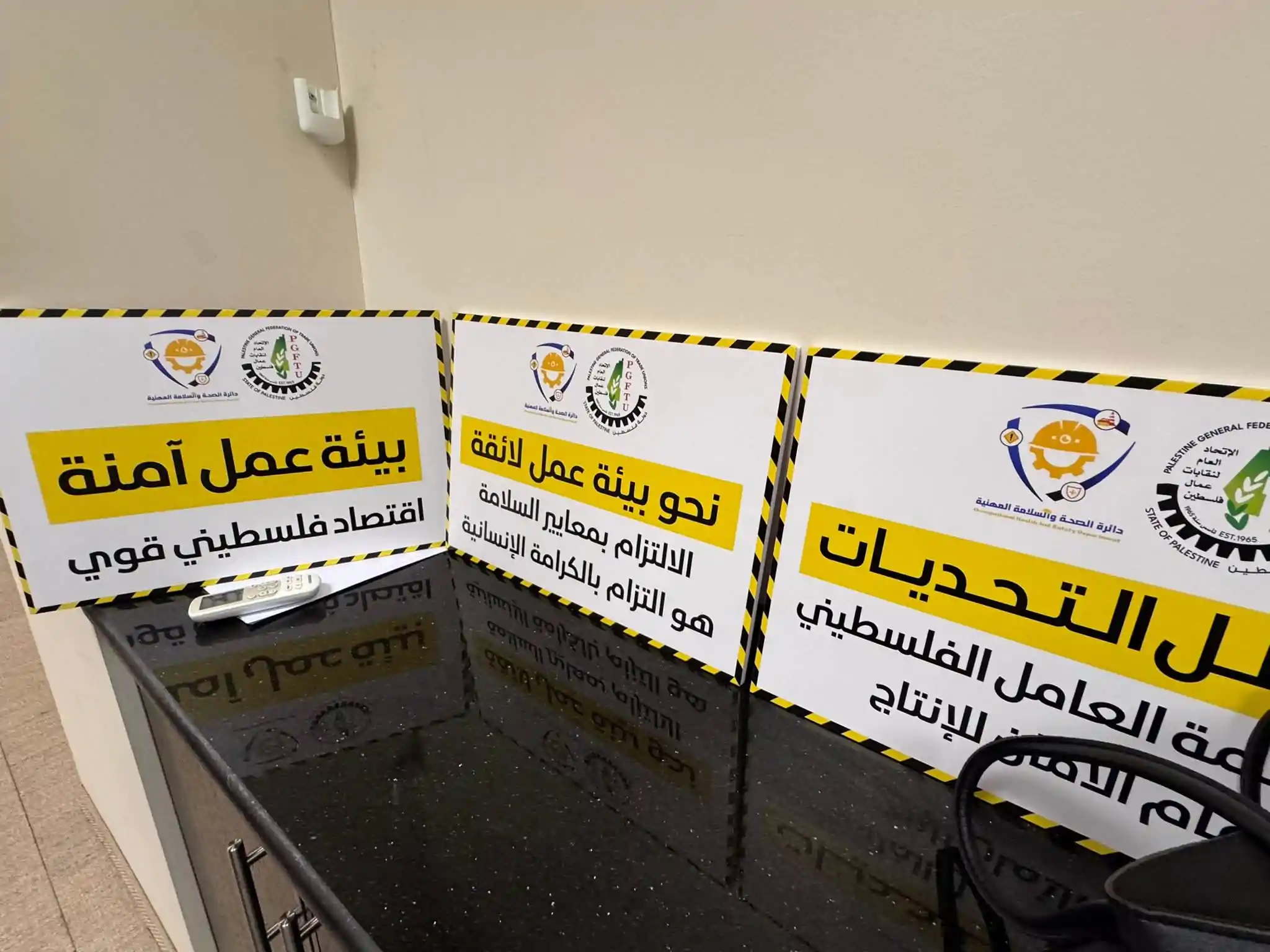
“سلامة العامل… أساس الإنتاج، وكرامته… عنوان العدالة.”

The Palestinian General Federation of Trade Unions renews its commitment to protecting workers and reveals that 74 workers were killed during 2025.

The department explained, in a press statement, that this day comes in light of the worsening challenges faced by Palestinian workers, in light of the difficult economic conditions and weak adherence to safety standards in some work sites, which increases the extent of occupational risks and exposes workers’ lives to danger.

The statement revealed the martyrdom of 74 workers during the period from January 1, 2025 to December 30, 2025, distributed as follows: 20 workers within the labor market in the West Bank, one worker as a result of targeting at sea, 14 workers while trying to reach or return to their workplaces, and 39 workers within the 1948 territories. 18 workers were also killed as a result of being shot, arrested, pursued, or stormed into their workplaces.

The statement indicated that 47 “livelihood martyrs” fell from October 7, 2023 until the end of 2025, in light of the continuing risks threatening Palestinian workers in their various workplaces.

The department stressed that occupational safety is not an option, but rather “a national, ethical and legal responsibility”, calling for concerted efforts to protect workers and promote a safe work environment.

She called for the effective implementation and strict oversight of occupational safety and health standards in various sectors, holding employers fully responsible for providing preventive measures, strengthening the role of regulatory authorities, activating inspection and accountability tools, and spreading preventive awareness through ongoing training programs targeting workers and employers.

She also stressed the importance of harmonizing national legislation with international standards to ensure broader protection for workers.

The department concluded its statement by emphasizing the Union’s continued union struggle to preserve the dignity of the Palestinian worker, protect his life, and promote decent work conditions, under the slogan:

“Worker safety… the basis of production, and his dignity… the title of justice.”